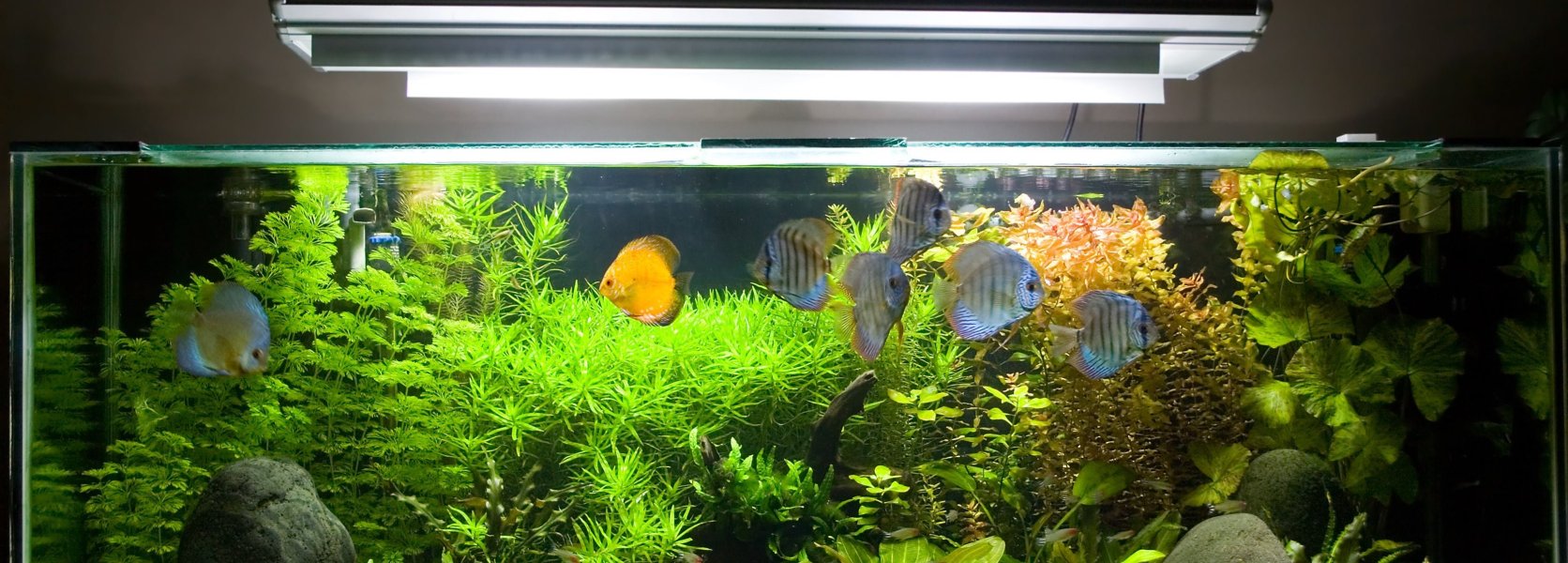
Lighting is one of the most underestimated variables in aquarium keeping. Most beginners install whatever light came with their tank and leave it on all day, without realizing that light duration, intensity, and spectrum all significantly affect fish health, plant growth, and algae control. The right lighting setup brings out the best colors in your fish, sustains thriving plant growth, and maintains the natural day-night rhythms that fish depend on for stress-free living.
Modern LED technology has transformed aquarium lighting over the past decade. Efficient, programmable lights that simulate sunrise, sunset, and moonlight are now accessible at reasonable prices, and the ability to control spectrum has opened up planted tank possibilities that previously required expensive metal halide or T5 systems. Understanding the basics of light measurement, spectrum, and duration gives you the tools to evaluate any lighting product and configure it correctly for your specific setup.
How Light is Measured: PAR, PUR, and Lux
PAR (Photosynthetically Active Radiation) measures the amount of light in the 400 to 700 nanometer wavelength range that plants can use for photosynthesis. It is measured in micromoles per square meter per second (µmol/m²/s), and PAR values at the substrate level are the most useful metric for evaluating whether a light can support live plant growth. Low-light plants typically need 20 to 50 PAR; medium-light plants need 50 to 150 PAR; high-light demanding plants need 150 PAR or more.
PUR (Photosynthetically Usable Radiation) refines PAR by focusing on the specific wavelengths plants absorb most efficiently: primarily the red (around 660 nm) and blue (around 450 nm) peaks that chlorophyll absorbs most strongly. A light with high PAR but poor PUR emits light that plants cannot use efficiently. Lux measures human-perceived brightness and is useful for general aquarium visibility but does not reliably indicate plant-growing capability. When evaluating lights for planted tanks, PAR values are the most reliable metric.
Light Spectrum and What Different Colors Do
The color temperature of aquarium lighting, measured in Kelvin (K), dramatically affects how the tank looks and how it functions biologically. Lights in the 5,500 to 7,000K range provide a daylight-balanced white light that renders fish colors naturally and supports plant photosynthesis across a broad spectrum. Most quality LED fixtures for planted tanks target this range. Lower Kelvin values (around 3,000K) produce warm, yellowish light that makes reds and oranges pop but may not support plant growth as effectively. Higher values (10,000K and above) produce a blue-white light used in reef aquariums.
Red spectrum light (around 660 nm) drives plant growth efficiently and intensifies the red pigmentation in fish and plants. Blue spectrum light (around 450 nm) also supports photosynthesis and enhances the iridescent colors in many tropical fish, particularly blue and violet tones. Many modern planted tank lights blend white LEDs with targeted red and blue LEDs to provide both natural appearance and high plant-growing efficiency. Pure blue "moonlight" LEDs at very low intensity can simulate nighttime without disturbing fish sleep rhythms.
How Much Light Do Fish Need?
Fish themselves do not have a technical light intensity requirement the way plants do, but they are highly sensitive to photoperiod: the daily cycle of light and darkness. In the wild, tropical fish experience roughly 10 to 14 hours of light during the day and complete darkness at night, with a brief dawn and dusk transition. Aquarium fish need this same basic cycle. A consistent photoperiod regulates hormone levels, feeding behavior, activity patterns, and immune function in fish.
Fish kept under lights left on 24 hours a day, or with irregular on/off patterns, display elevated stress hormones, disrupted feeding cycles, and suppressed immune response over time. A 10 to 12 hour photoperiod with the light turning on and off at consistent times is the simplest way to meet your fish's lighting needs. Programmable timers, available for a few dollars at any hardware store, remove all guesswork from maintaining this schedule. Some advanced LED fixtures include built-in programmable timers with gradual sunrise and sunset transitions that are noticeably beneficial for easily startled or shy fish.
Lighting for Fish-Only Tanks
If your aquarium has no live plants and is primarily a display for fish, your lighting priorities shift toward aesthetics and fish wellbeing rather than plant photosynthesis. A moderate-intensity LED in the 6,000 to 7,000K range provides natural daylight coloration that renders fish attractively without creating the intense light that drives algae growth in tanks without enough plants to outcompete it. Fish-only tanks are particularly prone to algae outbreaks under excessive lighting because there are no plants competing for the nutrients algae use.
Hiding places in the form of decorations, caves, and driftwood are more important in brightly lit fish-only tanks. Fish naturally seek shaded areas and will show reduced stress when they can retreat from bright light. Dark backgrounds and substrates also reduce the reflectivity that makes bare tanks feel overly exposed to sensitive fish. A fish-only tank with well-placed hiding spots, a moderate light intensity, and a consistent 10-hour photoperiod will show fish behaving naturally and displaying their best colors.
Lighting for Planted Tanks: Low-Tech vs. High-Tech
Planted tanks fall into two broad categories that have very different lighting requirements. Low-tech planted tanks use easy-growing, low-demand plants (anubias, java fern, java moss, crypts, hornwort) that thrive at 20 to 50 PAR without CO2 injection or fertilizer dosing. These tanks are ideal for beginners and pair well with a budget LED fixture set to moderate intensity. The plants grow slowly but steadily, and the low light levels significantly reduce algae problems.
High-tech planted tanks use demanding carpet plants, stem plants, and foreground species that require 50 to 200+ PAR, injected CO2 to support rapid photosynthesis at those light levels, and regular fertilization. These tanks produce lush, fast growth and can achieve the look of professionally aquascaped displays seen in competitions, but they require substantially more equipment, maintenance, and expertise. High light without CO2 injection is a recipe for algae explosions: the light drives plant metabolism, and without adequate CO2 and nutrients the plants cannot absorb the energy fast enough, and algae fills the gap.
The Algae Problem: Light Duration and Intensity Management
Algae growth is the most common consequence of lighting mistakes in aquariums. Too much light for too long gives algae the energy to outgrow whatever the tank's nutrient levels allow. The most effective first step in controlling algae is almost always reducing either light intensity, photoperiod duration, or both. Reducing a photoperiod from 12 hours to 8 hours while increasing it back gradually if plants show signs of insufficient light is a standard troubleshooting approach for new tanks dealing with algae outbreaks.
The "siesta method" splits the photoperiod into two blocks with a midday break, such as lights on from 8 AM to noon, off from noon to 3 PM, then on again from 3 PM to 8 PM. This approach maintains total daily light hours for plant growth while disrupting the sustained energy input that algae exploit more efficiently than higher plants. It is particularly useful in new tanks before plants have established enough mass to outcompete algae effectively. As the plant mass grows and nutrient uptake increases, algae naturally becomes less of a problem even with normalized photoperiods.
Lighting for Reef and Marine Tanks
Marine reef aquariums with coral have the most demanding and technically complex lighting requirements in the hobby. Photosynthetic corals harbor symbiotic algae (zooxanthellae) that require specific light intensities and spectrums to produce the sugars that feed the coral. Different coral types have radically different light requirements: low-light softies like mushrooms and some leathers can thrive at 50 to 100 PAR, while high-light SPS (small polyp stony) corals like Acropora require 200 to 400+ PAR at the coral surface.
The blue-spectrum light emphasized in reef lighting (typically 420 to 470 nm) drives zooxanthellae photosynthesis most efficiently and also produces the characteristic blue-purple glow of reef tanks under actinic lighting. Reef tanks require lights specifically designed for marine applications: standard freshwater planted tank lights do not provide adequate intensity or the correct blue-spectrum weighting for demanding coral systems. Quality reef LED systems from brands like Kessil, AI Hydra, and Radion provide the programmability and intensity needed but represent a significant investment in aquarium equipment.
How to Choose the Right Light for Your Tank
Choosing aquarium lighting starts with answering three questions: What inhabitants do you have (fish only, live plants, or coral)? What is your tank depth? What is your budget? Deeper tanks require more powerful lights to deliver adequate PAR at the substrate level, as light intensity falls off with distance according to the inverse square law. A light that provides 100 PAR at 6 inches depth may only deliver 30 PAR at 18 inches, making it insufficient for a deep planted tank despite having adequate surface intensity.
For most freshwater planted tanks in the 10 to 50-gallon range, mid-range LED fixtures from brands like Fluval, Finnex, and Current USA provide excellent performance at reasonable prices. Check whether the manufacturer publishes PAR data at varying depths, as this information is the most reliable way to evaluate a light's suitability for your tank before purchasing. User reviews from planted tank communities like Reddit's r/PlantedTank often include real-world PAR measurements from hobbyists using PAR meters, providing more useful data than marketing specifications alone.
Photoperiod Programming and Timers
Consistent lighting schedules are best achieved with a digital timer rather than manual switching. Even the most diligent fishkeeper will occasionally forget to turn the light on or off, and inconsistency is more disruptive to fish than a fixed schedule that might not be perfectly optimized. A basic digital outlet timer costs under $15 and is one of the best investments in fish wellbeing you can make regardless of what other equipment you are using.
Advanced LED controllers allow hour-by-hour dimming curves that simulate the gradual brightening and dimming of natural sunlight. This technology is not just an aesthetic luxury: fish that experience gradual light transitions show significantly less startle behavior, particularly during lights-on when abrupt full-intensity illumination in an otherwise dark room causes fish to bolt and sometimes injure themselves on glass or hardscape. The programming also allows coordination of moonlight simulation, which can trigger natural nocturnal behavior in fish that are active at night and supports the behavioral needs of nocturnal species like many loaches and catfish.