1 / 10Start with fish that tolerate mistakes
Every new aquarist makes mistakes. Water changes get missed, the filter runs a little dirty, temperature fluctuates. The fish on this list were chosen specifically because they handle imperfect conditions without immediately getting sick or dying. That does not mean you should ignore water quality, but it does mean you have a margin for error while you learn.
Keep in mind that "beginner-friendly" still requires a cycled tank, appropriate tank size, and regular maintenance. These fish are forgiving, not indestructible.
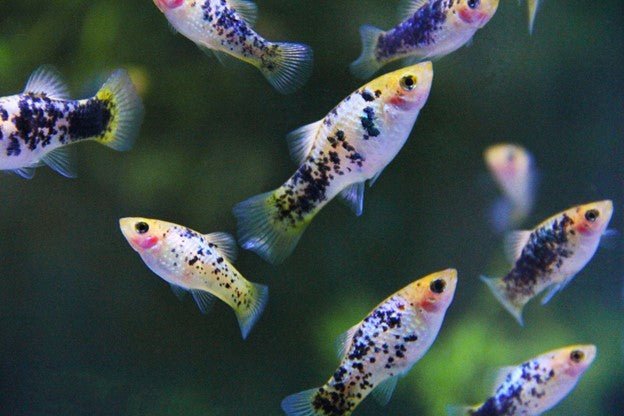
2 / 10Platy
Platies are colorful, peaceful, and nearly bulletproof. They come in dozens of color varieties, eat anything, and get along with almost every other community fish. They prefer slightly hard water with a pH around 7.0–8.2 and do best in groups of five or more. One thing to watch: platies breed easily, so if you mix males and females, expect fry.
3 / 10Zebra Danio
Zebra danios are fast, active, and extremely hardy. They can handle temperatures from 65°F to 77°F, which makes them unusually tolerant of unheated tanks in warm climates. They are schooling fish and should be kept in groups of at least six. Their constant movement makes them entertaining to watch and keeps a tank looking lively.
4 / 10Corydoras Catfish
Corydoras are peaceful bottom-dwellers that spend their time scavenging leftover food and keeping the substrate clean. They are social fish that should always be kept in groups of three or more, ideally six. They stay small, rarely exceed 2.5 inches, and coexist with virtually every community fish. They prefer soft substrate like sand so they do not damage their barbels.
5 / 10Swordtail
Swordtails are closely related to platies and share their hardiness. The males have a distinctive elongated lower tail fin that gives the species its name. They are active swimmers and appreciate a longer tank with some open space. Like platies, they breed readily and can become territorial among males if overcrowded.
6 / 10Mollies
Mollies are adaptable livebearers that can even tolerate some salt in the water, making them unique among freshwater fish. They come in black, white, dalmatian, and balloon varieties. They do best in hard, alkaline water and are prone to a disease called molly disease or shimmies in soft, acidic tanks. Feed them a diet with some algae content.
7 / 10White Cloud Mountain Minnow
White clouds are small, cold-water fish that thrive at 60°F–72°F, which means they can live without a heater in most homes. They are schooling fish that show their best colors in groups of six or more. They are peaceful, undemanding, and safe with any fish too large to eat them. A good choice for smaller tanks of 10 gallons or more.
8 / 10Harlequin Rasbora
Harlequin rasboras are mid-water schoolers with a distinctive black triangle marking on their back half. They prefer slightly soft, acidic water and do best at temperatures around 72°F–80°F. They are peaceful and combine beautifully with other small community fish. Their schooling behavior in a planted tank is one of the most visually satisfying things in the hobby.
9 / 10Bristlenose Pleco
If you want algae control without a fish that outgrows your tank, the bristlenose pleco is the answer. Unlike common plecos that can reach 18 inches, bristlenoses stay under 5 inches and can live comfortably in a 20-gallon tank. They rasp algae off glass and decorations, eat sinking wafers, and are completely peaceful. Males develop distinctive fleshy tentacles on their snouts as they mature.
10 / 10Cherry Barb
Cherry barbs are calm, undemanding fish that turn a vivid red color when comfortable and well-fed. Unlike tiger barbs, they are not nippy and work well in community tanks. They do best in groups of six or more, with more females than males. They prefer densely planted tanks where they can hide and forage, and their red color intensifies dramatically against green plants.