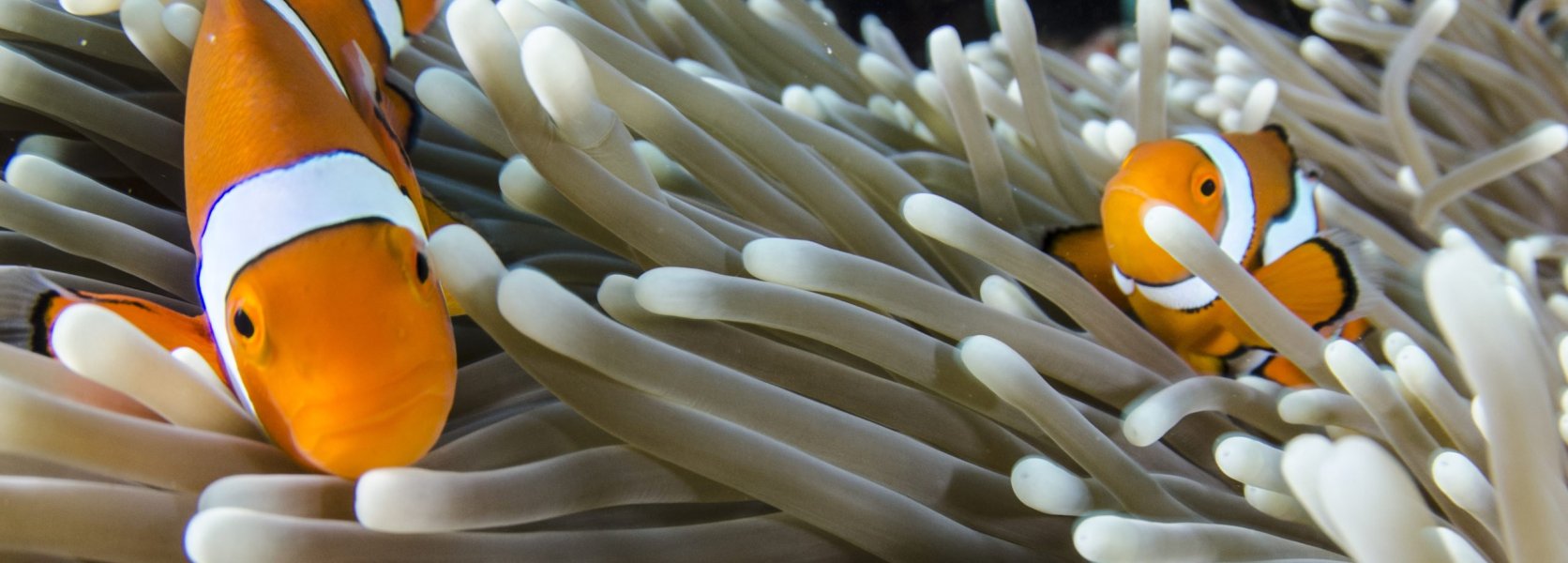
The relationship is real, but more complicated than it looks
The image of a clownfish nestled in the tentacles of a sea anemone is one of the most iconic in the ocean. But the nature of that relationship surprises most people when they look at it closely. It is not simply friendship. It is a mutualistic symbiosis, meaning both species benefit, but the dependency is not equal, and in captivity the dynamic changes in ways most aquarium guides do not explain.
How clownfish avoid the sting
Sea anemone tentacles are covered in stinging cells called nematocysts that fire on contact to paralyze prey. Most fish are immediately stung if they touch an anemone. Clownfish are not immune by birth. They develop chemical camouflage by slowly acclimating to the anemone, rubbing against the tentacles repeatedly until their mucus coat mimics the anemone's own chemical signature. The anemone then stops recognizing them as prey. If a clownfish is removed from its host anemone and placed with a different species, it must go through this process again.
What each species gets from the other
The anemone benefits from the clownfish in several documented ways. Clownfish chase away butterflyfish and other predators that eat anemone tentacles. Their waste provides nitrogen, which feeds the anemone's symbiotic algae. Their movement through the tentacles increases water circulation, improving the anemone's oxygen supply. The clownfish gets shelter and protection within the tentacles, and access to scraps of food the anemone catches.
Do clownfish need an anemone in captivity?
No. This is the most practical answer for most aquarists. Clownfish in aquariums thrive without a host anemone. They will often adopt a substitute, hosting in torch corals, hammer corals, bubble tip corals, or even among the tentacles of certain large-polyp stony corals. Some clownfish host in powerheads, corners of the tank, or specific ornaments. The hosting instinct is strong, but the anemone itself is not required.
Can you keep an anemone with clownfish?
You can, but anemones are significantly more demanding than clownfish. They require intense, reef-quality lighting (typically metal halide or high-output LED), stable water parameters with low nitrates, and a mature tank of at least 12–18 months old. They move around the tank and can be pulled into powerheads, killing themselves and potentially crashing the tank's water chemistry. They also sting and can damage or kill nearby corals. For a beginner, anemones are one of the harder invertebrates to keep successfully.
Species compatibility matters
In the wild, each clownfish species associates with only one or two anemone species. Ocellaris and percula clownfish, the most common aquarium species, naturally host in Heteractis magnifica, Stichodactyla gigantea, and Stichodactyla mertensii. In captivity they most readily adopt bubble tip anemones (Entacmaea quadricolor), which are easier to keep than their natural hosts. Maroon clownfish pair almost exclusively with bubble tips in the wild as well.