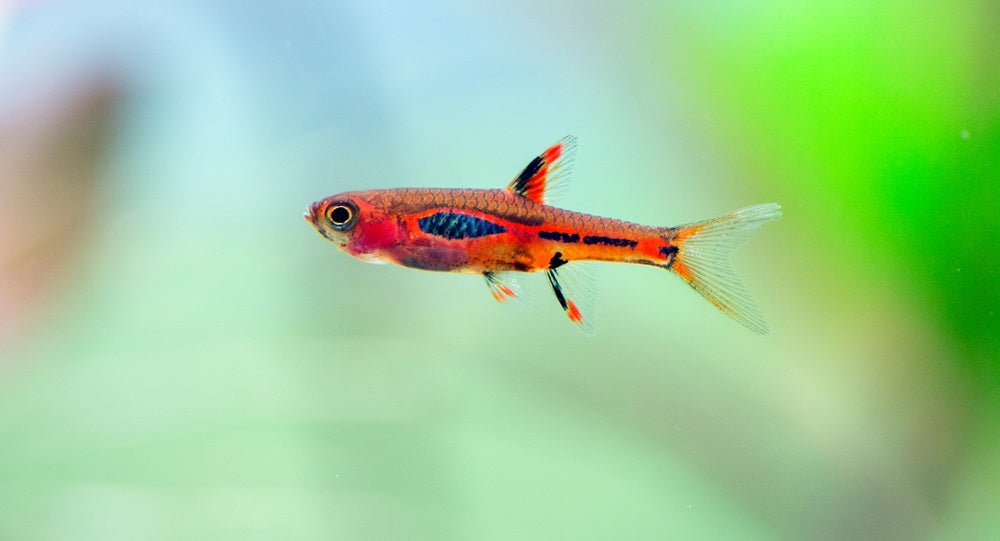
Nano tanks, typically defined as aquariums under 10 gallons, have become one of the most popular entry points into the fishkeeping hobby. Their small footprint fits any desk, shelf, or apartment, and modern equipment makes maintaining stable water conditions in small volumes more achievable than ever before. The challenge is choosing fish that genuinely thrive in limited space rather than simply surviving in it.
Many fish commonly sold for small tanks are actually poor choices: goldfish require hundreds of gallons, betta fish need proper setup but can adapt well, and schooling fish like neon tetras need six or more to be comfortable even in compact spaces. This guide focuses on species that are naturally small, have modest activity requirements, and genuinely suit the nano environment rather than merely tolerating it.
What Makes a Fish Suitable for a Nano Tank
The ideal nano tank fish shares several characteristics. Adult size under 1.5 inches ensures the fish has room to move, display natural behaviors, and avoid the chronic stress that comes from being confined in a space disproportionate to its body. Low to moderate activity levels are important: highly active swimmers like danios and barbs cover so much ground in a larger tank that confining them to 5 to 10 gallons causes visible restlessness. Low bioload (waste production) is critical because small volumes accumulate ammonia quickly, and fish that produce excessive waste overwhelm filtration fast.
Hardiness matters more in small tanks than large ones. Temperature swings, pH shifts, and ammonia spikes happen faster in small volumes, so fish that tolerate minor fluctuations give you a more forgiving margin for error. Nano tanks are not actually easier to maintain than large ones because there is less buffer for mistakes, but choosing the right species significantly reduces the impact of the inevitable minor imperfections in small-tank management.
1 / 7Chili Rasbora (Boraras brigittae)
The chili rasbora is arguably the perfect nano tank fish. Reaching only 0.7 inches at full adult size, these brilliant red fish from Borneo form active, visually striking schools in tanks as small as 5 gallons. A group of 8 to 12 chili rasboras in a planted nano tank creates one of the most beautiful displays in fishkeeping, their vivid red color intensifying under good lighting against green plant backgrounds.
Chili rasboras prefer soft, slightly acidic water (pH 5.5 to 7.0) and warm temperatures between 72 and 82 degrees Fahrenheit. They are peaceful and should not be kept with fish large enough to eat them. Their tiny mouths require micro-sized foods: micro pellets, crushed flakes, baby brine shrimp, and cyclops. A heavily planted tank with dark substrate brings out their best coloration and makes them feel secure enough to display their natural schooling behavior confidently.
2 / 7Pygmy Corydoras (Corydoras pygmaeus)
While most corydoras species grow too large for true nano tanks, the pygmy corydoras (Corydoras pygmaeus) tops out at about 1.2 inches and is perfectly suited to small tanks. Unlike other corydoras that stay on the bottom, pygmy cories spend significant time swimming mid-water in schools, making them an unusually active and visible small tank inhabitant. They still spend time on the substrate and appreciate fine sand or smooth gravel that does not damage their sensitive barbels.
Keep pygmy corydoras in groups of at least 6, as they are highly social and become stressed in smaller groups. They accept most small sinking foods including micro pellets, frozen daphnia, and small bloodworms. They prefer slightly soft, neutral to mildly acidic water, and being South American fish they pair naturally with other species from that region like chili rasboras or ember tetras. A 10-gallon tank can comfortably house a school of 8 to 10 pygmy cories alongside other nano species.
3 / 7Ember Tetra (Hyphessobrycon amandae)
The ember tetra from the Araguaia River in Brazil is one of the most underrated fish in the hobby. Reaching about 0.8 inches, these tiny orange-red fish school actively in small tanks and are significantly hardier and easier to keep than neon tetras. They tolerate a wider pH range (5.5 to 7.5), adapt more readily to local tap water conditions after proper acclimation, and are less susceptible to the dreaded neon tetra disease that decimates many tetra-keeper collections.
In planted tanks, ember tetras are particularly effective: their warm orange coloration creates a vivid contrast against green plants, and they actively explore the plant canopy rather than sticking to open water. A group of 8 or more in a 5 to 10-gallon planted tank creates a dynamic, colorful display. They accept micro pellets and finely crushed flakes readily and respond with intensified color to regular feedings of frozen daphnia or baby brine shrimp.
4 / 7Betta Fish (Betta splendens)
The betta deserves its place on this list when kept correctly, which means in a proper setup rather than the tiny cups they are sold in. A single male betta is an excellent 5 to 10-gallon nano tank inhabitant: they are slow swimmers suited to calm water, produce a moderate bioload that a good small filter can handle, and display extraordinary personality and visual drama that larger community fish sometimes lack. Bettas recognize their keepers, interact with their environment, and can even learn simple conditioned behaviors.
A betta nano tank needs a heater to maintain 76 to 82 degrees Fahrenheit and a gentle filter with low flow, as bettas come from still or very slow-moving water and strong current causes stress and fin damage. Males must be kept alone or with very carefully chosen tank mates: small snails, certain shrimp species (with the understanding that some bettas prey on shrimp), and peaceful bottom dwellers that stay out of the betta's visual territory. Female bettas are sometimes kept in sorority groups of 5 or more but require careful observation for aggression.
5 / 7Scarlet Badis (Dario dario)
The scarlet badis is one of the smallest perciform fish in the world, reaching only about 0.8 inches, and is one of the most strikingly colored nano fish available in the hobby. Males display vivid red and blue banding reminiscent of a tiny cichlid, with an animated personality that makes them fascinating to observe in small tanks. They are found in small, slow-moving streams in India and prefer well-planted nano tanks with plenty of hiding spots and a low flow rate.
The main challenge with scarlet badis is their feeding behavior: they are live food specialists that refuse dry foods, at least initially, and require live or frozen micro foods like daphnia, baby brine shrimp, micro worms, and cyclops. Patient keepers can sometimes transition them to accepting frozen foods consistently, but live foods should always be available. Because of their tiny mouths and feeding specificity, they are not recommended for complete beginners but reward intermediate keepers with extraordinary display behavior.
6 / 7Celestial Pearl Danio (Danio margaritatus)
Discovered only in 2006 in a small area of Myanmar, the celestial pearl danio (also called galaxy rasbora) became an instant sensation in the nano fish world. Reaching about 1 inch, these fish are covered in iridescent spots on a deep teal or olive body, with vivid red-orange fins in both sexes. Males develop particularly intense coloration when kept in small groups with females. They are genuinely one of the most beautiful nano fish available and are now widely bred in captivity, making wild collection pressure minimal.
Celestial pearl danios prefer neutral to mildly acidic water and temperatures of 73 to 79 degrees Fahrenheit. They are somewhat shy and do best in heavily planted tanks with minimal disturbance. Keep at least 8 to 10 in a group for natural behavior; smaller numbers lead to stress and color loss. They accept micro pellets, crushed flakes, and frozen small foods. Unlike regular danios, they are not hyperactive swimmers and move at a pace well-suited to small tank volumes.
7 / 7Pea Puffer (Carinotetraodon travancoricus)
The pea puffer, at just under 1 inch, is the smallest pufferfish in the world and one of the most charming nano tank inhabitants available. These freshwater puffers from Kerala, India have independent eyes that move independently, bold personalities, and a hunting behavior that makes them endlessly entertaining to watch. They pursue snails, small crustaceans, and invertebrates with purposeful intelligence, and their small size belies a personality that rivals fish several times larger.
Pea puffers require special consideration because of their carnivorous diet and semi-aggressive nature. They must be fed live or frozen meaty foods: snails are the most important dietary component for wearing down their continuously growing teeth, supplemented with frozen bloodworms, daphnia, and small brine shrimp. Tank mates require careful selection: most pea puffers nip fins and harass slower fish. A single pea puffer in a heavily planted 5-gallon tank, or a small group in 10+ gallons with careful monitoring, provides one of the most engaging nano tank experiences available.
Setting Up a Successful Nano Tank
Beyond fish selection, several setup factors determine nano tank success. Filtration is essential and should be sized for gentle flow, as most nano fish come from slow-moving waters. Sponge filters driven by small air pumps are excellent choices: gentle, biologically effective, and easy to maintain. Heating is non-negotiable for tropical nano fish; a small adjustable heater keeps temperatures stable within the range these species need. Cheap non-adjustable heaters are a false economy in nano tanks where temperature stability matters enormously.
Live plants transform a nano tank from a functional container into a thriving ecosystem. Easy-to-grow foreground plants like Monte Carlo and dwarf hairgrass create lush carpets; stem plants like rotala and ludwigia grow quickly and provide cover; mosses like Java moss soften hardscape and provide grazing surface for micro-organisms. A planted nano tank benefits fish through natural hiding places, improved water quality through nutrient uptake, and behavioral enrichment. Combined with the right species from this list, a well-planted nano tank is one of the most satisfying displays in all of fishkeeping.