One of the most commonly asked questions in fishkeeping is how long a fish will actually live. The answer varies enormously by species, with some fish living only one to two years while others outlive their owners by decades. Understanding lifespan helps you make informed decisions about which species to keep, how to evaluate the health of your fish, and what to expect over the course of your fishkeeping journey.
Lifespan in fish is influenced by genetics, water quality, diet, tank size, and stress levels. A fish living under optimal conditions consistently outlives the same species kept in poor conditions, sometimes by a factor of three or four. The figures in this guide represent well-cared-for specimens; fish living in unsuitable environments will generally fall far short of these numbers.
What Determines How Long a Fish Lives
Fish biology differs fundamentally from mammals in one key respect: most fish continue growing throughout their entire lives, a trait called indeterminate growth. This means that larger, older fish are often simply fish that had ideal conditions for growth and survival. The metabolic rate, which is heavily influenced by water temperature, plays a significant role. Cold-water fish in cool environments generally live longer than tropical fish in warm water, because higher temperatures accelerate metabolism and cellular aging.
Stress is the single largest controllable factor in lifespan reduction. Chronic stress from poor water quality, overcrowding, incompatible tank mates, or inadequate diet suppresses immune function and accelerates disease. A betta that might live four to five years in ideal conditions may only reach two years in a small unfiltered bowl. Genetics also matter: some species are simply short-lived by nature regardless of how well they are cared for.
Short-Lived Fish: Under 3 Years
Some popular aquarium species have naturally brief lifespans and should be expected to live only one to three years even under ideal conditions. Killifish are the most extreme example: annual killifish like Nothobranchius species live only six to twelve months in the wild because their native shallow pools dry up completely each year. Their eggs survive in the dried mud and hatch when rains return. In captivity, annual killifish typically live eight to eighteen months.
Many small livebearers including mosquitofish and endlers live only one to two years. The pygmy sunfish and many micro-species top out around two years. These short lifespans are not signs of poor health; they are genetically programmed. Knowing this prevents the mistake of blaming husbandry for a natural death at the end of a species normal lifespan.
Betta Fish Lifespan
Betta splendens lives approximately 3 to 5 years in good conditions. However, most bettas purchased from pet stores are already 6 to 12 months old by the time they reach the consumer, having been raised to showable fin length before sale. A betta purchased at typical store age can realistically be expected to live another 2 to 4 years with proper care. The longest-lived bettas documented in captivity have reached 7 years, though this is exceptional.
Betta lifespan is strongly affected by tank size and water quality. Bettas kept in bowls under 2 gallons consistently show shorter lifespans and more frequent illness than those kept in heated, filtered 5-gallon or larger tanks. The common belief that bettas thrive in tiny, unheated containers is one of the most persistently harmful misconceptions in fishkeeping.
Goldfish: Surprisingly Long-Lived
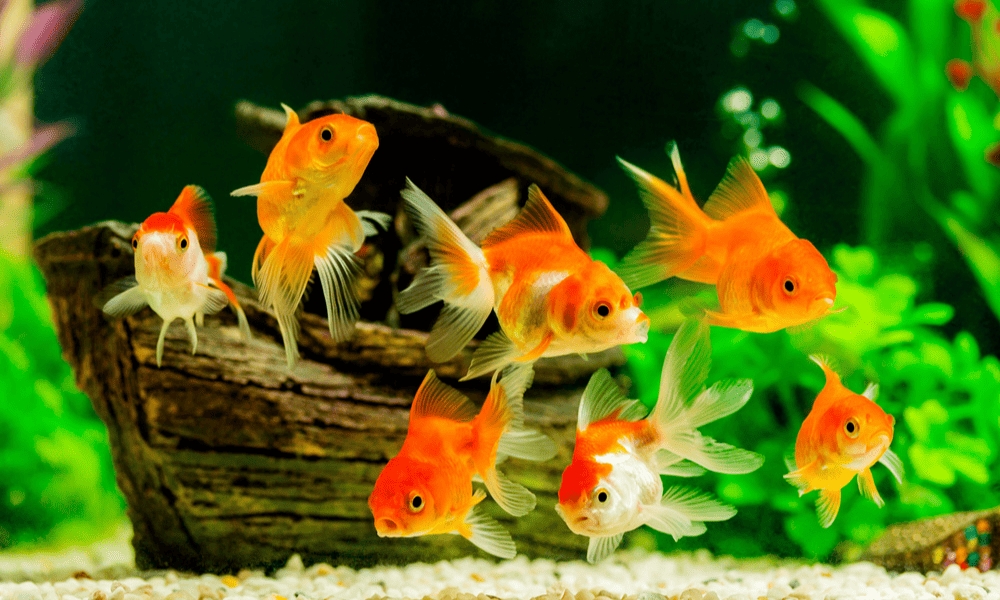
Goldfish are one of the most misunderstood fish when it comes to lifespan. Common goldfish and comet goldfish kept in appropriate conditions regularly live 15 to 20 years, and there are well-documented cases of goldfish living over 30 years. The world record holder, a goldfish named Tish in the UK, lived 43 years. Fancy goldfish varieties with compressed body shapes (orandas, ryukins, telescopes) typically live shorter lives of 10 to 15 years due to the health complications that come with their selective-bred body forms.
The dramatically short lifespans that most people associate with goldfish are almost entirely the result of inappropriate care: bowls, unfiltered tanks, overfeeding, and the mistaken belief that goldfish are a temporary pet. A goldfish given a properly sized, filtered aquarium or pond with good water quality is a multi-decade commitment.
Tropical Community Fish Lifespans
The popular neon tetra lives approximately 5 to 10 years under good conditions, though the average in home aquariums is often 3 to 5 years due to the sensitivity of this species to suboptimal water quality. Cardinal tetras are similarly long-lived at 4 to 8 years. Most small tetras, rasboras, and danios fall in the 3 to 8 year range. Harlequin rasboras frequently live 5 to 8 years; zebra danios have been documented living up to 5 years with records exceeding that in research settings.
Corydoras catfish are notably long-lived for small fish, commonly reaching 10 years and sometimes 15 or more. Bristlenose plecos live 10 to 15 years in well-maintained tanks. These longer lifespans among catfish species are consistent across the group: many armored catfish species outlive the more fragile small tetras and rasboras they share tanks with by a significant margin.
Cichlid Lifespans
Cichlids span a wide range of lifespans depending on size and species. African cichlids from the Rift Lakes (mbuna, peacocks, haps) typically live 8 to 15 years. Angelfish, one of the most popular cichlids in the hobby, live 10 to 15 years in good conditions, with some individuals reaching 20 years. Discus fish live approximately 10 to 15 years, though they are demanding enough that many specimens in captivity fall short of this potential.
Large South American cichlids like oscars live 10 to 15 years and sometimes longer. The flowerhorn cichlid, a hybrid species, lives 10 to 12 years. Central American cichlids including jack dempseys and firemouth cichlids typically live 8 to 12 years. As a general rule, larger cichlids tend to live longer than smaller ones, and cichlids as a group are among the longer-lived fish in the freshwater hobby.
Livebearers: Guppies, Mollies, and Platies
Guppies are relatively short-lived at 1.5 to 3 years, though some reports document guppies reaching 5 years in exceptional conditions. The intense selective breeding that produces the extravagant finnage of fancy guppies also tends to reduce their overall hardiness and lifespan compared to wild-type strains. Mollies live 3 to 5 years. Platies are similar at 3 to 5 years, and swordtails live approximately 3 to 5 years as well.
Livebearers are fast-maturing, fast-reproducing fish, which correlates with shorter lifespans across biology. Their energetic investment goes into early reproduction rather than longevity. Females of livebearer species often die sooner than males due to the physiological demands of continuous pregnancy, particularly in overstocked community tanks where they cannot escape male attention.
Long-Lived Fish: 20 Years and Beyond
Several aquarium fish species are capable of living for two decades or more when properly maintained. Koi are the most famous example, commonly living 20 to 30 years in well-managed ponds with records exceeding 200 years in Japan (the famous Hanako, verified at 226 years through scale ring analysis). Arowana species live 10 to 20 years in captivity with some reports of longer lifespans. Bowfin and some large sturgeon species kept in aquaculture settings have exceeded 100 years.
Among more commonly kept species, large plecostomus catfish like the common pleco can live 20 to 25 years in appropriate pond or large tank conditions. Freshwater rays live 15 to 25 years. Large catfish like redtail catfish and tiger shovelnose catfish can live 15 to 20 years, though they require massive aquariums or indoor ponds that most hobbyists cannot provide.
Saltwater Fish Lifespans
Reef fish lifespans are often surprising to marine hobbyists. The iconic clownfish lives 6 to 10 years in captivity, and wild clownfish have been documented living over 30 years in anemones. Tangs and surgeonfish, popular in reef tanks, live 30 to 45 years in the wild and often 10 to 20 years in well-maintained captive systems. Damselfish live 5 to 15 years. Royal gramma can live 5 to 10 years in reef tanks.
Larger marine fish kept in public aquariums reveal how long-lived many reef fish truly are under ideal conditions. Groupers can live 25 to 50 years, and many species that are killed within months in undersized home tanks would be decade-long companions in appropriate systems. Choosing marine fish appropriate to your tank size is especially important because so many reef species have the genetic potential for very long lives.
Signs of Aging in Fish
Unlike mammals, fish do not show obvious aging signs like gray hair or wrinkles, but there are observable changes in older fish. Color fading is one of the earliest signs, particularly loss of the bright pigmentation that defined the fish in its prime. Activity levels typically decrease: older fish swim more slowly, rest more frequently, and show less aggressive feeding behavior. Fin edges may become slightly ragged or develop minor abnormalities that are not disease-related but reflect cellular aging.
Older fish often become more susceptible to infections they would have resisted when younger, experiencing diseases like ich or bacterial infections from mild stressors that previously would not have affected them. Unexplained weight loss in an older fish that is eating normally can indicate organ deterioration. These changes are part of natural aging and should be responded to with reduced stress, careful water quality maintenance, and monitoring rather than aggressive medication.