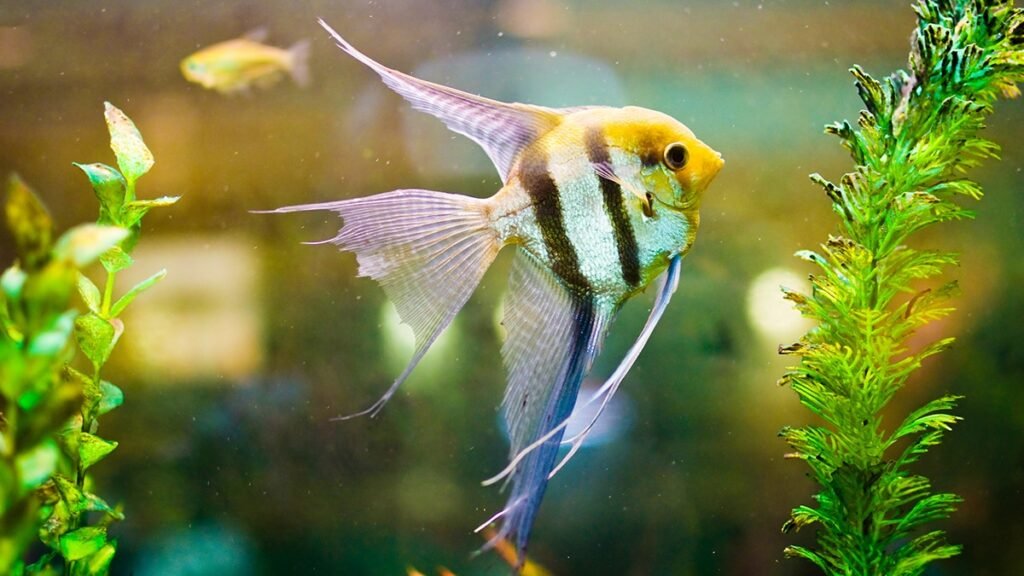
Angelfish are among the most iconic freshwater fish in the aquarium hobby. Their tall, elegant bodies, flowing fins, and graceful movement have made them a centerpiece species in community tanks for decades. Originating from the slow-moving rivers and floodplains of the Amazon Basin, they are hardy enough for intermediate hobbyists but reward the extra effort with stunning beauty.
Keeping angelfish successfully means understanding their specific needs: adequate vertical space, appropriate tankmates, a varied diet, and stable water conditions. Get those right, and you will enjoy one of the most charismatic and long-lived fish in the freshwater hobby.
Origins and Natural Habitat
Pterophyllum scalare, the common freshwater angelfish, is native to the Amazon River system in South America, including tributaries in Peru, Colombia, and Brazil. In the wild, they inhabit slow or still water with dense vegetation, submerged roots, and fallen timber. The water is typically warm, slightly acidic, and soft. Understanding their natural environment helps explain why they prefer certain tank conditions and why they behave the way they do in captivity.
Tank Size and Dimensions
Angelfish grow tall, so tank height matters as much as volume. Adults typically reach 6 inches in body length and up to 10 inches tall including fins, making standard 20-gallon tanks inadequate. A single adult angelfish needs at minimum a 29-gallon tank, and a 55-gallon or larger is recommended for a group of four or more. Tall tanks (18 inches or deeper) are preferable to wide, shallow ones. Avoid small tanks, as cramped conditions cause stress, fin damage, and aggression between individuals.
Water Parameters
Angelfish are adaptable but prefer water conditions close to their Amazonian origins. Aim for a temperature of 76 to 84°F (24 to 29°C), a pH between 6.0 and 7.5, and soft to moderately hard water. They are more sensitive to ammonia and nitrite than many common community fish, so consistent filtration and regular water changes are essential. Weekly water changes of 20 to 25 percent keep nitrates low and prevent the buildup of organic compounds that irritate their skin and fins. Sudden temperature drops or pH swings are a common cause of illness in angelfish.
Filtration and Water Flow
Good filtration is critical for angelfish, but strong water current is not welcome. In the wild, they live in calm waters and their tall, flat body shape is not built for swimming against strong flow. Use a canister filter or hang-on-back filter with the output directed at the water surface to oxygenate without creating a strong current in the body of the tank. A gentle, laminar flow is ideal. Sponge filters work well in angelfish breeding setups and fry tanks, as they provide biological filtration without the suction risk that powerheads or HOB filters pose to young fish.
Tank Decor and Layout
Angelfish appreciate a tank that mimics their natural habitat. Tall Amazon sword plants, vallisneria, and cryptocoryne species provide cover and reduce stress. Driftwood and tall rocks create territories and sightline breaks, which helps reduce aggression between tank members. Avoid sharp decorations that can damage their delicate fins. Leave open swimming areas in the middle and upper portions of the tank. A dark substrate like fine black sand flatters their coloration and makes them feel more secure.
Diet and Feeding
Angelfish are omnivores with a preference for meaty foods. In the wild, they eat small fish, invertebrates, and insects. In captivity, they readily accept high-quality flake or pellet food as a staple, but they thrive when given a varied diet. Supplement with frozen or live bloodworms, brine shrimp, daphnia, and mysis shrimp several times per week. Feed adults twice daily, offering only as much as they consume in 2 to 3 minutes. Overfeeding is a common mistake that leads to water quality problems and bloating. Juveniles can be fed three times daily to support fast growth.
Social Behavior and Compatibility
Angelfish are semi-aggressive cichlids that establish social hierarchies. A group of six or more juveniles raised together works well: they form a hierarchy early, and the tank is large enough to distribute aggression. Keeping just two often results in the stronger fish bullying the weaker one relentlessly. Suitable tankmates include peaceful, medium-to-large fish that are not small enough to be eaten. Tetras (larger species like black skirts), corydoras, gouramis, and plecos are generally compatible. Avoid fin-nipping species like tiger barbs and serpae tetras, which will stress angelfish by attacking their long fins.
Aggression and Territory
During breeding season, angelfish become significantly more territorial and aggressive. A paired male and female will claim a section of the tank and defend it vigorously against any fish that comes close. This is normal behavior, not a flaw. Managing it requires either providing a large enough tank so other fish can retreat, or moving the breeding pair to a dedicated breeding tank. Sightline breakers like tall plants and driftwood reduce line-of-sight aggression and allow subdominant fish to avoid confrontation.
Common Color Varieties
Decades of selective breeding have produced a wide range of angelfish varieties. Silver angelfish are closest to the wild type, with vertical black stripes on a silver body. Koi angelfish display patches of orange, white, and black. Marble angelfish have a random mosaic of black and gold. Veil angelfish have elongated, flowing fins, though they are slower swimmers and more vulnerable to fin-nipping tankmates. Albino angelfish are entirely white or cream with red eyes. Color intensity in all varieties is enhanced by a good diet, appropriate lighting, and a dark substrate.
Breeding Angelfish
Angelfish are relatively easy to breed once a compatible pair has formed. They are substrate spawners, laying eggs on flat surfaces: broad leaves, slate tiles, or the side of the tank itself. The female deposits rows of eggs while the male follows to fertilize them. Both parents fan and guard the eggs for 24 to 60 hours before they hatch. Fry are moved to a pit dug in the substrate and become free-swimming within a week. Feed fry baby brine shrimp and micro worms for the first few weeks. In community tanks, eggs are often eaten by other fish, so a separate breeding tank is ideal for raising a full clutch.
Health and Common Diseases
Angelfish are susceptible to several common freshwater diseases, especially when stressed or kept in poor conditions. Ich (white spot disease) is the most frequent issue, presenting as small white spots on the body and fins. It is treatable with heat therapy (raising temperature to 86°F) and commercial ich treatments. Hole-in-the-head disease (HITH), linked to poor water quality and nutritional deficiencies, causes pitting around the head and lateral line. Treating it requires improving water conditions and supplementing with vitamins. Fin rot from bacterial infection is common in tanks with poor hygiene or fin-nipping tankmates and responds well to antibacterial treatments.
Lifespan and Long-Term Care
With proper care, angelfish live 10 to 15 years, occasionally longer. They are a long-term commitment, not a beginner fish to be replaced seasonally. Consistent water changes, a varied diet, stable temperature, and a large enough tank are the pillars of long-term angelfish health. As they age, monitor them for signs of organ failure or tumor growth, which are more common in older individuals. Many experienced fishkeepers develop a strong bond with their angelfish, which are intelligent enough to recognize their owners and often beg for food at the front of the glass.