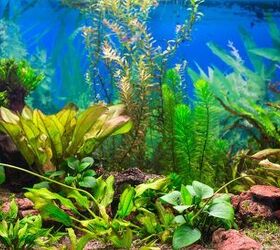
Live plants transform an aquarium from a simple glass box into a thriving underwater ecosystem. They provide oxygen, absorb harmful ammonia and nitrates, offer shelter for fish, and make the tank look stunning. For beginners, the good news is that many aquatic plants are genuinely easy to keep, even without special lighting or fertilizers.
The key to success with beginner plants is choosing species that tolerate a wide range of water conditions and do not demand high-tech setups. The plants on this list thrive under standard aquarium lighting, grow in ordinary gravel or sand, and forgive occasional neglect. Start with any of these, and you will quickly see why planted tanks are so rewarding.
Java Fern (Microsorum pteropus)
Java fern is arguably the most popular beginner plant in the hobby, and for good reason. It tolerates low light, grows slowly and steadily, and adapts to a huge range of water temperatures from 60 to 83°F. The broad, leathery leaves are left alone by most fish, making it ideal for cichlid or goldfish tanks where plants often get eaten or uprooted.
One important rule: never bury the rhizome in substrate. Attach java fern to driftwood or rock using thread or glue, and let the roots grip the surface naturally. New plantlets sprout from the leaf edges over time, giving you free plants to spread around the tank.
Anubias (Anubias barteri and varieties)
Anubias is another bulletproof choice for new hobbyists. Like java fern, it must be attached to hardscape rather than buried, as a submerged rhizome will rot. It grows very slowly, which means it rarely needs trimming, and its thick, waxy leaves resist herbivorous fish. Anubias will even grow in near-darkness, though it does better with moderate light.
Anubias produces small white flowers underwater, which is a pleasant surprise for new keepers. The nano varieties like Anubias nana work perfectly in small tanks, while larger varieties fill out mid and background zones in bigger setups.
Amazon Sword (Echinodorus bleheri)
The Amazon sword is a classic background plant with long, graceful green leaves that can reach 20 inches in a large tank. It grows well under moderate lighting and benefits from root tabs in the substrate since it feeds heavily through its roots. Unlike rhizome plants, it does get planted in gravel or sand, where it anchors itself firmly over time.
A healthy Amazon sword becomes a focal centerpiece in any aquarium. It propagates by sending out runners with small daughter plants that can be separated once they develop their own roots. It suits community tanks perfectly and provides excellent cover for shy fish and fry.
Hornwort (Ceratophyllum demersum)
Hornwort is one of the fastest-growing aquarium plants available, which makes it excellent for cycling new tanks and keeping nutrient levels in check. It can float freely at the surface or be loosely anchored in substrate. Under good light it grows so rapidly that you may need to trim it weekly, but that growth also means it outcompetes algae by consuming nutrients aggressively.
It sheds fine needles when stressed, which can look messy at first, but once it settles into your tank conditions it stabilizes. Hornwort is particularly useful in goldfish tanks and ponds, as goldfish usually leave it alone despite its soft texture.
Water Wisteria (Hygrophila difformis)
Water wisteria is a fast-growing stem plant with delicate, lacy leaves that give tanks a lush, full look quickly. It thrives under moderate to bright light and grows well in most substrates. Trim cuttings and replant them directly in the gravel to propagate almost endlessly without any special equipment.
The leaf shape of water wisteria actually changes depending on light intensity, becoming more deeply divided in brighter conditions. This adaptability makes it forgiving for beginners still dialing in their setup. It is also excellent at absorbing nitrates, which helps keep water quality stable between water changes.
Dwarf Sagittaria (Sagittaria subulata)
Dwarf sagittaria is a grass-like plant that creates a natural-looking carpet in the foreground of an aquarium. Unlike most carpeting plants, it does not require CO2 injection or high light. It spreads via runners, gradually filling in open substrate areas over several weeks. In lower light it stays shorter, making it ideal as a foreground plant that stays tidy.
It works especially well in community tanks and is largely ignored by most fish species. The thin green blades provide excellent grazing surfaces for small invertebrates like shrimp and snails. Plant individual stems a few inches apart and let them fill in naturally.
Vallisneria (Vallisneria spiralis)
Vallisneria, often called val or eelgrass, produces long ribbon-like leaves that sway gently in the current, giving tanks a natural, dynamic appearance. It is one of the easiest background plants available, tolerating hard water, alkaline conditions, and moderate to bright light. It spreads aggressively via runners, making it an excellent choice for filling the back of a tank quickly.
Vallisneria does not mix well with certain chemical fertilizers, particularly those containing glutaraldehyde, which can melt the leaves. Otherwise, it is extremely undemanding. It is particularly popular in African cichlid tanks where the alkaline, hard water conditions suit it perfectly.
Java Moss (Taxiphyllum barbieri)
Java moss is a versatile, undemanding moss that can be tied to rocks, driftwood, or mesh to create lush green textures throughout the aquarium. It grows in virtually any light level and does not require CO2 or fertilizers. Small fish and shrimp love hiding in it, and it provides an excellent spawning site for egg-scattering species.
Left untrimmed it forms large, billowing clumps. Trimmed regularly it can be shaped into walls, carpets, or precise topiary forms. Java moss is one of the most useful plants a beginner can keep because it works in almost any tank at any stage of the hobby.
Cryptocoryne (Crypt) Species
Cryptocorynes, commonly called crypts, are rosette plants that come in dozens of species ranging from small foreground types to tall background varieties. They grow slowly but become stunning focal points over time. They are extremely adaptable to low light and do not need CO2, making them perfect for low-tech setups. Be aware of crypt melt: leaves may die back when the plant is first introduced to a new tank, but new growth almost always emerges from the roots within a few weeks.
Once established, crypts are remarkably tough and long-lived. Popular beginner species include Cryptocoryne wendtii (brown or green), C. lucens, and C. parva. They propagate via runners and over time fill an area beautifully without becoming invasive.
Floating Plants: Water Lettuce and Frogbit
Floating plants like water lettuce (Pistia stratiotes) and Amazon frogbit (Limnobium laevigatum) are among the easiest plants in the hobby. They float on the surface, absorb excess nutrients through long dangling roots, and provide shade that many fish appreciate. They multiply rapidly and can be scooped out when the tank gets overcrowded, making excess plants easy to remove.
Floating plants are especially useful during cycling and in tanks with fish that prefer subdued lighting, like bettas. Their roots also act as hiding spots for fry and shrimp. The main limitation is that surface agitation from filters or air stones can damage them, so they suit calmer water conditions best.
Tips for Keeping Beginner Plants Healthy
Even easy plants benefit from a few basic practices. A standard aquarium light run for 8 to 10 hours per day is sufficient for all the plants on this list. Liquid fertilizer dosed weekly helps compensate for nutrients not provided by fish waste alone, and root tabs placed near heavy root feeders like Amazon swords give them the iron and minerals they need. Partial water changes of 25 to 30 percent weekly also prevent nutrient imbalances that lead to algae outbreaks.
Avoid overcrowding at first. Start with two or three species, observe how they grow in your specific water and light conditions, then add more once you understand your tank. Planted tanks become easier and more intuitive over time as you learn what your setup naturally favors.