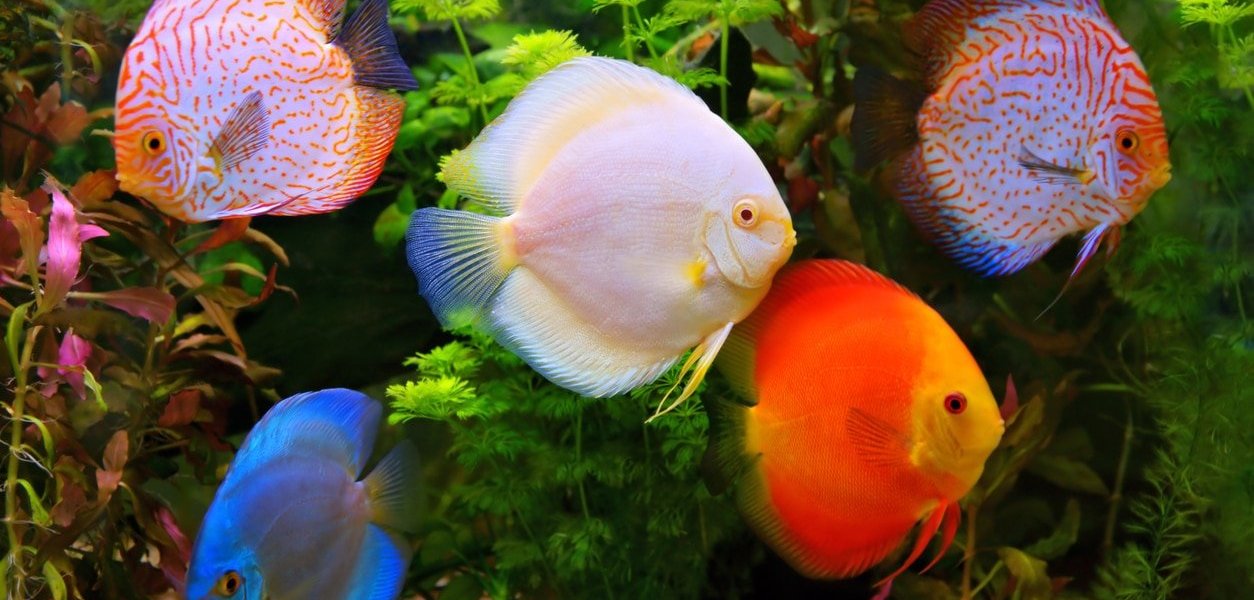
Discus fish have earned the title "King of the Aquarium" for good reason. With their perfectly round, disc-shaped bodies and extraordinary range of colors, from blazing red and electric blue to intricate patterns of white and orange, discus are among the most visually stunning fish in the freshwater hobby. They are also among the most demanding to keep.
Discus are not a beginner fish. They require stable, pristine water conditions, high temperatures, frequent water changes, and a careful diet. But for experienced hobbyists willing to commit to their needs, discus reward that dedication with unmatched beauty and surprisingly interactive, personable behavior.
Natural Habitat and Origins
Symphysodon, the genus containing all discus species, originates from the slow-moving blackwater and clearwater tributaries of the Amazon River Basin in South America. Their natural environment is characterized by extremely warm, acidic, soft water, with temperatures often above 86 degrees F (30 degrees C) and pH values as low as 4.5 to 6.0. Dissolved mineral content is very low. This unique, stable environment is why discus are so sensitive to water parameter fluctuations that most other fish would barely notice. In the wild, they live in groups among submerged roots and fallen trees, forming complex social hierarchies.
Tank Size Requirements
Discus grow large: adults typically reach 6 to 8 inches in diameter, with some exceptional specimens approaching 9 inches. A single adult discus requires a minimum of a 50-gallon tank, but discus are social fish that must be kept in groups. A group of five or six adults needs at least a 75 to 100-gallon tank, and serious discus keepers often use 125 gallons or larger. Tank height is important too, as discus are tall fish that need vertical space. Avoid wide, shallow tanks designed for other fish. The extra volume also provides a buffer against rapid parameter swings, which is critical for fish as sensitive as discus.
Water Temperature
Temperature is arguably the single most critical parameter for discus. They require 82 to 88 degrees F (28 to 31 degrees C) consistently, significantly higher than most tropical fish. Most fishkeepers use two heaters in a discus tank: one set to the target temperature and a backup set 2 degrees lower, so if the primary heater fails, the backup prevents a dangerous temperature drop. Quality heaters with accurate thermostats are essential. The elevated temperature suppresses many pathogens and parasites that thrive at lower temperatures, and discus kept at insufficient temperatures are far more susceptible to disease. The high temperature also means discus tanks need excellent surface agitation for oxygen.
Water Quality and Chemistry
Discus require near-zero ammonia and nitrite and very low nitrate, ideally below 20 ppm and preferably below 10 ppm. pH should be maintained between 6.0 and 7.0, with 6.5 being optimal for most captive-bred strains. Wild-caught discus prefer pH as low as 5.5. Water hardness should be soft to moderately soft. Many discus keepers use reverse osmosis (RO) water remineralized to the target hardness, as tap water in many areas is too hard and alkaline. This level of water chemistry control is significantly more involved than keeping most other freshwater fish and represents the core challenge of discus keeping.
Filtration and Water Changes
Discus require both powerful filtration and frequent water changes. The high temperature accelerates metabolism and waste production, and discus are sensitive to the compounds that accumulate in the water column. Large canister filters are the most popular choice, providing mechanical and biological filtration without introducing unwanted current. Water flow should be gentle: discus do not appreciate strong currents. Most serious discus keepers perform daily or every-other-day water changes of 25 to 50 percent, using water pre-treated and matched to the tank temperature. Skipping water changes even for a few days can cause visible stress and increased disease susceptibility in discus.
Feeding Discus: Diet and Nutrition
Discus are carnivorous with a preference for meaty foods. In the wild they consume invertebrates, insect larvae, and organic detritus. In captivity, many experienced keepers use a homemade beef heart mix as a staple: beef heart blended with shrimp, various vegetables, and vitamin supplements, then frozen and cut into small portions. Commercially, high-protein discus pellets and frozen bloodworms are popular options. Feed discus three to five times daily, offering only what they consume in 3 to 4 minutes. They are slow, deliberate eaters that may be outcompeted by faster tankmates, which is one reason many discus keepers maintain species-only tanks.
Tankmates for Discus
The high temperature requirements of discus significantly limit compatible tankmates, as most common tropical fish are stressed at 86 degrees F. Species that tolerate discus temperatures include cardinal tetras (which actually thrive at discus temperatures), rummy-nose tetras, ram cichlids, corydoras sterbai (one of the few corydoras that tolerates high heat), and various small rasboras. Avoid large fish that may intimidate discus, fin-nippers, and fast aggressive eaters that out-compete discus for food. Many dedicated hobbyists keep discus in species-only setups or with only a small school of cardinal tetras for visual contrast.
Social Dynamics and Hierarchy
Discus are social fish that live in groups and establish a clear pecking order. In a healthy group, you will observe subtle dominance displays: darkening of color, slight fin flaring, mild chasing. This is normal. Problems arise in groups that are too small. In a group of three or four, the dominant fish may relentlessly harass the most submissive individual, causing chronic stress and failure to thrive. Groups of five or more distribute aggression more evenly and function more harmoniously. If one fish is consistently hiding, refusing food, and showing dark or pale coloration, it is being bullied and may need to be moved to a separate tank temporarily.
Selecting and Purchasing Discus
The source of your discus matters enormously. Wild-caught discus from the Amazon are more sensitive, harder to acclimate, and more expensive, but they carry a unique appearance not found in captive-bred strains. Captive-bred discus, now available in dozens of color varieties, are more adaptable to tap water and captive conditions and are the better choice for most hobbyists. Look for fish that are eating actively at the store, have full round bodies (not sunken sides, which indicate internal parasites), bright clear eyes, and good body depth relative to their size. Avoid discus with a pencil shape, meaning their body is tall but very thin front-to-back.
Common Diseases and Health Issues
Discus are susceptible to several specific health problems. Hole-in-the-head disease (HITH) causes pitting erosions around the lateral line and head, linked to poor water quality and a deficiency of vitamins and minerals. Treatment involves improving water quality, increasing water change frequency, and supplementing with vitamin C and other trace minerals. Internal parasites, particularly Hexamita (spironucleus) protozoa and intestinal worms, are extremely common in discus and cause white, stringy feces, weight loss, and darkening of color. Metronidazole is the primary treatment. Capillaria worms cause similar symptoms and respond to fenbendazole or levamisole.
Breeding Discus
Discus are substrate spawners that form monogamous pairs and exhibit remarkable parental care. The pair cleans a flat surface, typically a broad leaf or a ceramic cone placed in the tank specifically for this purpose, and deposits 100 to 300 eggs. Both parents fan and guard the eggs until they hatch in about 48 to 60 hours. The fry initially cling to the parents and feed on a nutritious mucus secreted from the skin of the parents, a behavior unique among cichlids and one of the most fascinating phenomena in the aquarium hobby. Fry begin accepting baby brine shrimp and micro worms after about two weeks. Breeding discus successfully is considered a mark of mastery in the hobby.
Is Discus Keeping Right for You?
Before committing to discus, assess honestly whether you can meet their demands. You need a dedicated tank of at least 75 gallons, the ability to perform frequent large water changes (daily if possible), access to quality food, and the budget for potentially expensive treatments if disease occurs. Discus are not cheap fish: quality captive-bred specimens cost $30 to $80 each, and you need a minimum group of five or six. However, if you enjoy the challenge of mastering advanced aquarium husbandry, few fish in the freshwater hobby offer as much reward. The combination of social intelligence, parental behavior, and sheer visual magnificence makes discus one of the most compelling fish you can keep.