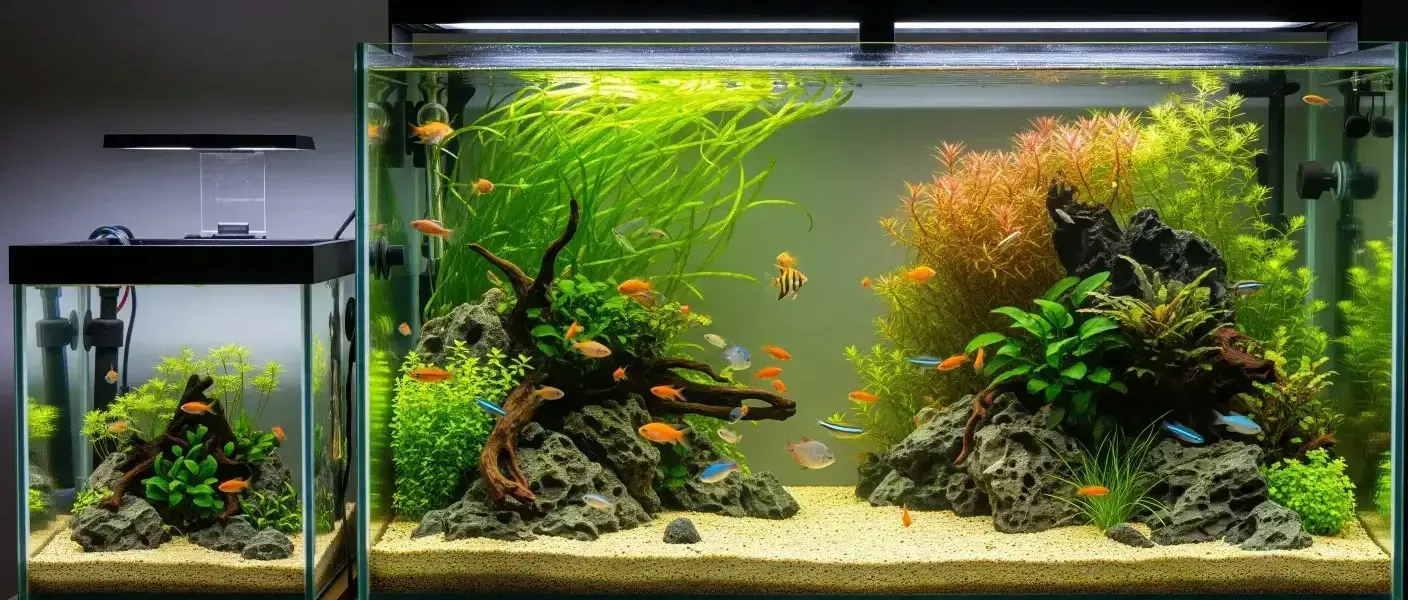
One of the most common mistakes new fishkeepers make is choosing a tank that is too small for the fish they want to keep. Undersized tanks lead to poor water quality, stunted growth, aggressive behavior, and shortened fish lifespans. Picking the right tank size before buying fish is one of the single most impactful decisions you will make as a hobbyist.
There is no universal rule that applies to every fish, but there are clear guidelines for every type of setup. This guide walks through the key factors that determine appropriate tank size, gives specific recommendations for common fish, and helps you match your living situation and budget to a tank that will genuinely support healthy fish.
Why Tank Size Matters More Than You Think
Fish do not simply "grow to the size of their tank," despite this widely repeated claim. What actually happens in an undersized tank is that fish become stunted: their internal organs continue growing even when external growth slows, causing chronic health problems. Fish kept in tanks that are too small live shorter, more stressful lives and are far more susceptible to disease.
Water volume is also directly tied to water quality. A larger volume of water dilutes ammonia, nitrites, and nitrates more effectively, making the tank more forgiving of feeding mistakes and filter inefficiencies. In a 5-gallon tank, a small spike in ammonia becomes dangerous within hours. In a 40-gallon tank, the same spike is buffered and handled by the biological filter before reaching lethal levels.
The One Inch Per Gallon Rule and Its Limits
The old "one inch of fish per gallon" rule is a rough starting point but breaks down quickly. It works reasonably well for small, slim-bodied fish like tetras and danios, where one inch of fish body mass genuinely corresponds to roughly one gallon of water. But it fails badly for larger or heavier-bodied fish. A 6-inch oscar, for example, produces far more waste than six 1-inch neon tetras and needs far more than 6 gallons.
A more useful approach is to look at species-specific recommendations from experienced keepers and reputable aquarium resources. The inch-per-gallon rule also does not account for swimming behavior: active schooling fish like giant danios need horizontal swimming space, while tall fish like angelfish need vertical height. Always research your specific species rather than relying on a single formula.
Minimum Tank Sizes for Popular Fish
Here are reliable minimums for commonly kept species. Betta fish need a minimum of 5 gallons, ideally 10. Neon tetras, guppies, and small schooling fish do well in 10 gallons for a small school, but 20 gallons allows for a proper-sized group. Goldfish (fancy varieties) need 20 to 30 gallons for the first fish and 10 additional gallons per extra fish. Common and comet goldfish need 40 gallons minimum, as they grow much larger.
Dwarf cichlids like apistogrammas and German blue rams need 20 to 30 gallons. Angelfish need at least 29 gallons for a pair, with taller tanks preferred due to their vertical body shape. Oscar cichlids need a minimum of 55 to 75 gallons for a single fish. Discus need 50 to 75 gallons and are best kept in groups of five or more in 100-gallon setups. These minimums represent the bare minimum for acceptable health, not ideal conditions.
Schooling Fish: Group Size Affects Tank Size
Many popular aquarium fish are schooling species that become stressed when kept alone or in groups that are too small. Neon tetras, harlequin rasboras, corydoras catfish, and most danios all need to be kept in groups of at least six. The tank size you choose must accommodate not just the fish you want, but enough of them to form a proper school.
A single neon tetra in a 10-gallon tank is technically not overstocked by bioload, but the fish will be unhappy and display pale coloration and shy, erratic behavior. Ten neon tetras in a 20-gallon tank with plants will display vibrant color and natural schooling behavior. When planning tank size, always calculate based on the minimum recommended school size for your chosen species.
Territorial Fish and Space Requirements
Some fish are territorial and need adequate space to establish and defend territories without constant conflict. Cichlids are the classic example: a pair of convict cichlids in a 30-gallon tank will establish clear territories and breed successfully, but the same pair in a 15-gallon tank will fight destructively because there is insufficient space for each to claim an area. Even peaceful territorial fish like bristlenose plecos will chase others of their own species if the tank lacks multiple hiding spots.
For territorial fish, the physical layout of the tank matters as much as raw water volume. Rocks, caves, plants, and driftwood break up sightlines and create natural territory boundaries. A 40-gallon breeder tank with heavy rockwork can comfortably house species that would conflict in a visually open 55-gallon tank. When shopping for a tank for cichlids or other territorial species, consider both dimensions and decoration potential.
Long Tanks vs. Tall Tanks
Aquarium size is not just about gallons. The footprint dimensions of a tank (length and width) determine usable swimming space for most fish, which is often more important than total volume. A tall, narrow 20-gallon tank and a long, shallow 20-gallon long tank hold the same water volume, but the long tank has twice the bottom area and far more horizontal swimming space for active fish.
For most community fish, longer tanks are preferable to tall ones. Standard 20-gallon long (30 inches x 12 inches) tanks are significantly better for schooling fish than 20-gallon tall tanks (24 inches x 12 inches). Tall tanks are better suited for deep-bodied fish like angelfish or discus that swim in all vertical zones. When comparing tanks of similar volume, prioritize footprint length for community setups.
Thinking About Future Stocking
Many hobbyists experience what is called MTS (multiple tank syndrome): you start with a small tank, immediately wish it were bigger, and end up buying progressively larger tanks. Save yourself time and money by planning for the fish you actually want to keep, not the smallest fish currently in the store. A juvenile oscar looks harmless in a 20-gallon, but you will need a 75-gallon within a year.
If you are uncertain which fish you want, start with a 20 or 29-gallon tank. These mid-size tanks are versatile enough to accommodate a wide range of community fish, are forgiving of beginner mistakes due to their water volume, and do not require an enormous financial commitment. They are also easy to resell or repurpose if your interests change.
Saltwater Tanks: Larger Minimums Apply
Saltwater (reef and fish-only) tanks generally require larger minimum sizes than their freshwater equivalents. Water chemistry in saltwater tanks is more complex and less forgiving of small volumes, where parameters like salinity, alkalinity, and calcium can shift rapidly. The typical advice for beginner saltwater hobbyists is to start with no less than 30 gallons, with 40 to 75 gallons being the practical minimum for a reef tank with corals.
Popular saltwater fish also have significant space requirements. Clownfish can technically be kept in 10 gallons, but most other reef-compatible fish like tangs, angelfish, and wrasses need 75 gallons or more. Research saltwater fish requirements carefully, as the beautiful species shown in pet stores are often large, active swimmers that need substantial space to thrive.
Practical Tips for Choosing Your Tank
Buy the largest tank your space, budget, and maintenance tolerance allow. Bigger tanks are more stable, more forgiving, and often not proportionally more expensive to maintain. The fish you can keep in a 75-gallon tank are dramatically more diverse and impressive than what fits in a 20-gallon. If you are serious about the hobby, a larger tank will save you from upgrading in frustration within the first year.
Before buying any fish, write out your full stocking plan: which species, how many of each, and what size they reach as adults. Then look up the recommended tank size for each species and use the largest recommendation as your baseline. Add a 20 to 30 percent buffer for stability and future additions. This planning process takes 30 minutes and prevents months of problems down the road.