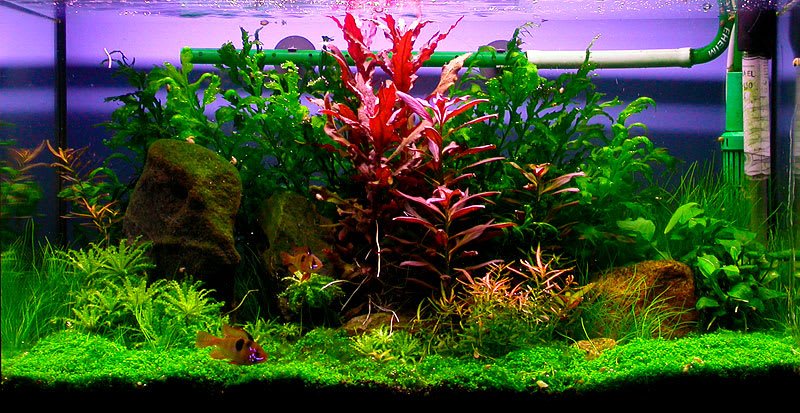
The case for live plants
Live plants do things fake plants cannot. They absorb ammonia, nitrite, and nitrate directly from the water, which reduces the burden on your filter and extends time between water changes. They produce oxygen during the day through photosynthesis. They provide hiding places and grazing surfaces for fish. In planted tanks, fish show less stress behavior, more natural activity, and often better color. The biological benefits are real and measurable.
The case for fake plants
Fake plants require no special lighting, no fertilizers, no CO2 supplementation, and no trimming. They never melt, never die, and never introduce pests like snails or algae spores into a new tank. For a busy aquarist who wants the visual effect of a planted tank without the additional complexity, high-quality silk or plastic plants can look excellent under good lighting. They are also the right choice for tanks with fish that eat or destroy live plants, like goldfish, large cichlids, and silver dollars.
What live plants actually need
The difficulty of live plants depends heavily on which plants you choose. Easy beginner plants like java fern, anubias, java moss, and hornwort grow in low light, need no CO2, and require minimal fertilization. These are genuinely easy to keep and a good starting point. Demanding plants like carpeting species, stem plants requiring high light, or plants that need pressurized CO2 injection are a different category entirely and require a significant investment in equipment and knowledge.
Lighting: the biggest variable
Most aquarium hoods come with lights designed for visibility, not plant growth. Low-light plants can survive under standard lighting, but growth will be slow. To grow a wider range of plants, you need a light with a PAR (Photosynthetically Active Radiation) rating appropriate for plants, typically from brands like Fluval, Finnex, or Chihiros. Too much light without CO2 and nutrients causes algae explosions, which is one of the most common problems aquarists encounter when trying to grow plants for the first time.
The pest risk with live plants
Live plants purchased from aquarium stores can carry hitchhikers: bladder snails, pond snails, hydra, planaria, and various algae spores. These are rarely dangerous to fish but can be difficult to control once established. Most experienced planted tank keepers either accept bladder snails as harmless or use a diluted bleach dip or alum soak on new plants before introducing them. This eliminates most hitchhikers without harming the plant.
Which is right for your tank?
For tanks with plant-destroying fish like goldfish, large cichlids, or herbivorous species, fake plants are the practical choice. For community tanks with small fish, live plants add real biological value and a naturalistic environment that benefits the fish. A hybrid approach works well for many aquarists: live plants in the background and midground where they thrive, with a few silk plants in areas where live plants struggle or where fish tend to uproot them.