Fish cannot tell you when something is wrong. By the time illness becomes obvious to a casual observer, the fish has often been sick for days. Early detection is not about being paranoid; it is about knowing what normal looks like for your fish so that anything off registers immediately. Spend a few minutes watching your tank each day. It pays off.
This guide covers the most common signs of illness in freshwater fish, what each symptom usually means, and what to do about it. Some require immediate action. Others give you a few days to diagnose before things become critical. Knowing the difference matters.
Lethargy and Unusual Stillness
Every fish has a characteristic activity level. A zebra danio that suddenly sits motionless at the bottom is telling you something is wrong. A betta that hovers near the surface without moving is not resting; it is struggling. Lethargy is one of the earliest and most universal signs of illness in fish, which makes it easy to dismiss as normal behavior if you do not know what to look for.
Test your water immediately. Ammonia and nitrite poisoning cause lethargy before any external symptoms appear. Low oxygen, wrong temperature, and the early stages of most infections all present the same way. Rule out water quality first before assuming disease.
Start with a full water parameter test. If ammonia or nitrite is above zero, do a 30% water change immediately.
Loss of Appetite
A fish that refuses food for more than two days is worth paying attention to. Some fish skip a meal occasionally, especially after a water change or if they are stressed by a new environment. But consistent food refusal over several days almost always signals something is wrong, whether it is internal parasites, bacterial infection, poor water quality, or stress from incompatible tank mates.
Watch how the fish reacts to food. Does it approach the food and then spit it out? That can indicate mouth or throat issues, or internal pain. Does it ignore food completely and stay hidden? That suggests systemic illness or severe stress. Note whether other fish in the tank are eating normally, which helps narrow down whether the problem is tank-wide or specific to one fish.
Abnormal Swimming Patterns
Fish have a normal, characteristic swimming posture. When that changes, something is wrong. Common abnormal patterns include swimming sideways or upside down, spinning in tight circles, darting erratically, listing to one side, or struggling to maintain depth in the water column. Swimming upside down or sideways almost always indicates a swim bladder problem, which can be caused by constipation, infection, or physical injury.
A fish that spins in circles or swims in a corkscrew pattern may have a neurological issue or a severe internal infection. Fish that dart suddenly and scratch against rocks or the substrate ("flashing") are usually responding to irritation on the skin, a hallmark of external parasites like ich or velvet. If you see flashing, inspect the fish closely under good light for white spots or a dusty coating on the skin.
White Spots or Unusual Patches on the Body
Ich (white spot disease) is one of the most common diseases in freshwater aquariums. It looks like someone sprinkled fine grains of salt across the fish's body and fins. It is caused by a parasite and spreads rapidly in a tank. A few spots today can become full body coverage within 48 hours. Treat the entire tank immediately with an ich medication containing malachite green or formalin, raise the temperature gradually to around 84°F to speed up the parasite's life cycle, and remove activated carbon from the filter.
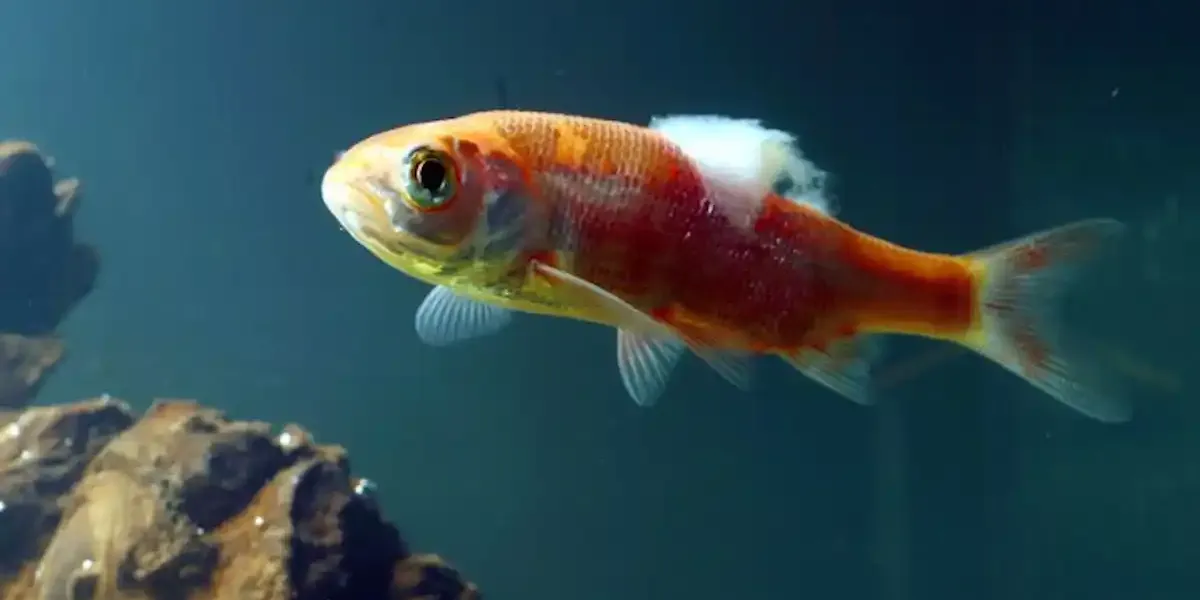
Other patches to watch for: white fluffy tufts that look like cotton wool indicate a fungal infection, usually secondary to a wound or fin damage. Gray or whitish mucus coating across the body suggests columnaris, a bacterial infection that progresses quickly and requires antibiotic treatment. Any patch that was not there yesterday needs to be identified today.
Fin Rot
Fin rot starts at the edges of the fins and works inward. Early fin rot looks like ragged, fraying fin tips, sometimes with a dark border or a slightly bloody edge. As it progresses, the fins erode back toward the body. In severe cases, the infection reaches the base of the fin and the body itself, at which point survival odds drop sharply.
Fin rot is caused by bacteria, almost always triggered or worsened by poor water quality. The fix starts with the water. Do a 25% water change, vacuum the substrate, and test your parameters. Then treat with an antibacterial medication. Caught early, fin rot is very treatable and fins will often regrow fully over several weeks.
Bloating or Pinecone Scales
A fish with a swollen, bloated abdomen could have several things going on: constipation (common, usually treatable), internal parasites, egg binding in females, or dropsy. Dropsy is the one to fear. It is not a disease itself but a symptom of severe internal organ failure, usually kidney failure caused by bacterial infection. The classic sign is scales that stick out from the body like a pinecone when viewed from above.
Dropsy is often fatal by the time it is visible. Isolate the fish in a hospital tank immediately. Treatment with Epsom salt baths and antibiotics like Seachem Kanaplex can help in early stages, but the prognosis is poor once the pineconing is pronounced. Focus on keeping the rest of the tank healthy and preventing spread. If only one fish is affected and water quality is good, the others are likely safe.
Gasping at the Surface
Fish that congregate at the water's surface and appear to be gasping for air are experiencing oxygen deprivation. This can be caused by overcrowding, a failed or clogged filter, high water temperature (warm water holds less dissolved oxygen), or a sudden ammonia spike that damages gill tissue. If you see multiple fish gasping at once, this is an emergency.
Immediately increase surface agitation by adding an air stone or adjusting the filter outlet to create more surface movement. Test for ammonia. Do a 30 to 40% water change with dechlorinated water at the correct temperature. Check that the filter is running properly. One fish occasionally surfacing for air may just be a labyrinth fish like a betta or gourami doing what they naturally do. A group of fish doing it together is a crisis.
Color Changes or Fading
Fish color is a direct indicator of health. Vibrant color means a healthy, unstressed fish. Fading, darkening, blotchy coloration, or a gray or pale appearance usually means something is wrong. Stress is the most common cause, whether from poor water quality, incompatible tank mates, wrong temperature, or inadequate hiding places. Some diseases also cause color changes directly: velvet gives fish a gold or rust-colored dusty appearance, and certain bacterial infections cause dark patches or bloody streaks.
If a fish that was bright yesterday looks washed out today, test the water, observe whether other fish are bullying it, and check the temperature. Sometimes color loss is gradual and hard to notice unless you are paying attention. Photos taken over time can help you catch slow changes you might otherwise miss.
Hiding Constantly
Some fish are naturally shy and like cover. But a fish that previously swam openly and has suddenly started hiding all day is stressed or sick. Check for bullying first. Watch the tank when you are not obviously present and see whether one fish is chasing or nipping others. If aggression is ruled out, check water parameters.
Persistent hiding combined with any other symptom on this list means the fish should be moved to a hospital tank for closer observation and treatment. A hospital tank does not need to be elaborate: a spare 5 to 10 gallon tank with a heater, a sponge filter, and some cover is enough. Treating sick fish in isolation protects the main tank and lets you dose medication without affecting fish that do not need it.
Rapid or Labored Breathing
Watch your fish's gill movement. Healthy fish breathe at a calm, steady rate. Rapid gill movement, where the gill covers pump quickly and visibly, indicates respiratory distress. This can be caused by gill flukes (parasites that attach to the gills), ammonia poisoning (which burns gill tissue), low dissolved oxygen, or bacterial gill disease. It is often hard to spot at a glance, which is why watching your fish regularly matters.
Gill flukes require an antiparasitic treatment. Ammonia damage requires an immediate water change and removal of the ammonia source. If rapid breathing appears alongside other symptoms, isolate the fish, test the water, and begin treatment based on your best diagnosis. When in doubt, a broad-spectrum treatment for both parasites and bacteria covers the most likely causes while you gather more information.