Of all the concepts a new fishkeeper encounters, biological filtration is the most important to understand. It is the reason a brand-new aquarium can kill fish even with a working filter, and it is the reason an established tank can handle feeding mistakes that would be lethal to a newly set-up one. Understanding how it works transforms you from someone who keeps fish to someone who truly manages a living aquatic ecosystem.
The process behind biological filtration is called the nitrogen cycle, and it is the foundation of every healthy aquarium. Once you understand it, many previously mysterious aspects of fishkeeping, including why tanks need to cycle, why adding too many fish at once causes problems, and why filter changes can crash a tank, will make complete sense.
The Problem: Fish Waste Is Toxic
Every fish constantly produces waste. Through their gills and in their urine, fish excrete ammonia (NH3), a colorless compound that is highly toxic to aquatic life even at very low concentrations. In an aquarium without biological filtration, ammonia accumulates rapidly. At levels above 0.5 ppm (parts per million), ammonia damages fish gills. At levels above 2 to 3 ppm, it becomes lethal within hours.
Uneaten food and decaying plant matter also break down into ammonia as bacteria consume organic material. In a closed aquarium system with no means of converting or removing ammonia, the water quickly becomes a toxic environment regardless of how clean it looks. This is why fish bowls and unfiltered tanks are so dangerous: they lack the biological mechanism to process this constant stream of waste.
Nitrifying Bacteria: The Key Players
The solution to the ammonia problem is a community of beneficial bacteria that colonize the surfaces inside your aquarium, particularly the filter media. Two main groups of bacteria are involved. The first group, primarily Nitrosomonas species, converts ammonia into nitrite (NO2). Nitrite is also toxic to fish, but less immediately lethal than ammonia in most cases.
The second group, primarily Nitrospira species, converts nitrite into nitrate (NO3). Nitrate is relatively non-toxic at low to moderate concentrations (below 40 ppm for most fish, lower for sensitive species). It accumulates over time and is removed through regular partial water changes or absorbed by live plants. These two groups of bacteria working together form the core of biological filtration.
The Nitrogen Cycle Explained
The full nitrogen cycle in an aquarium follows a predictable sequence. Fish produce ammonia. Nitrosomonas bacteria convert ammonia to nitrite. Nitrospira bacteria convert nitrite to nitrate. Nitrate is removed by water changes or plant uptake. In a fully cycled tank, this process happens continuously and automatically, keeping ammonia and nitrite at zero parts per million at all times.
The challenge is that these beneficial bacteria must be cultivated from scratch in a new tank. They occur naturally in aquatic environments and will colonize a new aquarium on their own, but the process takes 4 to 8 weeks under normal conditions. During this establishment period, called the cycling phase, ammonia and nitrite can spike to dangerous levels if fish are present before the bacterial populations are large enough to process the waste load.
Where Beneficial Bacteria Live
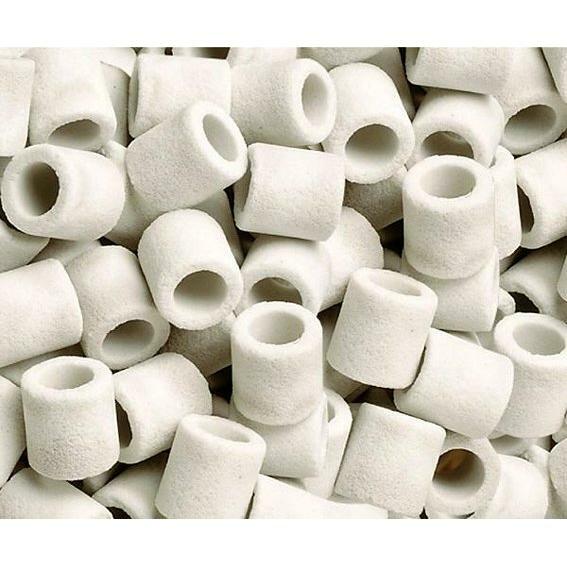
Beneficial nitrifying bacteria are not free-floating in the water column. They attach to surfaces and form biofilms, thin microbial communities that cling to any stable substrate. The most important surfaces in an aquarium are filter media: the sponge, ceramic rings, bio-balls, and other porous materials inside the filter provide enormous surface area for bacterial colonization. A mature filter sponge contains billions of bacteria in a surface area of just a few square inches.
Bacteria also colonize gravel, substrate, decorations, driftwood, rocks, and even the aquarium glass itself, though in much smaller quantities than the filter media. This is why the filter is so critical: it is the primary home of the bacteria that keep your fish alive. It is also why cleaning or replacing filter media carelessly can crash a tank by killing the majority of the biological filter in one step.
Why New Tanks Are Dangerous: New Tank Syndrome
New tank syndrome is the ammonia and nitrite spike that occurs in newly set-up aquariums before beneficial bacteria are established. A brand-new tank has no bacterial colony. When fish are added immediately, their waste produces ammonia with no bacteria to process it. Over the following weeks, bacteria slowly colonize but lag behind the waste load, causing first an ammonia spike, then a nitrite spike, then gradual stabilization as bacterial populations catch up.
Fish exposed to new tank syndrome experience ammonia poisoning (red or inflamed gills, gasping at the surface, lethargy) and nitrite poisoning (brown blood disease, where nitrite prevents blood from carrying oxygen). Many fish deaths in the first few weeks of a new setup are caused by this process. Fishless cycling, which establishes the bacterial colony before adding any fish, completely prevents this problem.
How to Cycle a New Tank (Fishless Method)
The safest and most humane method of cycling a new tank is the fishless cycle. Instead of using fish to produce ammonia, you add a measured dose of pure ammonia (available at hardware stores as clear ammonia without surfactants) or use fish food or pure ammonia drops designed for cycling. Dose to reach 2 to 4 ppm ammonia, then test daily with a liquid test kit.
Over the following weeks, you will observe ammonia rising, then falling as nitrite begins to rise, then nitrite falling as nitrate accumulates. When you can add a full dose of ammonia and it drops to zero within 24 hours with no detectable nitrite, your tank is fully cycled. This process takes 4 to 8 weeks but produces a mature tank that can handle fish immediately without dangerous spikes.
Seeding: Speeding Up the Cycle
Seeding is the practice of transferring established biological filter media from a mature tank to a new one, instantly establishing a bacterial colony. A used sponge or handful of ceramic rings from a healthy, established filter contains millions of bacteria ready to colonize the new tank. With adequate seeding, a new tank can cycle in days rather than weeks.
Other seeding sources include substrate from an established tank, a mature decoration, or commercially available bacterial supplements like Tetra SafeStart Plus or API Quick Start, which contain live nitrifying bacteria in suspension. While bacterial supplements vary in effectiveness, they can significantly shorten the cycling period when used alongside proper ammonia dosing. Seeding from an established tank remains the most reliable and fastest method.
Protecting Your Biological Filter
The biggest mistake experienced fishkeepers see is replacing filter media entirely during routine maintenance. This destroys the bacterial colony and effectively sends the tank back to an uncycled state. Filter sponges should be rinsed gently in dechlorinated water or old tank water, never tap water, which contains chlorine that kills bacteria. Replace only a portion of filter media at a time, leaving the rest intact to maintain the colony.
Other threats to biological filtration include antibiotics and certain medications that can kill bacteria along with pathogens. If you must medicate a tank, do so in a hospital tank where possible to protect the main filter. Activated carbon in the filter removes many medications from the water, so remove carbon during treatment. After a medication course, test water parameters regularly to ensure the biological filter has not been significantly compromised.
Signs of a Healthy Biological Filter
A mature, functioning biological filter maintains ammonia and nitrite at zero parts per million at all times, with nitrate slowly rising between water changes. Testing your water weekly with a reliable liquid test kit (not strips, which are less accurate) gives you a direct window into the health of your biological filter. Any detectable ammonia or nitrite in an established tank is a warning sign requiring immediate investigation.
Common causes of ammonia spikes in established tanks include adding too many fish at once (overwhelming the bacterial capacity), a significant filter failure, a large piece of food or dead fish decaying unnoticed, or inadvertent killing of filter bacteria through cleaning or medication. Prompt diagnosis and a large water change to dilute the ammonia while the colony recovers will resolve most issues without fish loss.