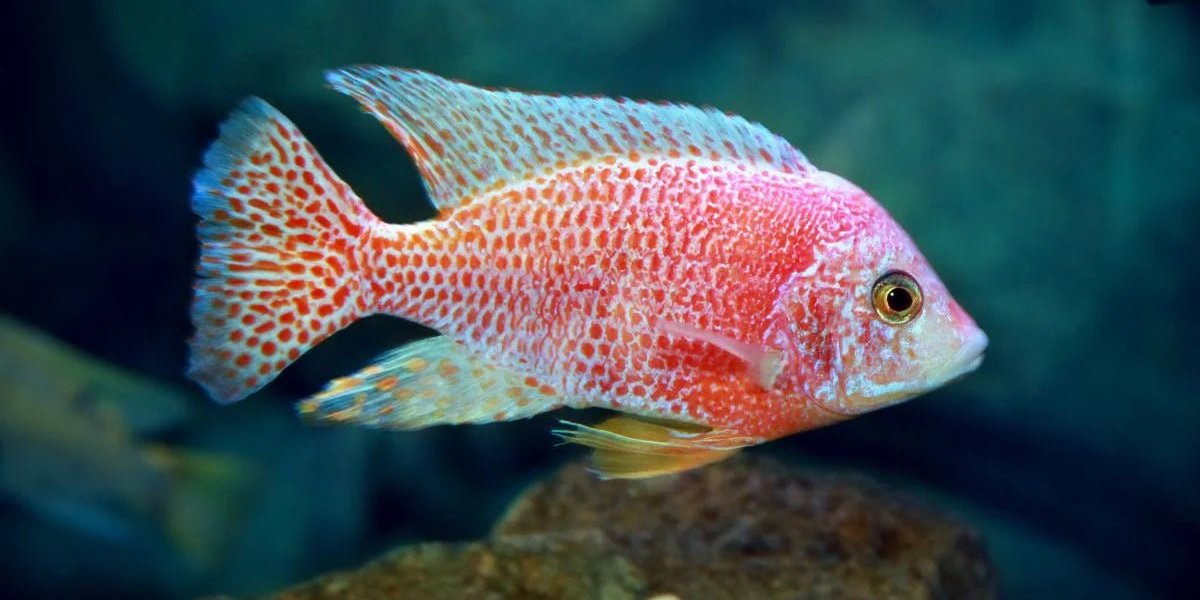
African cichlids are among the most stunning freshwater fish available to hobbyists. Their vibrant colors, fascinating behaviors, and active personalities make them a rewarding species to keep. However, they have specific requirements that differ significantly from typical community fish, and understanding those needs before setting up the tank is essential for success.
Most African cichlids kept in the hobby come from Lake Malawi, Lake Tanganyika, and Lake Victoria. Each lake has distinct water chemistry and cichlid species. This guide focuses primarily on Lake Malawi cichlids, which are the most widely available and the most popular starting point for beginners entering the African cichlid hobby.
Why African Cichlids Are Different
African cichlids from Lake Malawi are adapted to hard, alkaline water with a pH between 7.8 and 8.6 and significant mineral content. This is very different from the soft, acidic conditions preferred by many South American fish. Using the wrong water chemistry leads to poor color, weakened immune systems, and shortened lifespans.
They are also notably aggressive compared to most community fish. This aggression is natural and territory-based. Understanding and working with this behavior, rather than fighting it, is what separates successful African cichlid setups from failed ones.
Minimum Tank Size
A 55-gallon tank is the practical minimum for a Lake Malawi cichlid setup. A 75-gallon or 90-gallon tank is strongly preferred, as more space allows you to keep more fish, which is actually the key to managing aggression. Aggression spreads across more targets in a larger group, preventing any single fish from being targeted and killed.
Tank footprint matters more than height. African cichlids are mid-to-bottom dwellers that need horizontal swimming space and territorial ground. A longer, wider tank is better than a tall, narrow one of the same volume. The extra floor space gives each fish room to establish a territory without constant conflict.
Water Parameters and Chemistry
Target a pH of 7.8 to 8.6, hardness (GH) of 10 to 20 dGH, and temperature between 76 and 82 degrees Fahrenheit. In most areas, tap water does not naturally reach these values. You can raise pH and hardness by adding crushed coral or aragonite to the filter or substrate, which slowly dissolves and buffers the water.
Commercial African cichlid salt mixes are also widely available and provide an easy way to achieve the correct mineral balance. Test your water regularly, as pH can drift in cichlid tanks. A stable pH is more important than hitting a specific number, as sudden swings are stressful and dangerous for the fish.
Filtration Requirements
African cichlids produce significant waste, and their tank requires robust filtration. Use a canister filter or a large hang-on-back filter rated for at least twice the tank volume. Many experienced keepers run two filters simultaneously for redundancy and extra biological capacity.
Good water movement is important. Aim for a turnover rate of at least 8 to 10 times the tank volume per hour. African cichlids tolerate strong flow well, and the water movement helps keep the tank oxygenated and debris suspended so the filter can capture it. Weekly 25 to 30 percent water changes are non-negotiable in a heavily stocked cichlid tank.
Substrate Choice
Crushed coral, aragonite, or calcium-based sand is the ideal substrate for a Lake Malawi cichlid tank. Beyond aesthetics, these substrates actively buffer the water and help maintain the high pH that cichlids require. Fine sand works especially well for mouthbrooder species that sift substrate as part of spawning behavior.
Standard aquarium gravel works in a pinch if you are maintaining pH through other means, but crushed coral substrate is doing double duty by buffering the water and providing a natural look. Avoid soft, acidic substrates like peat or any product that lowers pH.
Rockwork and Decor
Rocks are the single most important decor element in an African cichlid tank. Piled limestone, slate, or lava rock creates the cave structures that cichlids use as territories, refuge, and breeding sites. Build structures from the substrate up to the waterline, creating numerous caves and crevices of different sizes.
The goal is to create so many territories and hiding spots that every fish can claim its own space. A tank with insufficient rockwork forces fish into fewer territories, intensifying competition and aggression. More rock, more caves, and more visual breaks between territories results in a more peaceful tank despite the inherently aggressive nature of the fish.
Plants in an African Cichlid Tank
Most African cichlids will uproot and destroy soft-leaved plants. The most commonly recommended approach is to avoid live plants entirely or stick to hardy, rock-anchored species like Anubias and Java fern. These plants attach to rocks and driftwood rather than rooting in substrate, making them much harder for cichlids to disturb.
Vallisneria, also called val or eelgrass, is one of the few rooted plants that survives well in cichlid tanks. It grows quickly enough to outpace cichlid damage, tolerates hard alkaline water, and provides some cover without becoming an obstacle. Plastic plants are a practical alternative if maintaining live plants seems too difficult.
Stocking Strategy: Overstocking on Purpose
One of the counterintuitive principles of African cichlid keeping is that deliberately stocking heavily reduces aggression. In a lightly stocked tank, the dominant fish has few distractions and can fixate on and kill weaker fish. In a heavily stocked tank, aggression is constantly redirected and spread across the group.
For a 75-gallon tank, 20 to 30 fish of appropriate size is not unusual for experienced keepers. This only works with excellent filtration and consistent water changes. Research each species you plan to add, as some are more aggressive than others, and mixing incompatible species will create problems regardless of stocking density.
Choosing Compatible Species
For beginners, mbuna cichlids from Lake Malawi are a common starting point. Popular species include yellow labs (Labidochromis caeruleus), various Pseudotropheus species, Metriaclima estherae (the red zebra), and Cynotilapia species. These fish are similarly sized and have overlapping care requirements.
Avoid mixing mbuna with the larger, more predatory Haplochromis and Aulonocara (peacock) species unless you have a very large tank and understand the compatibility issues. Peacocks are more peaceful among themselves and do well with other peacocks and haps, but mbuna will harass and stress them. Keep community groups of similar species and temperaments.
Feeding African Cichlids
Most mbuna are primarily herbivores in the wild, grazing on algae coatings on rocks called aufwuchs. In the aquarium, feed a high-quality cichlid pellet with spirulina as a primary ingredient. Over-relying on high-protein, meat-based foods for these herbivorous species causes a serious condition called Malawi bloat, which can be fatal.
Peacock and hap cichlids are omnivores and can handle more protein in their diet. Feed these fish a quality cichlid pellet with moderate protein content. For all African cichlids, feed small amounts two to three times daily. Remove uneaten food within a few minutes to prevent water quality issues.
Mouthbrooding and Breeding
Most Lake Malawi cichlids are maternal mouthbrooders. The female picks up fertilized eggs in her mouth and holds them for three to four weeks while they develop into free-swimming fry. During this time she typically does not eat. She will look noticeably distended in the jaw area and may become reclusive.
If you want to raise fry, you can strip the eggs from the female once they are well developed (around two weeks) and place them in a tumbler or net breeder. Alternatively, let the female release the fry naturally, then immediately remove her so she can recover and eat. The fry are large enough at release to eat crushed flake food and baby brine shrimp right away.
Common Health Issues
Malawi bloat is the most feared disease in African cichlid tanks. It presents as rapid, severe abdominal swelling, pinecone-like scales (dropsy), and fast decline. The cause is usually dietary (too much protein for herbivorous mbuna) or bacterial. Treatment with Metronidazole is sometimes effective if caught early, but many fish do not survive. Prevention through proper diet is the best approach.
Ich and other parasites occur occasionally, especially after adding new fish. Quarantining all new fish for two weeks before adding them to the main display tank is the best preventive measure. Stress from aggression also weakens immune systems, so maintaining a well-managed social environment protects fish health.