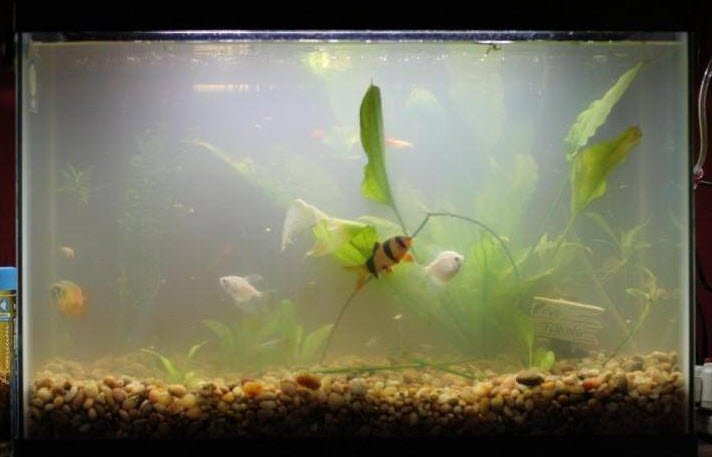
Cloudy aquarium water is one of the most common issues fishkeepers encounter, from brand new setups to established tanks that have been running for years. It can appear as a white haze, a green tint, or a murky brown color, and each shade points to a different underlying cause. The good news is that most cases of cloudy water are diagnosable and fixable once you understand what you are looking at.
Before reaching for a bottle of water clarifier, it is worth taking a few minutes to identify what type of cloudiness you have. Treating the wrong cause wastes time, wastes money, and sometimes makes the problem worse. This guide covers every major cause of cloudy aquarium water and the correct approach to fixing each one.
White or Gray Cloudiness: New Tank Bacterial Bloom
A white or grayish haze in a newly set up aquarium is almost always a bacterial bloom. When you set up a new tank, the water contains nutrients from substrate disturbance, decor leaching, and fish waste, but no established colony of beneficial bacteria to process it. Heterotrophic bacteria multiply rapidly in this nutrient-rich environment, causing the cloudy appearance.
This type of cloudiness is completely harmless to fish and will resolve on its own as the nitrogen cycle establishes. The beneficial nitrifying bacteria gradually outcompete the heterotrophs as ammonia and nitrite levels stabilize. The process typically takes one to two weeks. Doing large water changes to clear the haze actually prolongs it by removing the nutrients and delaying bacterial balance.
Green Cloudiness: Algae Bloom
Green water is caused by a free-floating single-celled algae bloom, also called a phytoplankton or green water algae bloom. It is driven by an excess of nutrients (particularly nitrate and phosphate) combined with high light levels. The tank may look like pea soup, with individual fish difficult to see even a few inches from the glass.
The solution requires addressing both the nutrient source and the light. Reduce photoperiod to six to eight hours per day and make sure no direct sunlight hits the tank. Perform 30 to 40 percent water changes every two to three days to dilute nutrients. Check your feeding habits and reduce the amount if fish are leaving food uneaten. A UV sterilizer is the most effective tool for quickly clearing green water, as it kills free-floating algae cells as water passes through it.
Milky White Water in an Established Tank
Sudden milky cloudiness in a tank that has been running stably often points to a bacterial die-off or a disturbance of the biological filter. This can happen after treating the tank with antibiotics that kill beneficial bacteria, after a large unplanned water change, after cleaning all filter media at once, or after accidentally letting the filter run dry.
The approach here is to let the cycle re-establish. Do not add more fish, reduce feeding significantly, and test water daily for ammonia and nitrite spikes. If ammonia climbs dangerously high, do small water changes of 10 to 15 percent to dilute it without crashing the recovering bacterial colony. Adding a bottled bacterial supplement like Seachem Stability or Fritz Zyme can accelerate recovery.
Brown or Yellow Tinted Water: Tannins
A brown or yellowish tint is almost always caused by tannins leaching from driftwood, botanicals like seed pods and leaves, or certain substrates. Tannins are completely safe for fish and many species actually thrive in tannin-rich, blackwater environments. However, it can be aesthetically unwanted in some setups.
To reduce tannin discoloration, pre-soak driftwood in a bucket of hot water for several days or weeks before adding it to the tank, replacing the water daily. Running activated carbon in the filter removes dissolved tannins effectively and will gradually clear the water over several days. If you add new driftwood to an existing tank, expect another round of tannin release and another stint with fresh carbon.
Cloudy After a Water Change
Cloudiness immediately following a water change is usually caused by tiny air bubbles introduced during the fill. This is especially common when water is added quickly or when the tap water contains dissolved gases. It clears on its own within an hour or two as the bubbles dissipate.
If cloudiness persists for more than a few hours after a water change, the likely culprit is substrate or filter media disturbance. Fine particles of substrate kicked up during water changes can stay suspended for a day or two. Pouring replacement water onto a plate or bag placed in the tank reduces turbulence and prevents this issue. If you recently changed filter media, tiny particles may be escaping from new filter floss or biomedia.
Overfeeding as a Root Cause
Overfeeding is one of the most common underlying causes of chronically cloudy water. Uneaten food decomposes in the tank and becomes a continuous source of ammonia and organic compounds that fuel bacterial blooms and algae growth. Even when the overfeeding is not dramatic, the cumulative effect builds up over weeks and months.
The rule of thumb is to feed only what fish consume within two to three minutes, once or twice a day. Remove uneaten food promptly using a siphon or turkey baster. If you regularly find leftover food after feeding, reduce the amount. Improving feeding discipline alone often solves recurring cloudiness without any other intervention.
The Role of Filtration
Inadequate or poorly maintained filtration contributes directly to cloudy water. A filter that is undersized for the tank, clogged with detritus, or running with dead biological media cannot process the organic load effectively. Mechanical filtration (filter floss, sponge pads) removes suspended particles, while biological filtration processes dissolved waste.
Rinse mechanical filter media in old tank water during water changes to remove accumulated gunk without killing beneficial bacteria. Replace filter floss when it is visibly clogged. Do not replace all filter media at once, as this crashes the biological filter. Stagger replacements over several weeks to maintain bacterial populations.
Water Clarifiers: What They Do and When to Use Them
Chemical water clarifiers work by causing fine suspended particles to clump together (flocculate) into larger masses that the filter can capture or that sink to the substrate. They are most effective against particle-based cloudiness, such as suspended substrate fines or bacterial bloom particles.
Clarifiers do not fix the underlying cause of cloudiness. Using them without addressing the root issue results in the water clearing briefly and then clouding again. They are best used as a temporary measure while you identify and correct the actual problem. Follow dosing instructions carefully, as overdosing can reduce dissolved oxygen and stress fish.
Testing Water Parameters
When you notice cloudy water, testing immediately gives you critical diagnostic information. Elevated ammonia or nitrite indicates a cycling problem or filter failure. High nitrate combined with cloudy green water suggests nutrient excess and algae. Normal parameters alongside cloudiness usually point to physical particles or tannins rather than a biological issue.
A basic liquid test kit (not strips, which are less accurate) covering ammonia, nitrite, nitrate, and pH is an essential tool for any fishkeeper. Test weekly as routine maintenance, and always test when something looks wrong. Knowing your numbers takes the guesswork out of diagnosing problems like cloudy water.
Preventing Cloudy Water Long Term
Long-term prevention comes down to consistent maintenance. Weekly partial water changes of 20 to 30 percent keep nutrient levels from accumulating. Regular vacuuming of substrate removes decomposing organic matter before it fully breaks down. Proper stocking levels ensure the biological filter is not overwhelmed.
A tank that is regularly maintained rarely develops serious cloudiness issues. When problems do occur in a well-maintained tank, they are usually traceable to a specific event: a new piece of decor, a changed feeding routine, or a filter that was cleaned too aggressively. Keep a simple tank log noting water changes and any additions, which makes identifying the cause of sudden changes much easier.
Summary: Matching the Fix to the Cause
White haze in a new tank requires patience and allowing the cycle to complete. Green water needs reduced light, less nutrients, and ideally a UV sterilizer. Brown tint from tannins responds to activated carbon. Sudden cloudiness in an established tank warrants testing and checking recent maintenance actions.
Most cloudy water situations resolve within one to two weeks when properly addressed. Resist the urge to make multiple simultaneous changes to the tank, as this makes it harder to identify what actually solved the problem. Make one change at a time, observe the results over several days, and adjust from there.