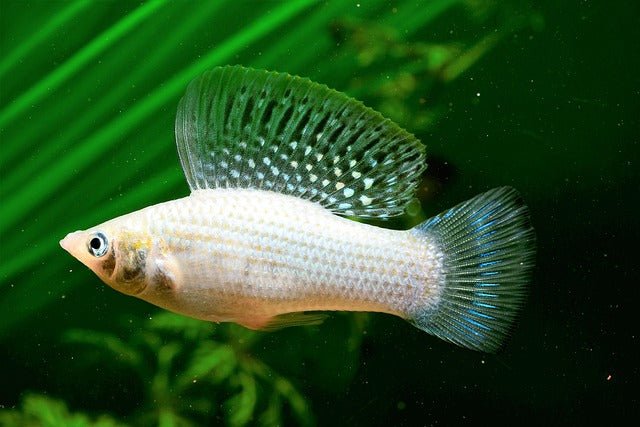
Molly fish are a staple of the freshwater fishkeeping hobby, beloved for their peaceful temperament, hardiness, and wide variety of colors and fin shapes. They are livebearers like guppies and platies, giving birth to free-swimming fry rather than laying eggs. Mollies are adaptable enough for beginner tanks but interesting enough to keep experienced fishkeepers engaged.
Available in dozens of color forms and body shapes including the popular sailfin molly, balloon molly, and Dalmatian molly, these fish suit a wide range of aquarium styles. This care guide covers everything you need to set up a healthy molly tank, feed them properly, and breed them successfully.
Species Overview and Varieties
The most common aquarium mollies descend from Poecilia sphenops (short-fin molly) and Poecilia latipinna (sailfin molly). Selective breeding has produced an enormous variety of forms: solid black mollies, white mollies, orange-red lyretail mollies, spotted Dalmatians, and the round-bodied balloon molly, among many others.
Sailfin mollies are larger, reaching up to five to six inches, and males develop an impressively large dorsal fin when kept in good conditions. Short-fin varieties are smaller, typically two to three inches. All varieties share the same basic care requirements, though larger sailfins need proportionally more space.
Tank Size Requirements
A 20-gallon tank is the minimum for a small group of mollies. Given their reproductive rate and active swimming behavior, a 30-gallon or larger tank is more comfortable and practical for long-term keeping. Sailfin mollies specifically benefit from 30 gallons or more to allow males to display their fins properly.
Mollies are active midwater swimmers that appreciate open swimming space in the front and center of the tank, with planted areas and decor toward the back and sides for security. A well-organized tank provides both open water for swimming and shelter for resting and fry hiding.
Water Parameters
Mollies are notably tolerant of a wide range of water conditions, including mildly brackish water. In the wild, many molly populations live in coastal areas where fresh and salt water mix. In the aquarium, they prefer a pH between 7.5 and 8.5 and a temperature of 72 to 82 degrees Fahrenheit.
Adding a small amount of aquarium salt to the molly tank is a common practice that some keepers swear by. One teaspoon per gallon is a typical recommendation for mollies in a dedicated tank. Salt is not strictly necessary, but it can reduce stress and disease susceptibility. Avoid salt if you have scaleless fish or salt-sensitive species in the same tank.
Filtration and Water Quality
Mollies are relatively tolerant fish but are particularly sensitive to poor water quality and ammonia. A quality hang-on-back or canister filter sized appropriately for the tank volume is essential. Because mollies breed readily and populations can grow quickly, maintain filtration capacity ahead of your current stocking level.
Perform weekly water changes of 25 to 30 percent. Molly tanks can accumulate nitrate quickly, especially in productive breeding setups. A gravel vacuum during water changes removes debris and uneaten food from the substrate. Clean molly tanks produce healthier, more colorful fish with reduced incidence of common diseases like molly disease (shimmying).
Tank Setup and Decor
Mollies are not demanding in terms of decor, but they do appreciate a planted tank. Live plants like Java fern, hornwort, and Vallisneria provide cover for females being pursued by males and hiding spots for newborn fry. Dense floating plants like frogbit and duckweed are particularly useful for fry survival.
Smooth rocks and driftwood add visual interest and provide resting spots. Avoid sharp decor that can tear fins. Mollies spend time at all levels of the tank, so arranging decor at multiple heights creates a more interesting and functional environment for the fish.
Feeding Molly Fish
Mollies are omnivores with a strong herbivorous tendency. In the wild, they graze heavily on algae and plant matter. In the aquarium, offer a varied diet that includes high-quality flake or pellet food, algae wafers, and regular servings of blanched vegetables like zucchini, spinach, and peas.
Supplement the base diet with occasional treats of frozen or live foods such as brine shrimp, daphnia, and bloodworms. Protein-rich foods promote good growth and condition in females, especially those that are pregnant. Feed two to three times daily in small amounts that are consumed within two to three minutes. Remove uneaten food promptly.
Compatible Tank Mates
Mollies are peaceful community fish that get along well with most similarly sized, non-aggressive species. Good companions include platies, guppies, swordtails, tetras, corydoras catfish, danios, and peaceful barbs. Avoid aggressive fish that may nip fins or bully mollies.
Male mollies can harass females with persistent mating behavior. Keeping at least two to three females per male distributes this attention and prevents any one female from being stressed. A heavily planted tank also gives females places to retreat. Watch for signs of harassment, including hiding, clamped fins, or refusal to eat.
Breeding Mollies
Mollies breed very readily in well-maintained tanks, and if you have males and females together, breeding is essentially inevitable. The female gestation period is approximately 28 to 35 days. As delivery approaches, the female abdomen becomes noticeably squared off and she may become less active or seek out quieter areas of the tank.
Newborn molly fry are relatively large and immediately seek cover. Dense floating plants are the most reliable way to protect fry in a community setting. Remove the female to a separate tank shortly before birth if you want higher survival rates, then return her to the main tank after she has delivered and you have given the fry a few days to settle.
Raising Molly Fry
Molly fry can eat crushed flake food immediately after birth. Supplement with baby brine shrimp and specialty fry food for faster growth. Feed small amounts four to five times daily in the fry tank. Keep the fry tank clean with small, frequent water changes using conditioned water at the same temperature as the main tank.
Fry reach adult coloration at around two to three months and sexual maturity shortly after. Separate male and female fry by six to eight weeks to prevent early, unplanned breeding. Given their prolificity, have a plan for managing fry numbers before your first batch arrives.
Common Health Issues
Molly disease, also called the shimmies, is a common condition where mollies rock from side to side in place, as though shivering. It is not caused by a parasite or bacteria but is a stress response, usually triggered by poor water quality, low temperature, or salt deficiency. Improving water conditions, raising the temperature slightly, and adding a small amount of aquarium salt usually resolves it within a few days.
Mollies are also susceptible to ich, velvet, and fungal infections, particularly when stressed. Quarantining new fish before adding them to the tank prevents introducing these pathogens. Stable water conditions, good nutrition, and avoiding overcrowding are the best preventive measures. When treating disease in a molly tank, use medications at the recommended dose and remove carbon from the filter during treatment.
Male and Female Differences
Sexing mollies is straightforward. Males have a modified anal fin called a gonopodium, which is thin and pointed rather than fan-shaped like the female anal fin. Males are typically slimmer and may show more intense coloration. In sailfin mollies, only males develop the large, elaborate dorsal fin.
Females are broader through the body, especially when carrying fry. They may show a dark gravid spot near the anal fin as pregnancy progresses. Once you know the difference, molly sexing is one of the easier identification tasks in the hobby, even in young fish around four to six weeks of age.
Tips for Long-Term Success
Mollies are forgiving fish, but they do best with consistent care. The most common reasons mollies decline in a home aquarium are poor water quality, overcrowding from unchecked breeding, and a diet lacking enough plant matter. Address these three areas and mollies are among the most reliable, long-lived fish in the hobby, often reaching three to five years with good care.
Change water regularly, feed a varied diet with vegetables, keep groups with appropriate male-to-female ratios, and provide a well-filtered, appropriately sized tank. In return, mollies provide excellent color, active behavior, and the ongoing interest of watching fry grow through each generation.