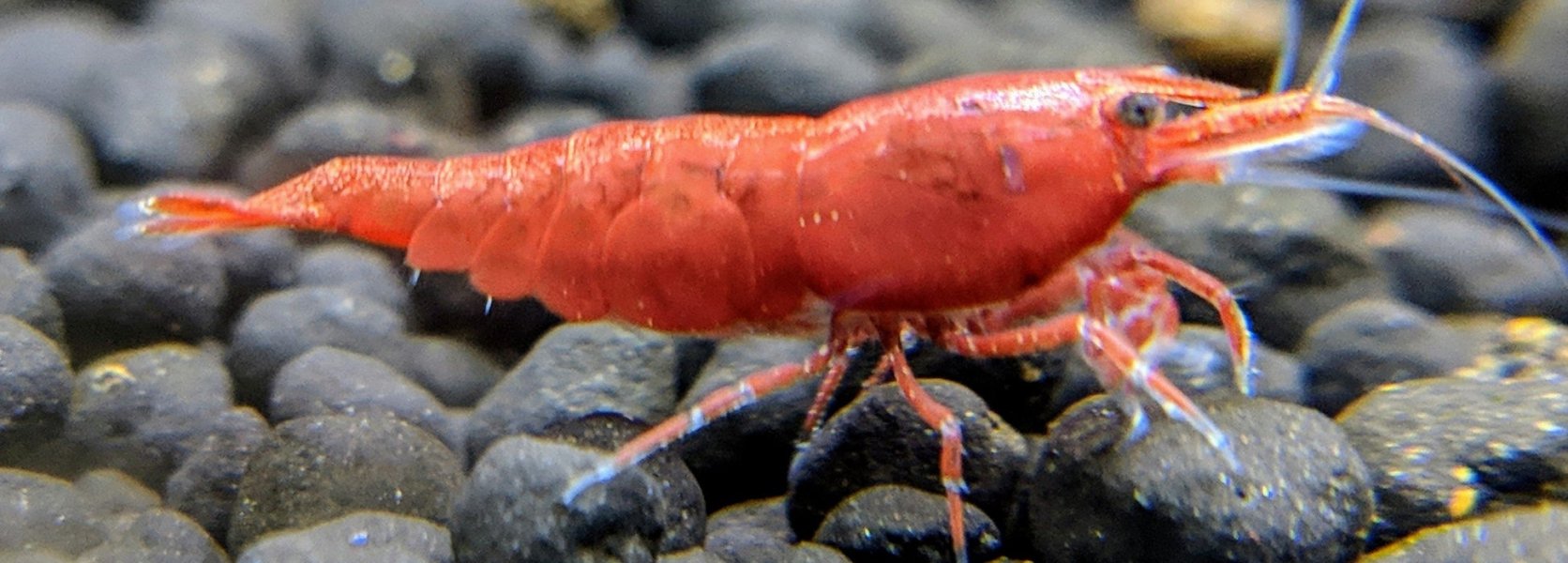
Cherry shrimp (Neocaridina davidi) are one of the most popular invertebrates in the freshwater hobby. Their vivid red coloration, algae-grazing behavior, and relative hardiness make them an appealing addition to planted tanks and community aquariums. Keeping them successfully alongside fish, however, requires some careful planning around compatibility, water conditions, and hiding cover.
Many fishkeepers have had the frustrating experience of adding a colony of cherry shrimp to a community tank only to watch them disappear within days. The fish do not always eat them immediately in plain sight. Understanding predation risks and how to mitigate them is the most important skill for keeping cherry shrimp with fish.
Why Cherry Shrimp Get Eaten
Cherry shrimp are small, slow-moving, and brightly colored. From the perspective of most fish, they register as food. Even fish that are marketed as shrimp-safe will often eat small or juvenile shrimp given the opportunity. The risk is highest during molting, when shrimp shed their exoskeleton and spend several hours soft-bodied and completely vulnerable.
Fish that have no interest in adult shrimp may still hunt down juveniles and baby shrimp relentlessly. A thriving shrimp colony in a community tank depends on having enough cover and hiding spaces that juvenile survival rate stays high enough to offset predation. Without adequate cover, even a shrimp-safe fish community will slowly deplete the colony.
Choosing Compatible Fish
The safest fish to keep with cherry shrimp are those small enough that adult shrimp are not a reasonable prey item. Small tetras like ember tetras, neon tetras, and chili rasboras are among the best options. Otocinclus catfish are excellent shrimp tank companions, as they are entirely herbivorous and pose zero threat to shrimp of any size.
Other good companions include small rasboras (harlequin, lambchop, galaxy), endlers livebearers, small corydoras like pygmy corydoras, and celestial pearl danios. These fish are small-mouthed and generally not interested in pursuing healthy adult shrimp, though they may eat shrimplets (newborns) opportunistically.
Fish to Avoid
Several popular community fish are significant threats to cherry shrimp and should be avoided entirely in a shrimp-forward tank. Bettas are highly variable: some ignore shrimp completely, others will hunt them down obsessively. The risk is too unpredictable to rely on, especially for a new shrimp colony still establishing itself.
Angelfish, gouramis, cichlids of any kind, larger tetras like Buenos Aires tetras, loaches, goldfish, and any fish large enough to fit a shrimp in its mouth are all poor choices. Even small-to-medium barb species like tiger barbs will chase and stress shrimp even if they cannot easily eat adult ones. Stress from harassment alone significantly impacts shrimp health and breeding rates.
Tank Setup for Shrimp and Fish
A well-planted tank is essential when housing cherry shrimp with fish. Dense planting provides cover for adults and juveniles, reduces visible stress for the shrimp, and creates hiding spots during the vulnerable molting period. Java moss, Christmas moss, and other fine-textured mosses are particularly valuable because tiny baby shrimp can hide within them effectively.
Floating plants like frogbit and salvinia add another layer of protection and create shaded areas that shrimp prefer. Marimo moss balls give shrimp surfaces to graze on throughout the day. Aim for a tank where there are always multiple shrimp out of direct sightlines, visible only from certain angles, rather than a bare or sparsely planted setup where shrimp are always in the open.
Water Parameters for Cherry Shrimp
Cherry shrimp prefer soft to moderately hard water with a pH between 6.5 and 7.5 and a temperature of 65 to 75 degrees Fahrenheit. They are more sensitive to water quality than most fish, particularly to ammonia and nitrite, which should always be zero. Even moderate nitrate levels above 20 ppm can negatively affect molting and breeding over time.
One important consideration in a community tank is that many fish species prefer warmer water than cherry shrimp do optimally. The upper end of the cherry shrimp range (74 to 76 degrees) overlaps with most tropical fish requirements, making temperature management workable. Avoid keeping cherry shrimp with fish that require water above 78 degrees as a baseline.
Minerals and Molting Health
Calcium and magnesium are critical minerals for shrimp health, as shrimp need them to form healthy exoskeletons. In soft water aquariums, shrimp may struggle to molt successfully, leading to a condition called failed molt where the shrimp cannot fully shed its old shell. Crushed coral in the filter, cuttlebone, or specialized shrimp mineral supplements help maintain adequate levels.
When a shrimp molts, it will leave behind a translucent white shell in the tank. This is normal and does not need to be removed. Other shrimp will consume the discarded shell to reclaim minerals. If you see molted shells regularly and the shrimp population is growing, your water mineral content is sufficient.
Feeding Cherry Shrimp in a Community Tank
Cherry shrimp are primarily algae grazers and biofilm feeders. In a well-established, planted tank they spend much of their time picking biofilm, algae, and decaying plant matter off every surface. This natural grazing behavior means they may not need significant supplemental feeding in a mature tank.
Supplement with specialized shrimp foods like Hikari Shrimp Cuisine, Fluval Bug Bites, or blanched vegetables like zucchini and spinach a few times per week. Remove uneaten food after a few hours to prevent water quality issues. In a community tank, shrimp often compete with fish for sinking pellets, so drop food in the evening when fish are less active, or use a shrimp feeding dish that keeps food concentrated and less visible to fish.
Breeding Cherry Shrimp with Fish Present
Cherry shrimp will breed in a community tank provided the fish population is not too large and cover is adequate. A berried female (a female carrying eggs under her tail) is visible with a little observation. She fans the eggs constantly with her swimmerets to oxygenate them, and they hatch in about 21 to 28 days.
The baby shrimp (shrimplets) are fully formed miniatures about one millimeter long at birth. They are extremely vulnerable and depend entirely on hiding in moss and dense plants to survive. In a community tank with even shrimp-safe fish, expect some loss of shrimplets. A sustainable colony needs enough juvenile survival to slowly increase or maintain population, which requires dense planting and not too many fish mouths in the tank.
Managing Population in a Community Tank
In a shrimp-only tank, cherry shrimp populations can explode rapidly. In a community tank with fish, the population grows more slowly because juvenile survival is lower. This natural balancing act often results in a stable colony size that self-regulates based on available cover and predation pressure.
If your shrimp colony is declining rather than holding steady, it means the balance is off. Either predation is too high, water quality is suboptimal, or mineral deficiency is causing molting failures. Identify which of these factors is the issue and address it. Adding more plants and removing more aggressive fish are the two most effective interventions.
Color Grading and Colony Quality
Cherry shrimp come in several color grades based on color intensity, from standard cherry through sakura, fire red, and painted fire red. Higher-grade shrimp have more opaque, intense red coloration. In a community tank, color grades will regress over time toward the wild-type coloration as shrimp breed freely.
If maintaining high color grade is a priority, a dedicated shrimp-only tank is the better approach. In a community tank, embrace the color variation that naturally develops and select the most intensely colored individuals for your eye. A healthy, active colony with good color saturation is rewarding even if it is not show-quality.
Starting Your Colony
Start with a group of ten to twenty shrimp to establish a colony with enough genetic diversity. A larger founding group reaches a sustainable self-reproducing population faster. Introduce shrimp to a fully cycled, well-established tank where biofilm has had time to develop on all surfaces, as this food source is critical for shrimp health from day one.
Acclimate cherry shrimp slowly using the drip method before adding them to the tank. Shrimp are more sensitive to parameter shifts during transfer than most fish. After introduction, give them at least two weeks to settle and show foraging behavior throughout the tank before assessing whether they are thriving in their new environment.