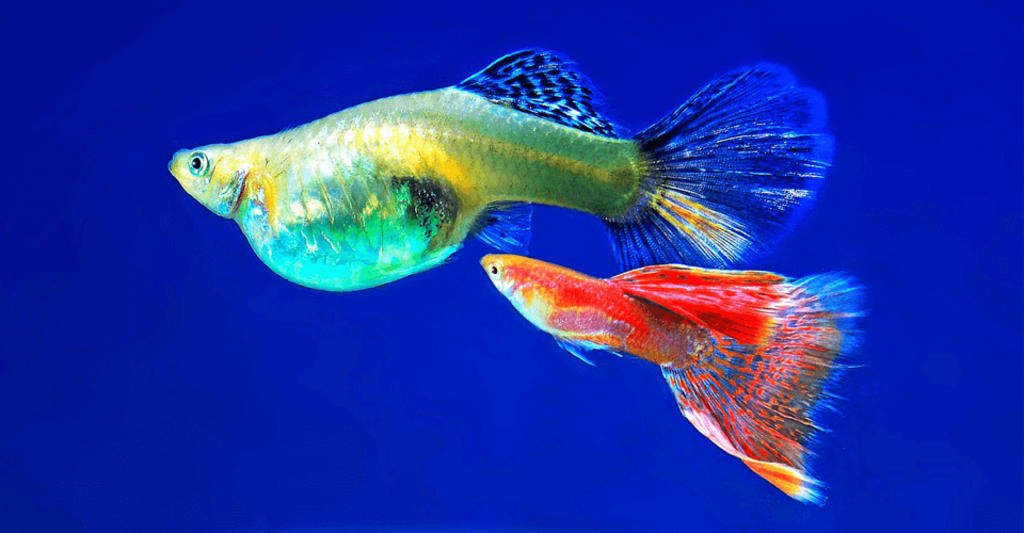
Guppies are one of the easiest freshwater fish to breed, making them an ideal starting point for anyone interested in fish reproduction. They are livebearers, meaning the female gives birth to fully formed, free-swimming fry rather than scattering eggs. With the right setup and a little planning, you can have guppy fry within weeks of starting out.
Breeding guppies is not just about placing males and females together. Success comes from understanding the breeding cycle, preparing the right environment, and knowing how to raise the fry to adulthood. This guide walks you through every step of the process.
Understanding Guppy Reproduction
Guppies are livebearing fish, which means fertilization and gestation happen internally. A female stores sperm from a single mating and can use it to fertilize multiple batches of eggs over several months, even without a male present. This is why a female guppy purchased from a store may give birth in your tank without ever being near a male.
The gestation period typically ranges from 21 to 30 days, depending on water temperature and individual variation. Warmer water shortens the gestation period slightly. A healthy female can produce anywhere from 20 to 100 fry per birth, with larger, more mature females producing the most offspring.
Choosing Your Breeding Stock
Select healthy, vibrant fish as your breeding pair. Males should have bright, full coloration and active behavior. Females should be plump but not bloated, with clear eyes and intact fins. Avoid fish that appear lethargic, have clamped fins, or show any signs of disease.
If you are breeding for specific traits such as color patterns, tail shape, or fin length, choose parents that both carry those traits. Guppy genetics are complex, and traits do not always appear predictably in the first generation. Selective breeding over multiple generations is how hobbyists develop distinct strains.
Setting Up the Breeding Tank
A 10 to 20 gallon tank works well as a dedicated breeding setup. The tank should be fully cycled before introducing fish. Keep the temperature between 76 and 82 degrees Fahrenheit. A sponge filter is ideal because it provides gentle filtration without sucking up fry.
Dense floating plants like Java moss, frogbit, and guppy grass are critical for the survival of fry. Newborn guppies instinctively seek cover immediately after birth. Without hiding spots, they will be eaten by the adults. Providing thick vegetation dramatically increases fry survival rates.
The Male-to-Female Ratio
The standard recommended ratio is one male to two or three females. Males are persistent in their mating attempts, and a single female paired with one male will be harassed constantly. Spreading a male attention across multiple females reduces stress and prevents injury or death from overbreeding.
A heavily harassed female will stop eating, become stressed, and may even abort her pregnancy. If you notice a female being chased relentlessly, add more females or temporarily separate the male. A healthy breeding colony has females that feed normally and show relaxed behavior between interactions.
Conditioning the Breeding Pair
Conditioning means feeding your breeding fish a rich, varied diet for one to two weeks before pairing them. High-quality live or frozen foods are especially effective. Good choices include baby brine shrimp, daphnia, bloodworms, and microworms. These protein-rich foods bring females into peak reproductive condition.
A well-conditioned female will be visibly round and plump. Her gravid spot, the dark patch near the anal fin, will become darker and more prominent as she develops eggs and the fry grow inside her. This darkening is one of the key visual cues that birth is approaching.
Signs That Birth Is Near
As delivery approaches, the female abdomen becomes squared off at the bottom rather than smoothly rounded. She may become less active and seek out quiet corners of the tank or hide among plants. Labored breathing, restlessness, or repeated trips to the surface can also indicate that birth is imminent.
The gravid spot will appear very dark, and in some females you may be able to see the eyes of the developing fry through the stretched skin. Birth can happen quickly, within an hour or over several hours. Once you notice these signs, it is time to prepare a safe space for the fry.
Protecting the Fry During Birth
The simplest approach to protecting newborn fry is having thick plant cover in the tank where the female can give birth. Fry that immediately hide in Java moss or guppy grass have a good survival rate. Remove the female from the breeding tank as soon as you confirm she has delivered all her fry.
An alternative is a breeding box, a mesh or perforated plastic container that hangs inside the main tank. The female is placed inside, and when fry are born they fall through slots into a protected lower chamber. However, breeding boxes are stressful for females, especially for extended periods. Use them only for short windows around birth if possible.
Feeding Newborn Fry
Guppy fry are surprisingly large at birth and can eat a wider range of foods than the newborns of egg-laying species. Start with crushed flake food, which should be ground to a fine powder between your fingers. Specialty fry foods and liquid fry diets are also effective in the first days of life.
Within the first week, baby brine shrimp (BBS) are the gold standard food for guppy fry. They are highly nutritious, appropriately sized, and stimulate the fry natural hunting instinct. Feed small amounts three to five times daily for fastest growth. Microworms and vinegar eels are other good options for early feeding.
Water Quality for the Fry Tank
Fry are more sensitive to water quality than adults. Perform small, frequent water changes of 10 to 15 percent every two to three days rather than large weekly changes that can shock young fish. Keep the temperature stable, as fluctuations stress fry and increase disease susceptibility.
Avoid using a standard hang-on-back filter in a fry tank. The intake can trap and kill fry. Use a sponge filter exclusively, which doubles as a biological filter and a surface for microorganisms that fry can graze on. Keep the tank clean but avoid disturbing the fry unnecessarily.
Separating Fry by Sex
Guppy fry can be sexed at around three to four weeks of age. Males develop color and begin showing their gonopodium, the modified anal fin used in mating. Females remain plainer in color and develop a gravid spot. Separating the sexes at this stage prevents unintended breeding before the fish are mature.
If you are working on developing a specific strain, keeping careful records of which fish came from which parents and separating them early is important. Mixed-sex fry tanks result in breeding before you can select for the traits you want, quickly muddying the genetics of your strain.
Raising Fry to Adulthood
With regular feeding and clean water, guppy fry reach sexual maturity at two to three months. Growth rate depends heavily on how often they are fed and how clean the water is. Crowded fry tanks produce stunted fish. If you have a large batch of fry, splitting them into multiple tanks or thinning the group improves growth for the remaining fish.
At around six to eight weeks, males will begin showing adult coloration. This is a satisfying milestone, especially if you are selectively breeding for a specific pattern or tail type. Continue high-quality feeding through this stage to develop the best possible fin extension and color saturation.
Managing Colony Size
Guppies breed prolifically, and it is easy to end up with more fish than your tank can support. Have a plan for what to do with excess fry before you start breeding. Options include selling or trading to a local fish store, giving them to other hobbyists, or setting up additional tanks.
Unmanaged guppy populations can quickly overload tank capacity and water quality. Some breeders use a few adult fish that naturally thin the fry population, but a thoughtful approach to managing numbers produces healthier fish and a more sustainable breeding operation overall.