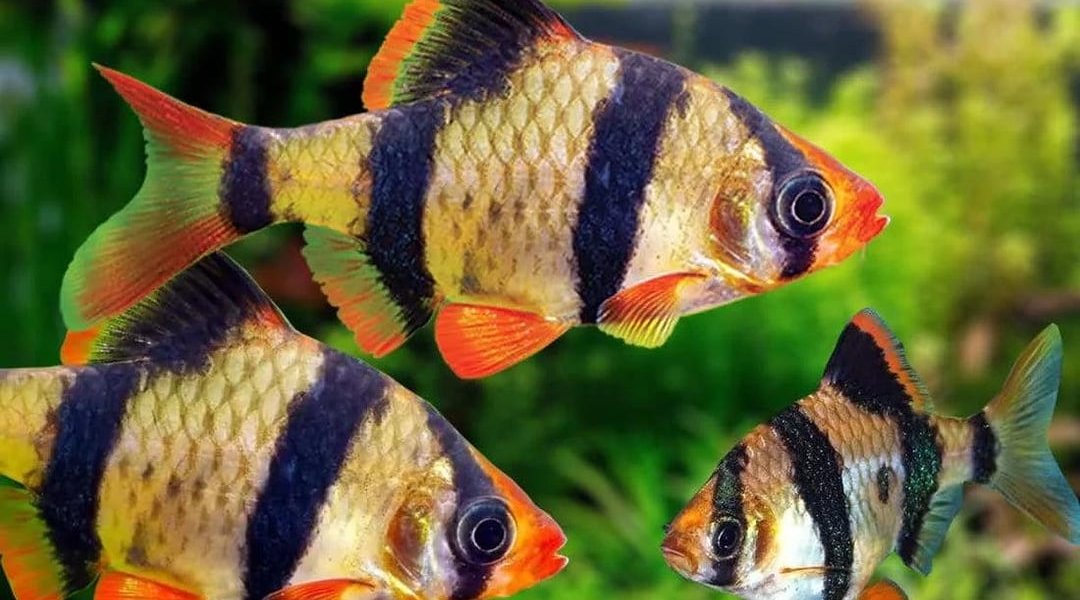
The tiger barb is one of the most recognizable freshwater fish in the hobby, sporting bold black stripes over an orange-gold body. Native to the rivers of Sumatra and Borneo, these active schooling fish bring energy and color to any aquarium. Their lively personality makes them a popular choice, though they do require some care to keep them thriving alongside other tank inhabitants.
Tiger barbs have a reputation for being fin nippers, which is partly earned and partly misunderstood. When kept in proper group sizes and given enough space, they direct most of their energy toward each other rather than their tankmates. Understanding their behavior is the key to making a tiger barb tank work beautifully.
Tank Size and Water Conditions
A minimum of 30 gallons is recommended for a school of tiger barbs, though a 40-gallon or larger tank gives them the room they need to swim and establish a hierarchy. These fish are active swimmers that appreciate open midwater space. A tight lid is important, as tiger barbs can occasionally jump when startled.
Tiger barbs prefer water temperatures between 74 and 79 degrees Fahrenheit, with a pH of 6.0 to 7.5. They do well in slightly soft to moderately hard water. Consistent water quality is essential, so weekly partial water changes of 25 to 30 percent will keep nitrate levels in check and fish healthy.
Setting Up the Tank
A well-planted tank with some open swimming space suits tiger barbs perfectly. Use dense background plants like Amazon swords, Java fern, and Vallisneria to give them visual breaks and make the tank feel more natural. Some driftwood and smooth stones add to the aesthetic while providing hiding spots.
Dark substrate tends to bring out the colors of tiger barbs more vividly. While they are not bottom dwellers, a fine-to-medium gravel or sand substrate completes the biotope look. Good filtration that creates a moderate current mimics their native river habitat and keeps water clean enough for their health.
Schooling Behavior and Group Size
Tiger barbs are schooling fish that must be kept in groups. A minimum of six is the baseline, but eight to ten fish is strongly preferred. In smaller groups, they become stressed and nippy. In larger schools, they form a fascinating social hierarchy where they constantly interact, chase, and display to one another.
Watching a large school of tiger barbs is one of the most dynamic sights in fishkeeping. The dominant fish will make short chasing runs at lower-ranking fish, but these interactions rarely cause harm within the school. This social energy is redirected toward the school itself when group size is adequate.
Fin Nipping: Managing the Problem
Tiger barbs have a well-known tendency to nip the fins of slow-moving, long-finned fish. Bettas, angelfish, gouramis, and fancy guppies are all vulnerable. When tiger barbs lack enough group members or stimulation, this behavior becomes more pronounced.
The best solution is preventative: keep them in large schools and avoid housing them with the fish listed above. If you notice persistent fin nipping even within a large school, check that the tank is not overcrowded and that there is enough open swimming space. Providing more hiding areas and plants often reduces aggression by breaking up sightlines.
Compatible Tank Mates
Tiger barbs work well with fish that are fast-moving, short-finned, or robust enough to hold their own. Good choices include other barb species like cherry barbs and rosy barbs, most tetras, danios, rainbowfish, loaches, and larger catfish like bristlenose plecos.
Bottom dwellers such as clown loaches are a classic pairing with tiger barbs and actually do very well together. Corydoras catfish are another good option. The general rule is to avoid anything with long, flowing fins or fish that are timid and slow, as those traits attract the barbs attention.
Feeding Tiger Barbs
Tiger barbs are omnivores that accept a wide variety of foods. A high-quality flake or pellet food forms the base of their diet. Supplement this with frozen or live foods like bloodworms, daphnia, brine shrimp, and tubifex worms to enhance their color and keep them in peak condition.
Feed small amounts two to three times per day, offering only what they can consume in two to three minutes. Tiger barbs are enthusiastic eaters and will not stop on their own, so overfeeding and the resulting water quality issues are a common problem. Blanched vegetables like zucchini or spinach can be offered occasionally as a fiber source.
Health and Common Diseases
Tiger barbs are generally hardy fish, but they are susceptible to ich (white spot disease), especially when subjected to temperature fluctuations or stress from poor water conditions. Look for small white dots on the body and fins, along with scratching behavior. Ich responds well to heat treatment (raising temperature to 86 degrees for several days) or commercially available medications.
Velvet disease, characterized by a gold or rust-colored dust on the body, is another occasional issue. Maintaining clean water and a stable temperature prevents most illness. Always quarantine new fish for at least two weeks before introducing them to the main tank to avoid introducing pathogens.
Breeding Tiger Barbs
Tiger barbs are egg scatterers that breed readily in the right conditions. Set up a separate breeding tank of around 10 gallons with fine-leaved plants or a mesh bottom to protect eggs from being eaten by the parents. Raise the temperature slightly to around 79 to 80 degrees and feed the pair protein-rich live or frozen foods to condition them.
The female will scatter hundreds of adhesive eggs among the plants, which the male fertilizes as she does so. Remove the adults immediately after spawning, as they will eat the eggs. Eggs hatch in about 48 hours, and the fry become free-swimming within a few days. Start feeding with infusoria or commercial fry food, then transition to baby brine shrimp as they grow.
Male vs. Female Differences
Sexing tiger barbs is straightforward once they mature. Males display a bright red nose and a vivid red coloration on their dorsal fin. They tend to be slimmer and more intensely colored overall. When courting, males perform display dances in front of females, showing off their colors.
Females are noticeably rounder in the abdomen, especially when carrying eggs. Their coloration is generally slightly less intense than males. Once you know what to look for, it is easy to spot the difference in a healthy, well-fed school.
Color Variants
Several color variants of the tiger barb have been developed through selective breeding. The green tiger barb displays a deep moss-green sheen where the orange would normally appear and is just as hardy and lively as the standard form. The albino tiger barb has a pale gold-white body with reduced pigmentation and faint striping.
All variants share the same temperament and care requirements as the standard tiger barb. Mixing different color forms within the same school creates a visually striking display without any additional management concerns.
Long-Term Care Tips
Tiger barbs can live five to seven years with good care. Consistent water changes, a varied diet, a large school, and compatible tankmates are the pillars of long-term success. Avoid abrupt temperature changes, which stress them and open the door to disease.
Monitor the hierarchy in your school periodically. Occasionally, one fish will become a target for persistent bullying. If a fish is being harassed constantly, separating it or restructuring the tank layout to add more visual breaks often resolves the situation. A healthy, well-fed school with enough space is naturally less aggressive.