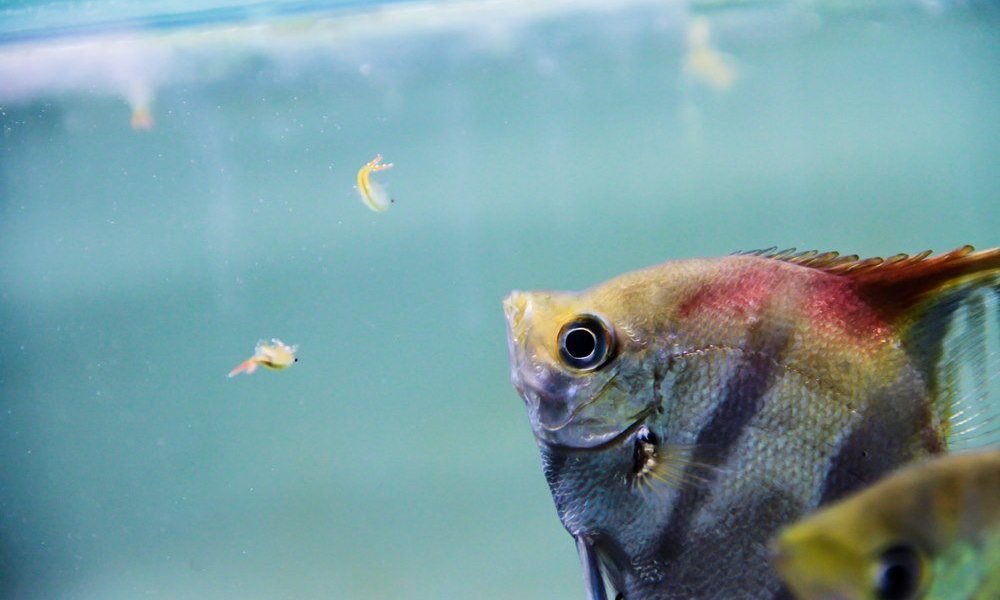
Dry flakes and pellets are convenient, but they rarely replicate the nutritional complexity of what fish eat in the wild. Live foods provide proteins, enzymes, and movement-triggered feeding responses that prepared foods simply cannot match. For breeding fish, conditioning fussy eaters, or recovering sick fish, live foods are often the difference between success and failure.
Even for healthy, well-established fish on a good dry diet, regular live food supplements improve coloration, breeding condition, and overall vitality. The key is knowing which live foods are appropriate for your fish, how to culture or source them, and how to use them safely.
Brine Shrimp (Artemia)
Brine shrimp are the most universally used live food in the hobby. Adult brine shrimp are accepted eagerly by almost any fish that eats meaty foods, from bettas to angelfish to discus. They are highly nutritious, easy to digest, and the right size for most small to medium tropical fish. Brine shrimp can be purchased at fish stores or grown from eggs at home.
Hatching brine shrimp nauplii (newly hatched larvae) at home takes 24 to 48 hours using a simple hatchery made from a plastic bottle, airline tubing, and an air pump. Fresh nauplii are nutritionally superior to adult brine shrimp because they still contain their yolk sac, making them a rich food source for fry and small fish. Gut-loading adults with spirulina powder or phytoplankton before feeding them to your fish improves their nutritional profile significantly.
Daphnia
Daphnia, commonly called water fleas, are small crustaceans that swim in a jerky, erratic motion that triggers a strong feeding response in most fish. They are excellent for conditioning fish for breeding and are often recommended as a laxative for fish suffering from constipation or swim bladder issues, as the chitin in their shells acts as a natural fiber source.
Daphnia can be cultured at home in a bucket or barrel outdoors using green water (a culture of suspended algae) as their food source. They multiply rapidly in warm weather and are largely self-sustaining once established. Indoors, daphnia cultures can be maintained under LED grow lights with green water or yeast as food. Purchased daphnia from fish stores are often available year-round and are generally safe to use with minimal disease risk.
Bloodworms (Chironomid Larvae)
Bloodworms are the larvae of non-biting midges and are one of the most popular live foods for aquarium fish. Their red color comes from hemoglobin, and they are rich in iron and protein. Nearly every carnivorous and omnivorous fish will accept them eagerly. They are particularly effective for conditioning bettas, cichlids, loaches, and other predatory species for breeding.
Live bloodworms should be rinsed thoroughly before feeding to remove any substrate debris. They can be kept alive in the refrigerator for up to a week in a thin layer of damp newspaper or in a shallow dish with a small amount of water. One caution: wild-caught bloodworms carry a small risk of introducing parasites or disease organisms into your tank. Rinse them well and avoid feeding them to fish that are already ill or immunocompromised.
White Worms and Grindal Worms
White worms (Enchytraeus buchholzi) and the smaller grindal worms (Enchytraeus albidus) are both excellent live foods for small to medium fish. They are high in fat and protein, making them outstanding conditioning foods for breeding. However, because of their high fat content, they should be used as supplements rather than a primary diet to avoid fatty liver problems in fish fed them exclusively.
Both can be cultured in shallow plastic containers with moist potting soil or coconut coir as bedding. Feed them with oatmeal, bread, or commercial worm food applied to the surface of the bedding. They reproduce quickly at room temperature, and cultures are typically self-sustaining with minimal maintenance. Harvest by placing food in one corner and collecting the worms that cluster there.
Vinegar Eels
Vinegar eels are actually nematodes (not true eels) that live in apple cider vinegar. They are one of the best starter live foods for fish fry and very small fish because of their tiny size (about 1 to 2 mm) and their ability to remain alive in aquarium water for several hours without sinking. This makes them ideal for feeding newly hatched fish that cannot yet chase food effectively.
Culturing vinegar eels is extremely simple. Fill a bottle halfway with apple cider vinegar and add a slice of apple. Add your starter culture and cap loosely. The culture is self-sustaining for months with minimal attention. Harvest by pouring a small amount through a coffee filter, then rinsing the worms off the filter into a cup of tank water before feeding.
Microworms
Microworms (Panagrellus redivivus) are another excellent live food for fry and small fish. Slightly larger than vinegar eels at 1.5 to 2 mm, they are still small enough for most newly free-swimming fish to consume. They swim actively when added to water and sink relatively slowly, giving fry time to locate and eat them.
Microworm cultures are grown in small containers with a thin layer of oatmeal or instant mashed potato as the growing medium. The worms crawl up the sides of the container and can be harvested by wiping the sides with a wet finger and rinsing into tank water. Cultures need refreshing every two to three weeks as the medium exhausts, but they are inexpensive and very easy to maintain at room temperature.
Blackworms (California Blackworms)
Blackworms (Lumbriculus variegatus) are freshwater annelid worms that are particularly popular for conditioning cichlids, discus, and other large predatory fish for breeding. They are nutritionally dense and highly palatable to most fish. When placed in the tank, they burrow into the substrate, which encourages fish to dig and forage naturally.
Blackworms can be kept alive in the refrigerator for up to two weeks in a shallow dish with a thin layer of water, changed daily. Rinse them thoroughly before each feeding. They cannot be cultured easily at home but are widely available from specialty fish stores and online retailers. Feed them sparingly due to their high protein content and the burrowing behavior that can disturb delicate planted substrates.
Fruit Flies (Drosophila)
For surface-feeding fish that hunt insects, flightless fruit flies are an outstanding live food. Drosophila melanogaster (the smaller variety) is appropriate for bettas, small killifish, and juvenile fish. Drosophila hydei is larger and better suited for medium-sized fish. Both flightless varieties cannot fly or jump out of the tank, making them practical to use without making a mess of the room.
Fruit fly cultures are sold at reptile and amphibian stores as well as online. A single culture yields thousands of flies over two to four weeks. Keep cultures at room temperature and start a new one before the old one is exhausted. The sight of fruit flies on the water surface activates strong surface-hunting behavior in many fish, which is not just entertaining to watch but excellent exercise for the fish.
Safety Considerations
Live foods sourced from the wild or from outdoor cultures carry a higher risk of introducing parasites, bacteria, or pollutants than home-cultured or commercially bred live foods. Whenever possible, culture your own live foods or purchase them from reputable suppliers who maintain closed cultures. Avoid collecting live food from outdoor ponds, streams, or puddles, as these sources can introduce diseases like fish tuberculosis, parasitic infections, and harmful bacteria.
Even commercially sourced live foods should be rinsed before feeding. Never add the water that live food comes packaged in to your aquarium. When introducing live food to a new quarantine tank or a fry tank, be especially cautious, as young fish have less robust immune systems and are more susceptible to disease exposure.