Nitrates are the end product of the nitrogen cycle. After beneficial bacteria convert ammonia to nitrite and nitrite to nitrate, the nitrate accumulates in your tank water. Unlike ammonia and nitrite, which are acutely toxic even at very low concentrations, nitrate is less immediately dangerous but causes serious problems when allowed to build up over time.
High nitrate levels stress fish chronically, suppress immune function, promote algae growth, and at very high concentrations cause respiratory distress and death. Keeping nitrates consistently low is one of the most important long-term maintenance tasks in any aquarium, and it requires understanding the sources of nitrate buildup before you can address them effectively.
What Nitrate Level Is Safe?
For most freshwater community fish, nitrate below 20 ppm is considered safe, with below 10 ppm being ideal. Sensitive fish like discus, wild-caught species, and some soft-water species do best below 10 ppm. Goldfish are somewhat more tolerant but still benefit from levels below 20 ppm. For planted tanks and reef aquariums, the target is even lower, often between 1 and 5 ppm.
Nitrate above 40 ppm causes noticeable stress in most fish over time. Levels above 80 to 100 ppm can cause acute symptoms including gasping, color loss, fin deterioration, and increased susceptibility to disease. If you test your water and find nitrates above 40 ppm, a large partial water change should be your first step.
Source 1: Overfeeding
Every piece of uneaten food that decomposes in your tank eventually becomes nitrate. Overfeeding is the single largest controllable source of nitrate in most home aquariums. Feed only what your fish can consume in two to three minutes, remove excess food immediately with a turkey baster or net, and consider skipping one feeding day per week. This small change often produces a noticeable reduction in nitrate levels within weeks.
Even food that fish eat still becomes nitrate after metabolic processing and excretion. Feeding high-protein foods like bloodworms exclusively increases nitrate production faster than a varied diet that includes plant-based foods. A balanced diet reduces the overall nitrogen load your tank must process.
Source 2: Overstocking
More fish means more waste, and more waste means faster nitrate accumulation. An overstocked tank will chronically struggle with high nitrates regardless of how often you change water. Right-sizing your fish population to the tank volume is not just about physical space but about the tank's capacity to process biological waste.
If you are performing regular water changes but still seeing rapid nitrate spikes between changes, overstocking is likely a contributing factor. Consider rehoming some fish or upgrading to a larger tank. Alternatively, upgrading your filtration to a larger canister filter with more biological media can help handle a higher bioload more effectively.
Solution 1: Regular Water Changes
The most reliable and straightforward method for reducing nitrates is also the most fundamental: regular partial water changes. A weekly water change of 25 to 30 percent removes nitrate-laden water and replaces it with fresh, treated water. Skipping water changes even occasionally allows nitrates to accumulate rapidly, especially in heavily stocked tanks.
In tanks with very high nitrate problems, more frequent or larger water changes may be necessary temporarily. A 50 percent water change twice a week will reduce nitrates more aggressively than a 25 percent change once a week. However, large rapid changes in water chemistry can themselves stress fish, so always treat tap water with a dechlorinator and match the temperature before adding it to the tank.
Solution 2: Live Plants
Live aquatic plants consume nitrate as a nutrient for growth. A heavily planted tank can maintain low nitrate levels with far fewer water changes than an equivalent unplanted tank. Fast-growing stem plants like hornwort, water sprite, and guppy grass are particularly effective nitrate consumers because of their rapid growth rate.
Floating plants like frogbit, water lettuce, and duckweed are among the most efficient nitrate removers available because they grow quickly and have direct access to light without competition. Adding a mat of floating plants to a high-nitrate tank can produce measurable improvement within days. The trade-off is that these plants must be regularly thinned to prevent them from blocking light to lower plants and fish.
Solution 3: Improving Filtration and Reducing Detritus
Solid waste and detritus accumulating in the tank and filter is a significant nitrate source. Regular gravel vacuuming during water changes removes the organic matter that would otherwise break down into nitrates. Pay particular attention to areas behind decorations, under plants, and in corners where water flow is low and detritus accumulates.
Rinse mechanical filter media (sponges and filter pads) in old tank water during water changes to remove trapped solids. Avoid rinsing biological media in tap water as this kills beneficial bacteria. Upgrading to a filter with more effective mechanical filtration reduces the amount of organic waste that reaches the biological stage of the cycle and gets converted to nitrate.
Solution 4: Nitrate Reducing Media
Several types of specialized filter media can help reduce nitrates. Seachem Matrix and similar products provide a porous environment in the oxygen-poor zones of the filter where anaerobic bacteria perform denitrification, converting nitrate into harmless nitrogen gas. These products work best in high-flow canister filters where some media can be positioned in lower-oxygen zones.
Ion exchange resins like Seachem Purigen remove organic compounds before they oxidize into nitrates, reducing the overall nitrate load produced. These resins are rechargeable with a bleach solution and reusable over time. While these products are useful supplements, they work alongside regular maintenance and water changes, not as a replacement for them.
Solution 5: Deep Sand Beds (Advanced)
A deep sand bed of 4 to 6 inches of fine sand creates anaerobic zones at the deeper layers where denitrifying bacteria can thrive. This method is common in reef aquariums but can be used in freshwater tanks as well. The bacteria in oxygen-poor zones reduce nitrate to nitrogen gas as part of their metabolic process, effectively removing it from the water column.
Deep sand beds take several months to become fully effective and require care not to disturb the deep layers. Adding small Malaysian trumpet snails to a deep sand bed is beneficial as they burrow through the upper layers without disrupting the anaerobic zone, preventing dangerous pockets of toxic hydrogen sulfide gas from forming.
Solution 6: Refugiums and Vegetable Filters
A refugium is a separate small tank or compartment connected to the main display tank where fast-growing plants or algae can consume nitrates produced in the main system. In marine systems, macroalgae like chaeto is grown in a refugium under 24-hour lighting to maximize nitrate consumption. In freshwater systems, fast-growing plants or even a simple trough of hornwort and floating plants fed by the sump outflow can achieve similar results.
Vegetable filters or algae scrubbers work on the same principle: plant growth extracts nitrate from the water, and you remove the nitrates from the system physically when you trim or harvest the plants. This is a highly effective long-term solution for tanks with chronically high nitrate levels that is completely chemical-free.
Testing and Tracking Progress
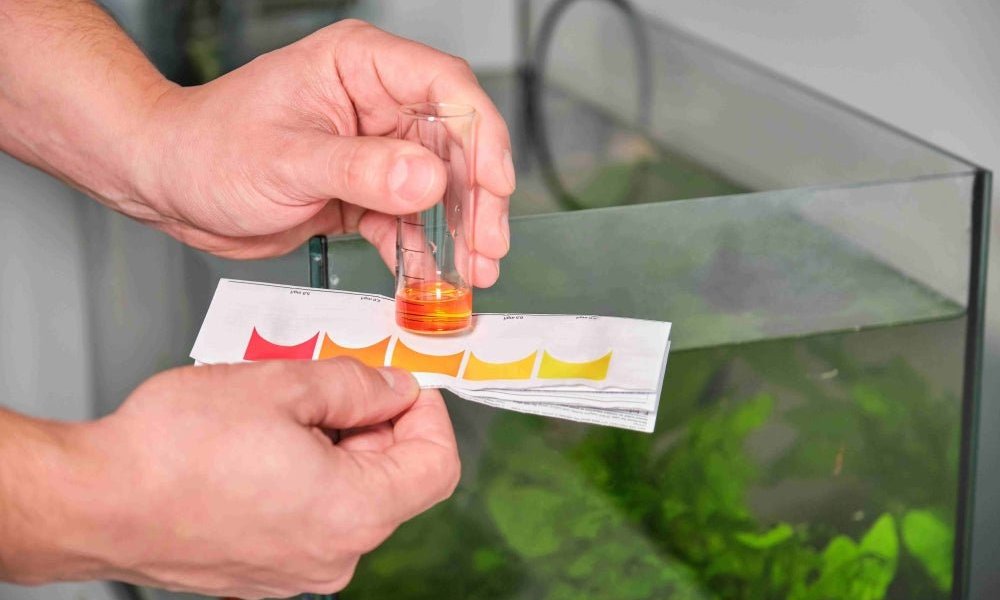
Use a reliable liquid test kit (not strip tests) to measure nitrate levels at least weekly. Track your readings over time to identify patterns. If nitrates rise more than 10 ppm per day, you have a serious overfeeding or overstocking problem that must be addressed structurally. If levels are stable but elevated around 30 to 40 ppm between water changes, increasing the frequency or size of water changes should resolve it.
Consistent monitoring is the only way to know whether your efforts are working. Many hobbyists are surprised to find that the tank they assumed had acceptable water quality has been running at chronically elevated nitrate levels for months. Regular testing removes guesswork and lets you intervene before problems become visible in the fish themselves.