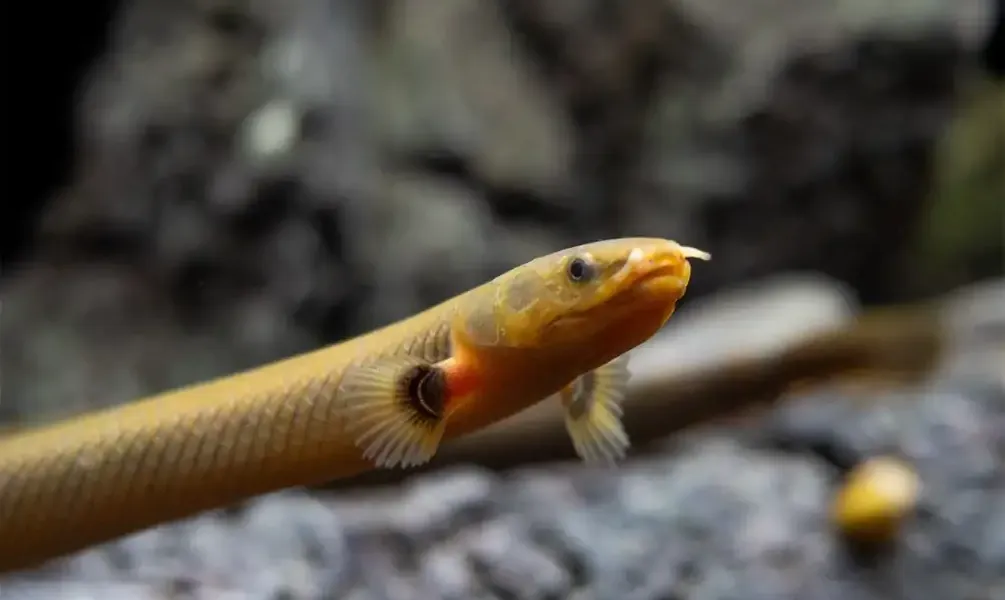
The rope fish (Erpetoichthys calabaricus) is one of the most unusual creatures you can keep in a freshwater aquarium. With its long, eel-like body, overlapping scales, and serpentine movement, it looks less like a fish and more like a living fossil. In fact, it is: the rope fish belongs to a family of fish that has remained virtually unchanged for millions of years.
Despite its exotic appearance, the rope fish is a hardy and rewarding species for aquarists willing to meet its specific needs. It is peaceful, slow-moving, and genuinely fascinating to observe. This guide covers everything you need to keep your rope fish healthy and thriving for years to come.
Species Overview
The rope fish is also commonly called the reedfish or snakefish, and its scientific name reflects its bichir ancestry. It is native to slow-moving, murky rivers, swamps, and floodplains in West and Central Africa, particularly in Nigeria, Cameroon, and the Congo Basin. It shares its family with the more commonly kept bichir species, all of which are ancient, air-breathing fish that have changed little since prehistoric times.
Rope fish can grow to 14 to 20 inches in length, though most aquarium specimens reach around 14 to 16 inches. Their bodies are long and cylindrical, covered in interlocking rhomboid scales that give them a distinctly reptilian look. The dorsal fin is reduced to a series of small spines running down the back, and they use their pectoral fins to walk along the substrate.
Tank Size and Setup
Because rope fish grow large and are active at night, they need a spacious tank. A minimum of 55 gallons is recommended for one or two individuals, with larger tanks required for groups or tankmates. The tank should be long rather than tall, as rope fish spend most of their time near the bottom and mid-level of the water column.
Substrate should be soft sand or fine gravel to protect the fish's sensitive underside as it moves across the bottom. Sharp or coarse gravel can cause abrasions. Provide plenty of hiding spots using PVC pipes, caves, driftwood, and dense plant clusters. Rope fish are secretive by nature and will be more active and less stressed when they have places to retreat.
Because they are escape artists capable of squeezing through surprisingly small gaps, a tight-fitting lid is essential. Even a small opening is enough for a rope fish to slip through overnight. They have been found dried on floors the next morning, so take lid security seriously.
Water Parameters
Rope fish are tolerant of a range of water conditions, which makes them forgiving for intermediate keepers. The ideal temperature range is 72 to 82 degrees Fahrenheit (22 to 28 degrees Celsius). pH should be kept between 6.5 and 7.5, and hardness between 5 and 20 dGH. They come from soft, slightly acidic water in the wild, but adapt well to neutral conditions.
Keep ammonia and nitrite at zero and maintain nitrates below 20 ppm with regular water changes. These fish are not exceptionally sensitive, but they do benefit from stable, clean water. A good canister filter provides excellent biological filtration without creating excessive flow, which rope fish dislike.
Breathing Air: A Unique Adaptation
One of the most remarkable features of the rope fish is its ability to breathe atmospheric air. Like its bichir relatives, it has a primitive lung-like structure that supplements gill respiration. In the wild, this allows it to survive in oxygen-depleted swampy water and even to move short distances overland during floods.
In your aquarium, you will notice the rope fish regularly surfacing to gulp air. This is completely normal and not a sign of distress. However, do make sure the air above the waterline is not significantly cooler than the tank water, as inhaling cold air can cause respiratory issues. A lid also helps keep the air above the tank warm and humid.
Feeding Rope Fish
Rope fish are carnivorous predators that hunt by smell rather than sight, using sensory organs on their snouts to detect prey in murky water. In the wild they eat worms, small crustaceans, insect larvae, and small fish. In the aquarium, they readily accept live and frozen foods, and can be trained to take sinking pellets over time.
Excellent food choices include bloodworms, earthworms, blackworms, shrimp, and frozen silversides. Feed in the evening or after lights-out since rope fish are primarily nocturnal hunters. Drop food near the bottom where they forage, and use feeding tongs or a feeding stick to place food directly in front of them if they seem reluctant to find it on their own.
Avoid overfeeding: two to three small feedings per week is sufficient for adults. Rope fish have slow metabolisms and can go without food for several days without harm. Uneaten food should be removed promptly to prevent water quality issues.
Compatible Tankmates
Rope fish are peaceful toward fish too large to swallow, but any fish small enough to fit in their mouth is potential prey. Tetras, small rasboras, guppies, and other small fish will likely disappear overnight. Stick to tankmates that are at least 4 to 5 inches long to be safe.
Good companions include larger peaceful cichlids, medium to large gouramis, clown loaches, larger barbs, and other bichir species. Rope fish are generally not aggressive toward their own kind, and groups of two or three can coexist well in a large enough tank. Avoid aggressive species that may nip at the rope fish's fins or stress it out.
Behavior and Activity Patterns
Rope fish are almost entirely nocturnal. During the day they typically hide inside caves or tubes, remaining motionless for hours. As the lights dim in the evening, they emerge and begin slowly patrolling the bottom in search of food. Their movement is hypnotic: they undulate their bodies smoothly while using their small pectoral fins as legs, creating an effect that looks somewhere between swimming and crawling.
While they are not schooling fish, rope fish kept in groups tend to be more active and less secretive than solitary individuals. They may curl up together in the same hiding spot, which is a sign they are comfortable and at ease. Watching several rope fish emerge together at feeding time is one of the genuine highlights of keeping this species.
Health and Common Issues
Rope fish are generally robust, but there are a few health concerns to watch for. Skin infections and abrasions can occur if the substrate is too coarse or if the fish is injured. Their scale-covered bodies are somewhat protective, but any wound should be monitored for signs of infection, treated with aquarium salt or antibiotics if needed.
Because they breathe air, respiratory infections can occur if the tank is too cold or if water quality is poor. Signs include labored breathing, loss of appetite, and unusual surface-gulping behavior. Maintain good water quality and stable temperatures to prevent most health issues. Rope fish can live 15 to 20 years in well-maintained aquariums, making them a long-term commitment.
Breeding in Captivity
Breeding rope fish in captivity is rare and considered difficult. They are egg-scatterers that spawn in shallow, vegetated water in the wild, typically during the rainy season when water levels rise and temperatures fluctuate. Inducing this in an aquarium requires careful manipulation of conditions, including simulating a dry and rainy season cycle.
Sexing rope fish is not straightforward; males may have slightly more dorsal spines than females, but this is not a reliable indicator in all specimens. Most aquarists keep rope fish for their appearance and behavior rather than attempting to breed them. If breeding is a goal, connecting with specialist bichir breeders for guidance is the best starting point.
Purchasing and Acclimation
Rope fish are widely available in the aquarium trade, though not always stocked at general pet stores. Specialty fish stores and online retailers are the most reliable sources. When selecting a specimen, look for one that is active, has clear eyes, intact fins, and no visible wounds or signs of disease. Avoid fish that are lying motionless at the bottom and not responding to stimuli during the day, as this can indicate illness.
Acclimate new rope fish slowly using the drip method over 30 to 60 minutes to minimize osmotic stress. After introduction to the tank, expect the fish to hide for the first few days while it adjusts. Offer food after the second or third evening once it has settled in.