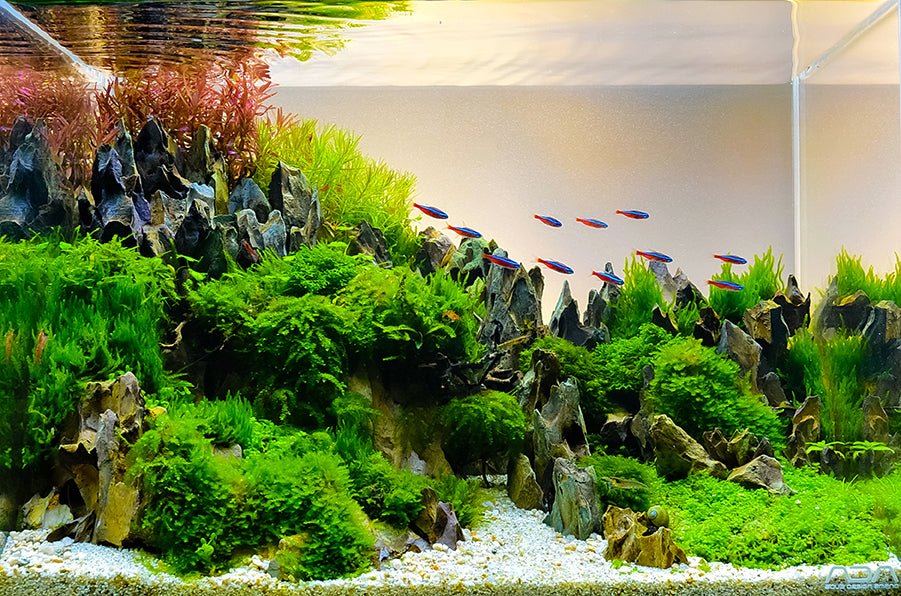
Aquascaping is the art of arranging aquatic plants, rocks, wood, and substrate inside an aquarium to create a visually compelling underwater landscape. Done well, a planted aquascape looks like a miniature natural world frozen in glass. Done poorly, it looks like a pile of rocks with some wilting plants. The difference lies almost entirely in planning, technique, and an understanding of a few key principles.
This guide walks through the entire process of building an aquascape from scratch: choosing a layout style, selecting and preparing hardscape materials, planting effectively, and maintaining the result over time. Whether you are building your first planted tank or refining an existing one, these principles will help you create something genuinely beautiful.
Choosing a Layout Style
Before buying a single plant or rock, decide on a layout style. The three most popular aquascaping styles are the Iwagumi, the Nature Aquarium, and the Dutch style. Each has a distinct philosophy and set of rules.
Iwagumi uses only rocks and foreground and midground plants, creating a minimalist, zen-like landscape. It is elegant but unforgiving: every stone placement matters, and algae management is critical because there are no tall plants to compete with it. Nature Aquarium style, popularized by Takashi Amano, combines rocks, driftwood, and a mix of plants to recreate a natural riverbank or forest floor scene. This is the most versatile style and works well for beginners. Dutch style focuses heavily on dense plantings of contrasting colors and textures, organized into rows and groups, with minimal hardscape. It rewards meticulous plant knowledge but is less about a "scene" and more about lush botanical display.
For most beginners, a Nature Aquarium approach offers the best balance of visual impact and manageable complexity. Pick one style and stick to it. Mixing philosophies usually produces cluttered, unfocused results.
The Golden Ratio and Composition Rules
Good aquascapes follow the same compositional rules as landscape photography and painting. The most important is the rule of thirds: mentally divide the tank into a 3x3 grid and place your focal point where the lines intersect, not in the center. A centered composition looks static and boring. An off-center focal point creates visual tension and draws the eye.
The golden ratio (approximately 1:1.618) is also widely used, particularly in Iwagumi layouts. The main stone (called the oyaishi) is typically placed at the golden ratio point along the tank floor, roughly at 60% from one end. Secondary and tertiary stones are placed in relation to this anchor stone. Odd numbers of stones (3, 5, 7) are preferred over even numbers, as even groupings create symmetry that feels artificial in a natural scene.
Use depth and perspective to make the tank appear larger than it is. Place larger, taller elements at the back and sides, and keep the foreground low and open. Use fine-leaved or small-leafed plants toward the back to create the illusion of distance.
Selecting and Preparing Hardscape
Hardscape refers to the non-living structural elements: rocks and wood. The two most popular aquascaping rocks are Seiryu stone (blue-grey limestone with angular fractures and white veins) and dragon stone (also called Ohko stone, a textured tan-brown rock with dramatic pits and ridges). Both create natural-looking formations. Lava rock is porous and great for holding moss and bacteria, but less visually dramatic on its own.
For wood, spiderwood creates delicate branch structures perfect for recreating a fallen tree or root system. Manzanita is denser with twisted, branching arms. Malaysian driftwood is heavy and dark, ideal for creating low-lying root structures. All wood should be boiled or soaked before use to remove tannins that will cloud the water. Some tannin staining is normal and even desirable in blackwater setups, but heavy staining in a bright planted tank is undesirable.
Before placing anything in the tank, do a dry layout on a table. Arrange stones and wood until the composition feels natural. Photograph it from the front at eye level. If it looks good in a photo, it will look good in the tank. This step saves enormous frustration later.
Substrate: Layers and Depth
Substrate is more than just the floor of your aquascape: it is the growing medium for plant roots and a key part of the visual composition. A proper aquascape substrate has two or three layers. The base layer is typically an aquatic soil or nutrient-rich substrate like ADA Amazonia, Fluval Stratum, or similar products. This layer feeds plant roots and lowers pH slightly, benefiting most aquatic plants.
Above the base, many aquascapers add a thin cap of fine sand or decorative gravel. This prevents the nutrient substrate from clouding the water, gives a clean natural appearance, and makes the tank easier to vacuum without disturbing root zones. Aim for a total substrate depth of 3 to 4 inches in the foreground, sloping up to 4 to 6 inches in the background to enhance depth perception.
Create hills and slopes in the substrate before adding water or plants. A perfectly flat substrate floor looks unnatural. Mound the substrate toward the back corners, slope it toward the front center, and use rocks to hold slopes in place. Over time substrate shifts, so securing slopes with mesh supports or holding rocks is worthwhile.
Choosing Plants: Foreground, Midground, and Background
Successful planted tanks use plants at three depth levels. Foreground plants are low-growing carpeting species that cover the substrate and create a lawn effect. Popular choices include Hemianthus callitrichoides (dwarf baby tears), Eleocharis parvula (dwarf hairgrass), and Glossostigma elatinoides. These require high light and CO2 injection to carpet properly.
Midground plants provide transition between foreground and background. Compact species like Staurogyne repens, Cryptocoryne parva, and low-growing mosses attached to stones work well here. They should not grow tall enough to block the foreground view from the front glass.
Background plants form the backdrop and create height. Stem plants like Rotala rotundifolia, Ludwigia repens, and Hygrophila polysperma grow quickly, add color, and soften the visual edge between hardscape and water. Large species like Vallisneria and Amazon swords also work well at the rear. Choose plants with contrasting leaf shapes and colors to create visual interest.
CO2 Injection and Fertilization
Most foreground carpeting plants and many midground species require pressurized CO2 injection to grow properly. Without CO2, demanding plants like baby tears grow slowly, become pale, and lose to algae. A CO2 system consists of a pressurized cylinder, a regulator with a solenoid, a bubble counter, and a diffuser. CO2 should be set to run during the light period only, targeting a level of 20 to 30 ppm in the tank water.
Alongside CO2, plants need fertilizers. Use a comprehensive liquid fertilizer that covers all macro and micronutrients, dosed according to your plant load and growth rate. The Estimative Index (EI) method doses nutrients generously and relies on weekly water changes to reset levels, eliminating the need for precise testing. For beginners, a simpler lean dosing approach with a balanced all-in-one fertilizer like Seachem Flourish or Easy Green is more forgiving.
Lighting Requirements
Lighting is one of the most critical variables in an aquascape. Too little light and plants stagnate and algae blooms with no competition. Too much light without adequate CO2 and nutrients also triggers algae explosions. The goal is balance between light, CO2, and nutrients.
For high-tech planted tanks with CO2, use lights rated at medium to high intensity for 7 to 8 hours per day. Popular fixtures include the Fluval Plant 3.0, Chihiros series, and Twinstar lights. For low-tech setups without CO2, reduce lighting intensity and stick to low-demand plants like java fern, anubias, crypts, and mosses. A programmable light with a sunrise and sunset ramp reduces daily fluctuation stress on both plants and fish.
Planting Technique
Planting technique matters more than most beginners expect. Stem plants should be inserted individually into the substrate using aquascaping tweezers, burying at least one node below the surface. Plant in clusters of 5 to 10 stems rather than single stems spread across the background, as clusters look more natural and fill in faster.
Foreground carpet plants should be divided into small portions and planted 2 to 3 cm apart across the foreground area. They will spread and fill in over 4 to 8 weeks with good light and CO2. Mosses are best attached to rocks or wood with super glue gel or cotton thread. Anubias and java fern should be tied to hardscape rather than buried, as burying their rhizome causes rot.
Algae Prevention and the Cycling Period
The first 4 to 6 weeks after setup are the most challenging. The tank is cycling, nutrients and CO2 levels are unstable, and algae often appear before plants are fully established. This is normal and expected. The most common algae during this period are green spot algae, brown diatoms, and hair algae. Most will disappear as the tank matures and plants take hold.
To minimize early algae: perform daily water changes of 30 to 50% for the first two weeks to export nutrients, keep lighting to 6 hours per day during cycling, and add fast-growing stem plants to compete with algae from the start. A healthy population of algae-eating crew including Amano shrimp, nerite snails, and otocinclus catfish helps control surface algae without harming plants.
Maintenance Routine
Once established, aquascapes require consistent maintenance to stay beautiful. Trim stem plants before they reach the surface and replant trimmed tops to maintain density. Remove yellowing or dying leaves before they decay. Prune carpeting plants by cutting them flat with sharp scissors, which encourages lateral spread rather than upward growth.
Perform weekly water changes of 30 to 50% to replenish minerals, remove waste, and keep parameters stable. Clean the glass with a magnetic scraper or razor blade. Wipe filter intakes weekly to maintain flow. Check CO2 levels monthly and refill cylinders as needed. A consistent maintenance schedule is what separates thriving aquascapes from declining ones.