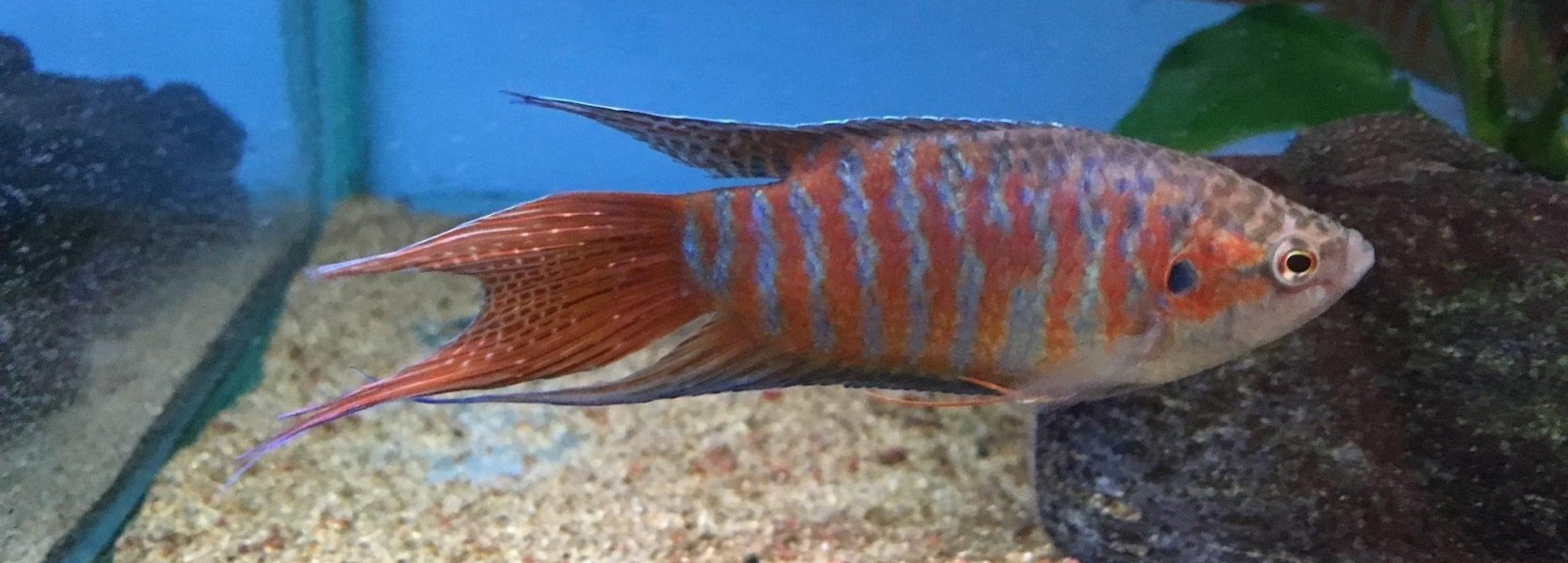
Long before neon tetras, guppies, or bettas became household names, there was the paradise fish. This vividly striped, fin-flaring gourami relative was among the first tropical fish ever kept in European aquariums, arriving in France in the 1860s and captivating aquarists who had never seen anything like it. In an era before reliable aquarium heaters, the paradise fish offered something revolutionary: a tropical-looking fish that could tolerate cool water.
Today the paradise fish (Macropodus opercularis) is somewhat overshadowed by its more popular cousins, but it remains a remarkable species with an outsized personality, bold colors, and an interesting history. For aquarists who want something different from the usual community fish, the paradise fish is well worth a second look.
History: The First Aquarium Fish
The paradise fish holds a genuine claim to being the first tropical fish kept in Western aquariums. French naval officer and amateur naturalist Pierre Carbonnier imported several specimens to Paris in 1869, and they caused a sensation. The fish were unlike anything previously seen in Europe: brilliantly colored in alternating bands of red-orange and blue-green, with long flowing fins and a combative temperament that made them riveting to observe.
Their hardiness made them practical to keep before aquarium technology existed. They could tolerate temperatures as low as 60 degrees Fahrenheit and survive in small containers with minimal filtration. For decades they were the most popular aquarium fish in Europe, only displaced when more colorful tropical species became available as aquarium technology improved and the hobby expanded in the early 20th century. Understanding this history gives the paradise fish a historical significance no other aquarium species can match.
Appearance and Varieties
The wild-type paradise fish is striped in alternating bands of vivid blue-green and red-orange running along its body. The fins are long and flowing, with males having particularly elaborate tails. The body shape is compressed and oval, typical of the gourami family. A fully colored male in breeding condition is genuinely stunning, ranking among the most beautiful temperate freshwater fish in the world.
Several color varieties have been developed through selective breeding. The albino paradise fish has a pale cream body with red-pink finnage and red eyes. The blue paradise fish has intensified blue coloration. A less common black paradise fish variety has dark, metallic scaling. There is also the spike-tail paradise fish (Macropodus erythropterus) and the Chinese paradise fish (Macropodus chinensis), both closely related species sometimes available in the trade.
Tank Size and Setup
Paradise fish are active, curious, and somewhat aggressive, so they benefit from a tank of at least 20 to 30 gallons. This provides enough swimming room and territory to reduce aggression. A longer tank is preferable to a taller one, giving the fish room to patrol horizontally.
Decor should include plenty of plants, driftwood, and visual barriers. Dense planting along the sides and back of the tank allows fish to establish territories and retreat from one another. Floating plants like water sprite or frogbit are appreciated and also mimic the fish's natural shallow-water habitat. The tank can be kept relatively simple, as paradise fish do not require specific substrate or elaborate hardscape.
Unlike most tropical fish, paradise fish thrive in cooler water. A temperature of 60 to 75 degrees Fahrenheit (15 to 24 degrees Celsius) is ideal. They can be kept without a heater in rooms that stay at or above 65 degrees, making them suitable for unheated tanks in temperate climates. This cold tolerance is one of their most practical advantages.
Water Parameters
Paradise fish are extremely tolerant of varied water conditions. They accept a wide pH range of 6.0 to 8.0, and adapt to both soft and moderately hard water. Unlike many tropical fish, they do not require precise water chemistry, making them forgiving for beginners who are still learning the hobby.
Filtration can be gentle to moderate. Paradise fish, like all labyrinth fish, breathe atmospheric air using a specialized organ called the labyrinth organ. They regularly surface to gulp air. Keep the surface accessible and ensure the air above the water is not significantly colder than the tank, as inhaling cold air can cause respiratory issues.
Temperament and Aggression
The paradise fish has a reputation for aggression, and it is largely deserved. Males are intensely territorial toward other males and will fight vigorously if kept together. Two males in the same tank will fight repeatedly until one is killed or severely injured unless the tank is very large with dense cover. Keep only one male per tank as a rule.
Toward other species, paradise fish range from mildly nippy to aggressive depending on the individual. Long-finned fish are frequently nipped, so avoid tankmates like fancy guppies, angelfish, or bettas. Paradise fish also eat smaller fish that fit in their mouths, so avoid very small tetras or nano fish. Their aggression tends to increase during breeding season and when a male is building a bubble nest.
Despite this combative reputation, paradise fish can coexist peacefully with the right companions. Robust, medium-sized fish that are not fin-nipped targets and hold their own are the best choices. Giant danios, corydoras catfish, peaceful barbs, and larger rasboras generally work well.
Feeding Paradise Fish
Paradise fish are omnivores that lean toward the carnivorous side. In the wild they eat insects, worms, small crustaceans, and zooplankton. In the aquarium they readily accept most prepared foods including high-quality flakes, pellets, and freeze-dried foods. However, they thrive and show their best colors when given regular live or frozen protein.
Excellent food choices include frozen bloodworms, brine shrimp, daphnia, and mosquito larvae. Live daphnia and live brine shrimp are especially appreciated and trigger strong natural hunting behaviors. Feed once or twice daily, offering only as much as the fish consumes in 2 to 3 minutes. Remove any uneaten food to keep the water clean.
Breeding Paradise Fish
Paradise fish are bubble nest builders, like bettas and most gouramis. When ready to spawn, the male constructs a nest of air bubbles at the water surface, often incorporating floating plant material. Spawning itself involves a characteristic gourami embrace, with the male wrapping himself around the female and fertilizing eggs as they are released.
After spawning, the male collects the eggs in his mouth and places them in the bubble nest. He then guards the nest aggressively, chasing away the female, who should be removed at this point or she may be injured or killed. The eggs hatch in 24 to 48 hours, and the male continues guarding the fry until they are free-swimming, typically 3 to 5 days after hatching.
To encourage breeding, raise the temperature slightly to 75 to 78 degrees Fahrenheit and feed the pair high-protein live or frozen foods for a week. Provide floating plants for nest construction. Lowering the water level to 6 to 8 inches can also trigger spawning behavior. Fry can be raised on infusoria, powdered fry food, or baby brine shrimp.
Comparison to Betta Fish
Paradise fish and bettas share many similarities: both are labyrinth fish, both are aggressive toward males of their own species, both build bubble nests, and both display vibrant finnage. The key differences are in temperature tolerance and size. Paradise fish are significantly hardier in cold water, making them viable for unheated tanks. They also tend to be slightly larger and arguably more robust overall.
Bettas generally have more color variety and longer fins, which is why they have eclipsed paradise fish in popularity. But for aquarists who want a labyrinth fish with historical significance, cold-water tolerance, and a feisty personality in a more natural-looking package, the paradise fish offers something bettas simply cannot match.
Common Health Issues
Paradise fish are hardy and rarely suffer serious illness when water quality is maintained. The most common problems are related to fin damage from fighting or nipping by aggressive tankmates. Torn fins heal quickly in clean water with good nutrition, but monitor for secondary bacterial infections in split or fraying fins. A treatment of aquarium salt and a water quality check resolves most minor fin issues.
Ich (white spot disease) can occur when fish are stressed by temperature swings or poor water quality. Treat with aquarium temperature raised to 82 degrees Fahrenheit combined with a copper-based medication or ich treatment product. Velvet disease, caused by a dinoflagellate parasite, presents as a golden or rust-colored dust on the body and requires prompt treatment with copper-based medication.
Where to Find Paradise Fish
Despite their historical importance, paradise fish are not always easy to find in mainstream pet stores. Specialty aquarium retailers, local fish clubs, and online fish sellers are the most reliable sources. The wild-type coloration is the most commonly available form, while color varieties like albino and blue forms may require searching through specialty breeders.
Prices are generally modest, reflecting the fact that paradise fish are easy to breed in captivity and have been in the hobby for over 150 years. When purchasing, look for fish with fully erect fins, bright coloration, and active behavior. A healthy paradise fish holds its fins up and moves with confidence; a stressed or sick individual clamps its fins and hides.