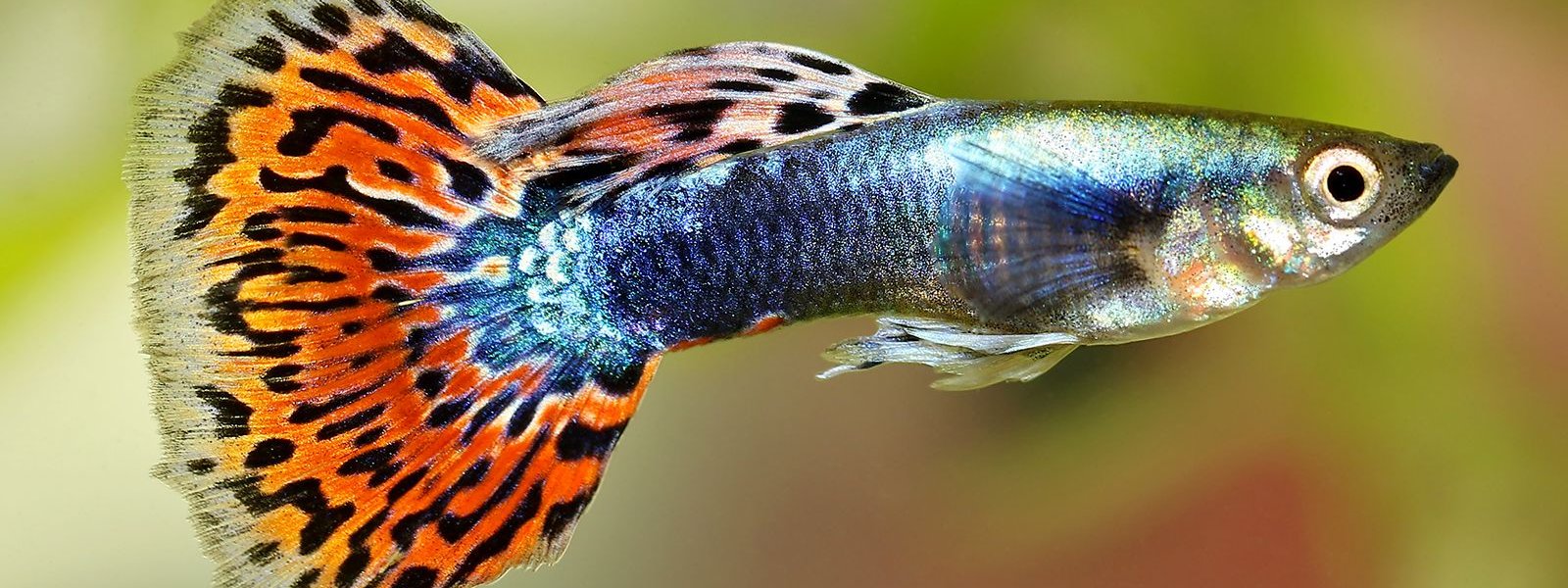
Why guppies are one of the most popular fish in the hobby
Guppies have been kept in aquariums for well over a century, and their popularity has never faded. They are hardy, colorful, active, and easy to breed, which makes them appealing to beginners and experienced aquarists alike. Selective breeding over decades has produced an enormous range of tail shapes and color patterns, from solid red deltas to mosaic and snakeskin varieties with intricate markings. Few fish offer this combination of ease and visual variety.
Tank requirements
Guppies are small fish, with males reaching about 1.5 inches and females up to 2.5 inches, but they are active swimmers and should not be kept in tiny tanks. A 10-gallon tank is the practical minimum for a small group. Larger tanks are better because they dilute waste and provide more swimming space. Guppies prefer water temperatures between 72°F and 82°F with a pH of 7.0–7.5 and moderate hardness. They tolerate a surprisingly wide range of conditions but thrive in slightly hard, neutral to alkaline water.
Feeding
Guppies are omnivores and eat almost anything. A quality micro pellet or crushed flake food should form the base of their diet. Supplement with frozen or live foods like baby brine shrimp, daphnia, and micro worms a few times a week. Guppies that receive varied feeding display better color, grow faster, and breed more readily. Avoid overfeeding, which is a common mistake. They should finish food within two minutes.
Tank mates
Guppies are peaceful community fish that coexist with most non-aggressive species of similar size. Good tank mates include corydoras, mollies, platies, small tetras, and rasboras. Avoid fin-nipping species like tiger barbs, which will target the long, flowing tails of male guppies. Also avoid larger fish that could eat them. Male guppies can occasionally harass each other, and keeping too many males together or too few females causes stress. A ratio of one male to two or three females reduces aggression and prevents females from being over-pursued.
Breeding guppies
Guppies are livebearers, meaning females give birth to free-swimming fry rather than laying eggs. A healthy female can produce 20–60 fry every four to six weeks. Females store sperm and can produce multiple batches from a single mating. Fry are born fully formed and immediately capable of swimming and eating. In a community tank, most fry will be eaten. To raise them, transfer pregnant females to a separate breeding box or fry tank with fine-leaved plants for cover. Feed fry baby brine shrimp or powdered fry food multiple times daily.
Common health problems
Guppies are susceptible to velvet (Oodinium), a parasitic disease that causes a dusty gold or rust-colored sheen on the body. It spreads quickly and requires treatment with copper-based medication. Fin rot is common in poor water conditions, appearing as ragged or receding fin edges. The most common cause is elevated nitrate and infrequent water changes. Wasting disease, where fish eat but steadily lose weight, is often caused by internal parasites and is treated with medicated food.