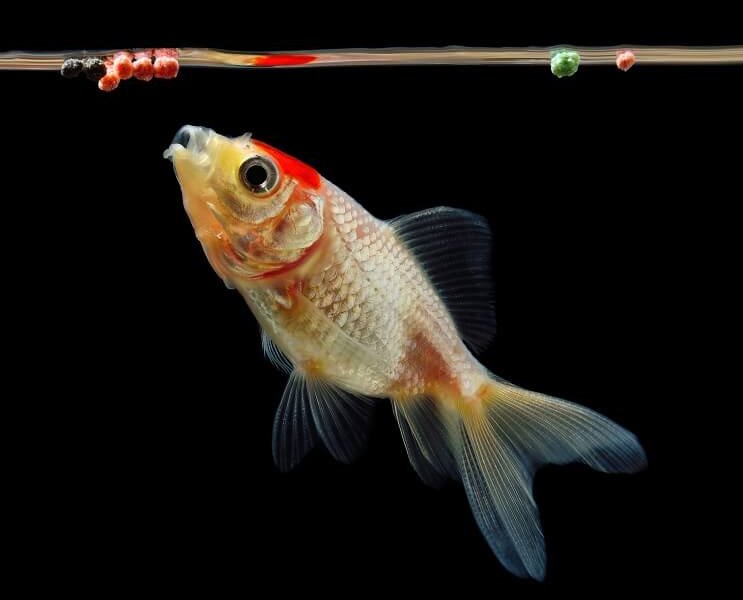
Goldfish are not carnivores, and they are not fully herbivores either
Goldfish are omnivores that eat a wide range of foods in the wild, including plant matter, insects, crustaceans, and algae. In an aquarium or pond, they need a diet that reflects this variety. A single food source, even a high-quality pellet, is not enough to keep them in peak condition long-term.
The problem with overfeeding
Goldfish have no stomach in the traditional sense. Food passes through their digestive tract quickly, which is why they appear to always be hungry. Overfeeding is one of the most common causes of poor water quality, bloating, and swim bladder problems in goldfish. Feed only what they can consume in two to three minutes, once or twice a day. Remove any uneaten food immediately.
Pellets vs. flakes
Pellets are generally preferable to flakes for goldfish. Flakes break apart quickly and cloud the water, and goldfish tend to gulp air while eating them, which can contribute to swim bladder issues. Sinking pellets are better than floating ones for the same reason. Look for pellets with a protein content around 30–35% and wheat germ as one of the first ingredients, which is easier for goldfish to digest.
Vegetables goldfish can eat
Fresh vegetables should make up a regular part of a goldfish diet. Blanched peas (with the skin removed) are the most commonly recommended food for goldfish with constipation or swim bladder issues. Other good options include:
Blanched spinach, zucchini, and romaine lettuce all work well. Cucumber slices can be weighted and left in the tank. Boiled broccoli florets are accepted by most goldfish. Remove any uneaten vegetable matter within a few hours to avoid fouling the water.
Protein sources
Goldfish benefit from occasional live or frozen protein. Bloodworms, daphnia, and brine shrimp are all suitable and most goldfish eat them enthusiastically. These should be treats rather than staples, fed once or twice a week. Avoid overreliance on bloodworms as they are high in fat and low in nutritional diversity.
Foods to avoid
Several common foods are harmful to goldfish. Bread and crackers expand in the digestive tract and cause bloating. Peas with the skin on are a choking hazard for smaller fish. Citrus fruits are too acidic. Processed human foods with salt, sugar, or seasoning should never be fed. Some aquarists avoid dried bloodworms as they can introduce bacteria, preferring frozen or live instead.
Feeding in winter or cold water
Goldfish are cold-water fish, and their metabolism slows significantly as temperatures drop. Below 50°F (10°C), their digestive system nearly shuts down. If you keep goldfish in an outdoor pond, stop feeding them when water temperatures fall below this threshold. Feeding them in cold water causes undigested food to rot inside their digestive tract, which can be fatal.