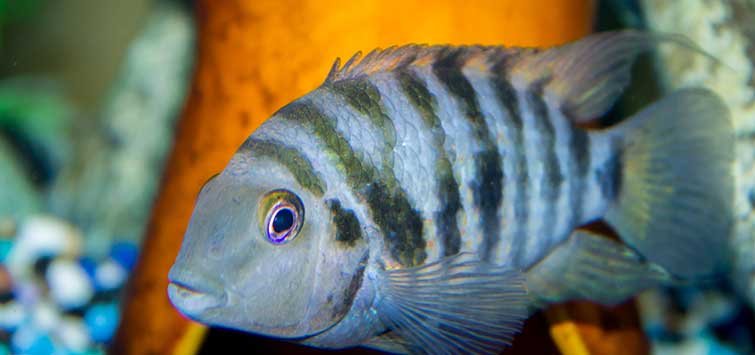
Cichlids are not all the same
Before attempting to breed cichlids, it helps to understand which type you are working with. The cichlid family is enormous and includes fish from three continents with very different breeding strategies. African Rift Lake cichlids from Malawi and Tanganyika, West African cichlids, and New World cichlids from Central and South America all breed differently, have different water requirements, and present different challenges. This guide focuses on the fundamentals that apply broadly, with notes on key differences.
Setting up a breeding tank
Most cichlid breeders use a dedicated breeding tank rather than breeding in the community setup. This protects both the breeding pair and other tank inhabitants, since cichlids become highly aggressive when guarding eggs and fry. The tank size depends on the species: a pair of small cichlids like German blue rams can breed in a 20-gallon tank, while a pair of Oscars needs at least 75 gallons. Provide flat rocks, caves, flowerpots, and broad-leaved plants as spawning sites.
Conditioning the pair
To trigger spawning, cichlids need to be in peak physical condition. Feed the pair a high-protein diet for two to four weeks before attempting to breed them: live or frozen bloodworms, earthworms, brine shrimp, and quality cichlid pellets. Gradually raise the temperature by 2–3°F above their normal range and perform larger, more frequent water changes to simulate the onset of the rainy season, which triggers breeding in many species.
Pairing and courtship
Cichlids form pairs through courtship behavior that can look like fighting to the uninformed eye. Lip-locking, chasing, and fin-flaring are all part of normal cichlid courtship. True aggression results in injury and hiding. Most cichlids choose their own mates and forced pairings of two random fish of the same species sometimes result in one fish killing the other. When possible, raise a group of juveniles together and let them pair naturally.
Substrate spawners vs. mouthbrooders
This is the most important behavioral distinction in cichlid breeding. Substrate spawners like oscars, angelfish, and discus lay eggs on a flat surface and both parents guard and fan the eggs. Mouthbrooders like most African cichlids collect eggs in the mouth immediately after spawning, where they incubate for three to four weeks. The female (or in some species the male) does not eat during this time. Mouthbrooding species are often easier to breed because the mother handles most of the work.
Raising the fry
Once eggs hatch, the care approach depends on the species. With substrate spawners, parents often move wriggling larvae to pits they have dug in the substrate until the fry are free-swimming. Free-swimming fry can be fed baby brine shrimp, micro worms, or powdered fry food multiple times daily. With mouthbrooders, the female releases the fry once they are developed enough to survive, and many species continue to allow fry to retreat into the parent's mouth when threatened for a week or more.