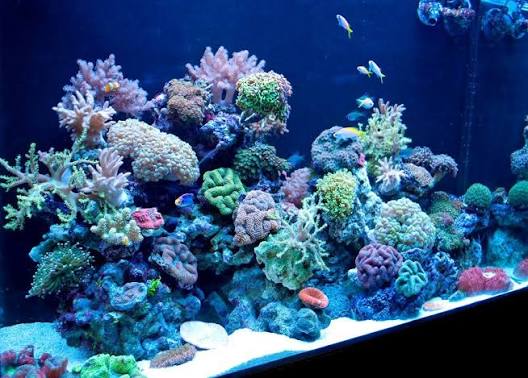
A reef tank is one of the most breathtaking things you can put in your home. A well-established reef aquarium, filled with colorful corals, anemones, and darting fish, looks like a window into a tropical ocean. It is also one of the most technically demanding hobbies in the aquarium world. Water chemistry, lighting, flow, live rock, and livestock compatibility all require understanding that does not exist in freshwater keeping.
The good news is that reef keeping has become dramatically more accessible in the last decade. Advances in LED lighting, aquarium monitoring equipment, and the availability of captive-bred corals have lowered both the cost and the knowledge barrier considerably. This guide gives a true beginner a realistic, step-by-step foundation to start a reef tank with confidence.
What Makes a Reef Tank Different
A reef tank is a saltwater aquarium designed to house not just fish but corals and other invertebrates. Corals are animals, not plants, and they require specific water chemistry, strong lighting, and consistent parameters to survive. Most corals contain symbiotic algae called zooxanthellae that photosynthesize inside coral tissue, providing the majority of the coral's nutrition. This is why reef lighting requirements are dramatically higher than for fish-only saltwater tanks.
The key difference from freshwater is water chemistry complexity. Reef tanks must maintain specific levels of calcium, alkalinity (KH), magnesium, salinity, temperature, and pH, in addition to standard ammonia, nitrite, and nitrate management. Corals consume calcium and alkalinity to build their skeletons, so these parameters must be monitored and replenished regularly. This is what makes reef keeping more demanding than any other type of aquarium.
Choosing the Right Tank Size
Beginners often assume a smaller tank is easier to manage. In reef keeping, the opposite is true. Larger volumes are more stable: water chemistry changes more slowly, temperature fluctuations are smaller, and mistakes are less immediately catastrophic. The recommended minimum for a first reef is a 20 to 30 gallon tank, though many experienced reefers recommend starting at 40 to 75 gallons for even greater stability.
Nano reef tanks (10 gallons and under) exist and can be beautiful, but they are genuinely difficult for beginners because parameters can swing dramatically in a short time. A single temperature spike or alkalinity drop that a 50-gallon tank absorbs without consequence can devastate a 5-gallon nano. If you are drawn to a small reef for space or budget reasons, aim for at least 20 gallons and invest in a reliable automated dosing system from the start.
Equipment: What You Actually Need
The core equipment list for a beginner reef includes a tank and stand, a return pump for water circulation, a protein skimmer to remove organic waste before it breaks down, a powerhead or wavemaker for flow, a heater with a temperature controller, a quality LED reef light, and a refractometer for measuring salinity.
A sump (a secondary tank usually located in the cabinet below the main display) is strongly recommended. The sump increases total water volume, hides equipment, and houses a refugium if desired. A refugium is a section of the sump planted with macro-algae that consumes nitrate and phosphate while providing a safe zone for copepods and amphipods, which are live food for corals and some fish.
For testing, invest in a saltwater test kit covering pH, ammonia, nitrite, nitrate, alkalinity, calcium, and magnesium. The Salifert or Red Sea Coral Pro test kits are reliable and commonly recommended. You will use these weekly during the first several months. An electronic pH and temperature monitor mounted in the tank provides constant readings and early warning of problems.
Live Rock: The Foundation of the Reef
Live rock is the biological and aesthetic backbone of a reef aquarium. It is porous calcium carbonate rock colonized by bacteria, coralline algae, sponges, and countless microscopic organisms. The porous structure provides enormous surface area for the beneficial bacteria that process ammonia and nitrite in the nitrogen cycle. It also creates the natural-looking rockscape that corals and fish will inhabit.
The standard recommendation is 1 to 1.5 pounds of live rock per gallon of tank volume, though the quality and porosity of the rock matters more than weight. Arrange rock to create caves, overhangs, and open swimming spaces rather than piling it against the back glass. Leave space at the back for water flow and for cleaning. Coralline algae (the purple and pink encrusting algae on live rock) will spread to the tank walls over time, which is a positive sign of a healthy system.
Dry rock (rock that has been dried and bleached) is also commonly used today. It is pest-free but must be fully colonized by bacteria before adding corals, which takes longer than with live rock. Many reefers mix dry rock as a base with a small amount of live rock to seed beneficial bacteria and organisms into the new system.
Saltwater, Salinity, and the Nitrogen Cycle
Reef aquariums use either natural seawater or synthetic saltwater mixed from purified fresh water and marine salt mix. Purified water (from a reverse osmosis and deionization system, often called RO/DI water) is essential: tap water contains chlorine, chloramine, phosphate, silicate, and other compounds that feed algae and stress corals. An RO/DI unit is an important investment for any serious reefer.
Target salinity is 1.025 to 1.026 specific gravity, or 35 ppt (parts per thousand), which matches natural seawater. Measure salinity daily when starting out. Evaporation raises salinity over time, so top off with fresh RO/DI water (not saltwater) to maintain the target level. Automatic top-off systems (ATO) handle this automatically, which is a significant convenience and improves parameter stability.
Before adding livestock, the tank must complete the nitrogen cycle: beneficial bacteria must colonize the live rock and establish the biological filter. This typically takes 4 to 8 weeks. Test daily until ammonia and nitrite both read zero and nitrate is detectable. Patience here prevents the most common beginner mistake: adding livestock to an uncycled tank.
Water Chemistry Parameters for Corals
The three most critical parameters for reef corals are alkalinity (dKH), calcium (Ca), and magnesium (Mg). These form the trinity of reef chemistry because corals use them to grow their calcium carbonate skeletons. Target alkalinity at 8 to 10 dKH, calcium at 420 to 450 ppm, and magnesium at 1250 to 1350 ppm. These are the levels found in natural seawater and are what most corals expect.
Water changes replenish these parameters naturally in lightly stocked tanks. As your coral load grows, you will need to dose calcium and alkalinity to keep pace with coral consumption. The simplest method for beginners is the two-part dosing system: you add a calcium solution and an alkalinity solution separately, in equal volumes. Automated dosing pumps handle this on a schedule, removing the daily manual dosing task.
Choosing Beginner Corals
Not all corals are equal in difficulty. Beginners should stick to the most forgiving species while learning the system. Soft corals are the easiest: leather corals, toadstool corals, mushroom corals (discosoma), and zoanthids all tolerate imperfect water conditions and lower light levels. They do not require calcium supplementation the way stony corals do, because their skeletons are not made of calcium carbonate.
LPS (large polyp stony) corals are the next step up. Hardy LPS species like brain corals, hammer corals, frogspawn, torch corals, and blastomussa are available at most reef stores and tolerate moderate water quality. They require calcium and alkalinity supplementation but are more forgiving than SPS corals. SPS (small polyp stony) corals like acropora and montipora are the most demanding, requiring near-perfect, highly stable water chemistry, intense light, and strong flow. Leave SPS for after you have a year of experience maintaining stable parameters.
Reef-Safe Fish Selection
Not all fish are safe in reef aquariums. Some fish eat corals, pick at invertebrates, or harass sessile animals. Classic reef-safe fish include clownfish, royal grammas, firefish gobies, blennies, chromis, cardinalfish, and most small wrasses. These species stay small, are peaceful, and do not bother corals or clean-up crew animals.
Keep the fish load modest in a beginner reef. Overstocking creates nutrient export problems (high nitrate and phosphate) that damage corals before the keeper realizes something is wrong. A 30-gallon reef might house 4 to 6 small fish comfortably. Start with a pair of clownfish as the anchor of the display: they are hardy, colorful, widely available, and the pairing of clownfish with an anemone (or surrogate host coral like a hammer coral) creates one of the most iconic reef scenes in the hobby.
Clean-Up Crew
The clean-up crew (CUC) consists of invertebrates that consume algae, detritus, and uneaten food, performing natural maintenance that keeps the tank cleaner between water changes. Essential clean-up crew members include hermit crabs, turbo snails, nassarius snails, emerald crabs, and sea cucumbers. Each fills a different ecological niche: turbo snails graze film algae from glass and rock, nassarius snails burrow in the sand and consume detritus, and emerald crabs pick at nuisance bubble algae.
Add the clean-up crew shortly after the tank cycles, before adding fish or corals. They will begin processing the accumulated waste from the cycling period and help control early algae growth. Maintain the CUC population over time, replacing lost members as they die. A healthy, diverse clean-up crew reduces the overall maintenance burden significantly.
Maintenance Schedule
A successful reef runs on a predictable maintenance schedule. Daily: check temperature, salinity, and pH; look over all livestock for signs of distress; top off evaporated water. Weekly: perform a 10 to 15% water change with fresh saltwater mixed to the correct salinity; test alkalinity, calcium, and nitrate; clean the glass with a magnetic scraper; empty the protein skimmer cup.
Monthly: test magnesium and phosphate; clean powerhead impellers; prune macro-algae in the refugium; check all equipment for signs of wear. Consistency is the most important aspect of reef maintenance. A tank maintained on a predictable schedule stays in balance. Reefs that are neglected for weeks and then receive frantic corrections are the ones that crash. Small, regular actions outperform large periodic interventions every time.