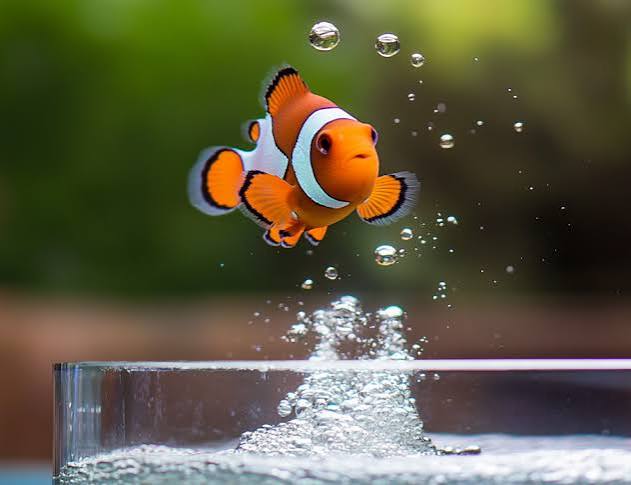
Fish jumping out of their tanks is one of the most alarming things a fishkeeper can witness, and unfortunately one of the most common causes of unexpected fish loss. You go to feed your fish in the morning, and there it is on the floor. Understanding why fish jump is the first step toward preventing this heartbreaking outcome.
The good news is that jumping behavior is almost always preventable. Whether your fish are escape artists by nature or are reacting to something stressful in their environment, there are practical solutions that will keep them safely in the water where they belong.
Why Fish Jump: The Core Reasons
Fish jump for a variety of reasons, and identifying the cause in your specific tank is key to stopping it. The most common triggers fall into two categories: environmental stress and natural instinct. Some fish are simply wired to jump as part of their survival behavior in the wild, while others jump because something in the tank is wrong. Both situations require different responses from the fishkeeper.
Understanding that jumping is a behavior with a cause, not random chaos, empowers you to actually solve the problem rather than just hoping for the best.
Poor Water Quality
Bad water conditions are the leading cause of fish jumping in home aquariums. When ammonia, nitrite, or nitrate levels spike, fish experience genuine physical distress. Their gills burn, their bodies struggle to function, and their instinct screams at them to escape the toxic environment. This is the aquatic equivalent of a mammal fleeing a smoke-filled room.
If your fish suddenly start jumping or attempting to jump, test your water immediately. Check ammonia and nitrite levels especially, as even small amounts of these compounds are toxic to fish. Perform a large water change, clean the substrate, and check whether your filter is functioning properly. Regular water changes every one to two weeks are your best defense against water quality crashes.
Oxygen Deprivation
Fish that are gasping at the surface or jumping may be trying to access more oxygen. Low dissolved oxygen levels, often caused by high temperatures, poor surface agitation, or overcrowding, cause fish to seek out the oxygen-rich interface between water and air. In the wild, jumping out of a stagnant pool into a faster-moving stream is a survival tactic. In your tank, it just leads to the floor.
Increase surface agitation using a powerhead, airstone, or by adjusting the flow rate on your filter. Lowering the water temperature slightly (if appropriate for your species) also increases oxygen solubility. Make sure your tank is not overcrowded, as more fish means more oxygen consumption.
Predator Stress and Tankmate Aggression
Fish that are being chased, bullied, or harassed by tankmates will often jump in a desperate attempt to escape. Even if the aggressor never actually catches them, the constant stress of being chased can push a fish to leap out of the tank. This is especially common when housing incompatible species together or when a previously peaceful fish turns territorial during breeding season.
Observe your tank carefully during feeding times and lights-on periods when aggression is most common. If you see one fish relentlessly chasing another, it is time to rethink your stocking. Remove the aggressor, add more hiding spots, or rehome one of the incompatible fish. No amount of tank covers will solve the root problem of mismatched fish.
Species That Are Natural Jumpers
Some fish are simply born to jump and will do so even in a perfect, stress-free environment. Hatchetfish, killifish, Archers, Bichirs, bettas, and many species of danios are notorious escape artists. In nature, these fish leap to catch prey, avoid predators, or navigate from one body of water to another during floods. The behavior is hardwired, not a problem to be solved, just managed.
If you keep known jumpers, a secure lid is non-negotiable. There is no conditioning or tank adjustment that will fully suppress an instinctual behavior. Accept that these fish jump and focus your energy on making escape impossible rather than trying to stop the jumping itself.
Chasing Food and Stimulation
Some fish, particularly surface feeders, will leap excitedly during feeding times. This is less a stress response and more exuberant hunting behavior. Archerfish are famous for jumping to catch insects. Even non-predatory fish can get carried away during feeding, especially if food is dropped near the water surface. While this is not a distress behavior, it still poses a drowning-on-the-carpet risk.
Feed smaller portions more frequently so fish are less frantic at feeding time. Use a feeding ring to concentrate food in one area, which reduces the chaotic surface activity that can lead to accidental jumps. Be especially careful during water changes when the reduced water level gives fish less room to miscalculate a leap.
New Tank Syndrome and Disorientation
Fish that are newly introduced to a tank are significantly more likely to jump. The stress of transport, new water chemistry, unfamiliar surroundings, and the absence of familiar hiding spots all combine to create panic. This is why covering the tank completely during the first few weeks of a new fish introduction is especially important.
Acclimate new fish slowly, using the drip method when possible, and dim the lights for the first day or two after introduction. Give them plenty of hiding spots so they feel secure. The jumping risk drops dramatically once a fish settles in and begins to feel comfortable in its new home.
Lighting and Sudden Darkness
Abrupt changes in lighting can startle fish into jumping. Suddenly turning on bright lights in a dark room causes a panic response in many species. Similarly, loud vibrations near the tank, tapping on the glass, or sudden movements can trigger a reflexive leap. This is a protective response to perceived threats, the aquatic version of a startled frog leaping off a lily pad.
Use a timer to gradually transition your tank lights on and off, or leave a low ambient light on in the room before turning on the tank lights. Avoid tapping on the glass and keep the area around the tank relatively calm. Skittish species benefit enormously from a consistent, predictable lighting schedule.
How to Choose the Right Tank Cover
A secure lid is your primary physical defense against jumping fish. Glass lids provide good coverage but often have gaps around equipment. Egg crate panels (plastic lighting diffuser grids) are an excellent DIY solution that provides near-complete coverage while allowing airflow and easy feeding access. Mesh covers are another good option, especially for large tanks with complex equipment arrangements.
Whatever cover you choose, pay close attention to openings around filter intakes, heaters, airline tubing, and wiring. These small gaps are exactly where a determined fish will find its way out. Use foam pipe insulation or aquarium-safe mesh to seal any opening larger than your smallest fish. Also make sure the lid cannot be nudged open by a larger fish bumping against it from below.
Water Level Management
Keeping your water level slightly lower than the absolute maximum creates a small buffer zone that can reduce the risk of fish clearing the rim. While this is not a substitute for a proper lid, it provides a small margin of safety. A two to three inch gap between the water surface and the top edge of the tank makes it harder for fish to accidentally fly out during a short jump.
This approach is especially useful in rimless open-top tanks where a full lid may not be practical or desirable for aesthetic reasons. Just be aware that dedicated jumpers can still clear several inches of airspace, so do not rely on water level alone for high-risk species.
What to Do If You Find a Fish on the Floor
Do not assume the fish is dead. Fish can survive outside the water longer than most people expect, sometimes 10 to 20 minutes or even longer depending on the species and how humid the environment is. A fish that is still moist and showing any movement, including gill movement, is worth attempting to save. Gently pick it up, rinse off any debris, and place it back in the tank near the surface.
Support the fish upright in the water. You may need to hold it gently for several minutes, allowing water to flow through its gills. Many fish make a remarkable recovery once returned to water. After the fish stabilizes, address the underlying cause of the jump to prevent a recurrence. A fish that has jumped once is likely to jump again if the root cause is not resolved.